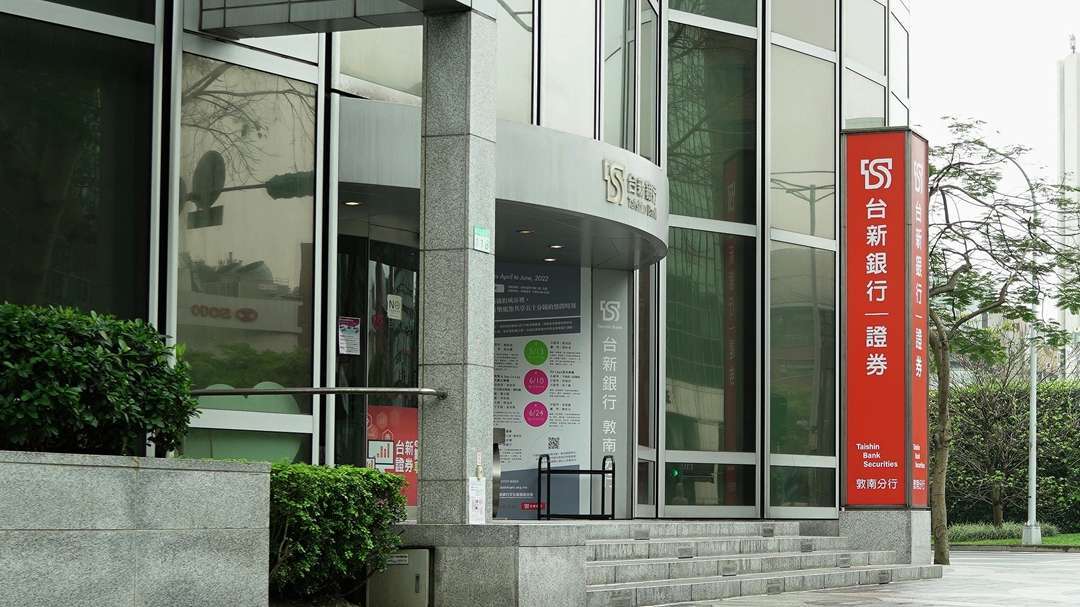
Taishin Financial Holding and SK Financial Holding completed their corporate merger on July 24 of last year, and are now entering the final stage of merging their banking subsidiaries. The Financial Supervisory Commission (FSC) announced today (April 4) that it has approved the merger between Taishin International Bank and SK Bank, with Taishin Bank as the surviving entity. Upon completion, the combined total assets will reach TWD 4.65 trillion, ranking 7th among domestic banks in Taiwan, with 204 domestic branches, making it the second-largest bank in the country by branch count.
According to officials from the Banking Bureau, the merger structure designates Taishin Bank as the surviving entity. The transaction consideration will be a combination of new share issuance and cash payment. The exchange ratio is set at 0.9505 new shares of Taishin Bank for every 1 share of SK Bank, with Taishin Bank additionally paying TWD 5.5 billion in cash. The two parties have tentatively set the merger effective date as January 1, 2027.
As of the end of March this year, Taishin Bank’s total assets were approximately TWD 3.25 trillion, ranking 12th in market share nationwide. SK Bank’s total assets were around TWD 1.4 trillion, ranking 17th. After the merger, the surviving bank’s total asset size will reach TWD 4.65 trillion, with a capital base of TWD 170.3 billion, significantly rising to 7th place in asset market share among domestic banks.
Taishin Bank currently has 8,600 employees and SK Bank has 3,500. The combined workforce after the merger will total 12,100.
In terms of physical branches, SK Bank currently operates 103 domestic branches, while Taishin Bank has 101. After integration, the total number of domestic physical branches will reach 204, ranking second among domestic banks in Taiwan, second only to the Cooperative Bank.
Given the critical nature of core banking system migration, there is public concern about operational smoothness at the merger launch on New Year’s Day. Wang Yun-chung, Deputy Director of the Banking Bureau, emphasized that system integration is akin to replacing a bank’s core system, and regulatory authorities will monitor the process under the highest standards. The FSC has required both banks to strictly follow the operational guidelines set by the Association of Banks of Taiwan, ensuring three key safeguards: thorough pre-merger planning, rigorous supervision during integration, and robust post-merger contingency plans.
Regarding system architecture, the merged entity will continue using Taishin Bank’s core system. Financial institutions have extremely high requirements for system stability, and the industry generally sets a 'tolerable downtime' standard (most banks set a 2-hour maximum). If a system failure exceeds this limit, banks must immediately activate their backup contingency plans.
Wang further added that comprehensive alternative contingency plans must be pre-established for the four core service channels: counter services, mobile banking, online banking, and ATMs. For example, if counter systems experience anomalies, backup mechanisms must be ready; if digital channels go down, customers should be immediately directed to the nearest branch to ensure consumer rights are fully protected. The FSC will continue to closely monitor the progress of system integration and employee placement plans to ensure a smooth and successful merger process.
FACT BOX
- Source: PR Times
- Category: Partnership