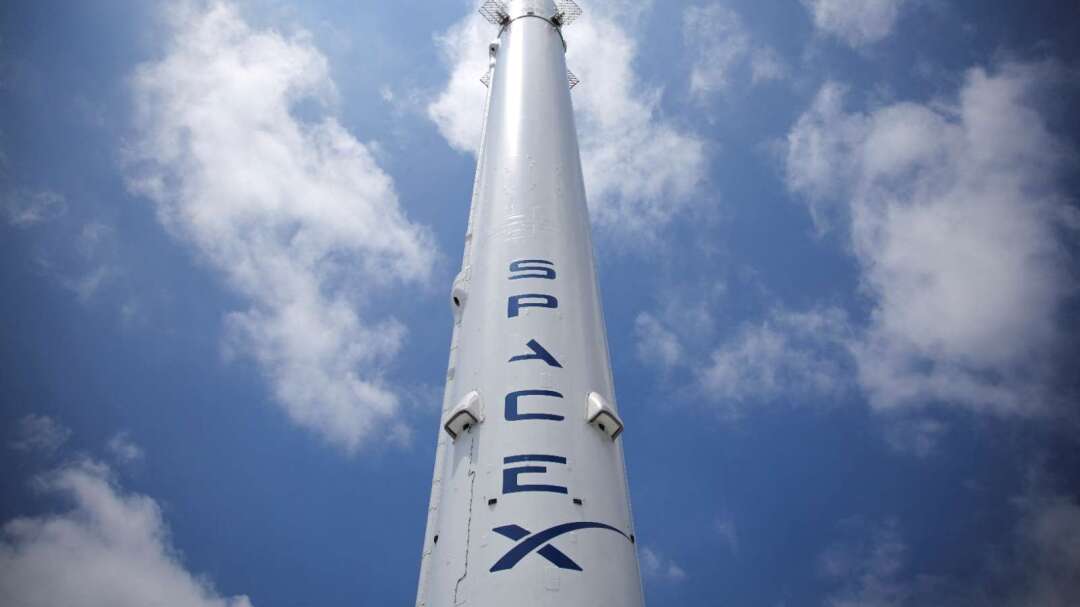
SpaceX (SPCX-US) is scheduled to release its first quarterly financial report after U.S. market close on Tuesday (the 4th). According to options market analysis, the stock could experience a sharp move of approximately 15% in either direction, equating to a market capitalization change of around $225 billion. This reflects heightened investor unease, with sentiment slightly skewed toward the bearish side.
Data from options analytics provider ORATS shows SpaceX’s market cap still stands at $1.5 trillion, yet the stock has fallen 43% from its closing high of $201.80 reached shortly after its June 12 listing. Shares briefly touched an intraday record high of $225.64 days after listing but have since retreated to $114.53.
Analysts note that SpaceX’s short trading history, rapid price decline, and uncertainty over whether its first earnings will reveal revenue and profitability sufficient to justify its current valuation have driven implied volatility in its options far higher than typical large, mature companies. In contrast, ahead of Microsoft’s recent earnings release, options markets priced in a mere 6.6% expected stock movement.
Ophir Gottlieb, CEO of Capital Market Laboratories, described SpaceX’s overall volatility as "extremely astonishing." Market expectations estimate SpaceX’s last quarter revenue near $7 billion, with an interest and tax before loss of approximately $1.55 billion.
### Dual Pressure: Earnings and Share Unlock Fuel Bearish Bets
In addition to earnings, SpaceX faces pressure from an impending stock unlock. Following the earnings release, approximately 911.5 million restricted shares held by insiders, employees, and early investors could be released from lock-up as early as August 6, potentially adding further downward pressure on the stock.
Brent Kochuba, founder of SpotGamma, said that taken together, various signals suggest the options market is currently slightly tilted toward shorting SpaceX. Retail investor flows into leveraged ETFs also indicate that bullish and bearish forces are closely balanced.
Seven leveraged long single-stock ETFs tracking SpaceX currently hold about $401.1 million in combined assets under management; meanwhile, two-times inverse and short ETFs betting on price declines have attracted $296.8 million. The gap between the two is much narrower than for other stocks with leveraged ETFs, suggesting relatively cautious bullish sentiment.
Short positions are also nearing historic highs. Peter Hillerberg, co-founder of Ortex Technologies, noted that roughly 63% of SpaceX’s freely tradable shares have already been borrowed, leaving almost no available shares left to short. Based on SpaceX’s July 31 closing price of $108.37, short sellers’ paper profits are estimated at $18.4 billion.
Excessive volatility has also made options more expensive, increasing hedging costs for investors. Clint Sorenson, CEO and CIO of Ascentis Asset Management, said his firm had originally planned to build synthetic hedges for investors, but the cost was simply too high, and ultimately no one was willing to adopt them.
### Overcrowded Shorts, But Rebound Bets Remain Alive
Despite the bearish sentiment, some investors warn that shorting SpaceX may already be overcrowded. Mark Spiegel, portfolio manager at Stanphyl Capital Partners, pointed out that short interest in SpaceX has increased significantly in recent weeks, and much—or even all—of the negative news associated with this week’s unlock may already be priced into recent lows.
If SpaceX’s earnings exceed pessimistic market expectations, the massive short positions could be forced to cover, triggering a short squeeze. In the options market, call options with strike prices above the current stock price continue to see steady demand, signaling that some traders still believe Elon Musk can lead the company to success.
Steve Sosnick, chief strategist at Interactive Brokers, said there are clearly still many traders willing to bet that SpaceX’s stock price will return to its IPO price of $135, or even challenge higher levels.
Therefore, SpaceX’s first earnings report is not only a crucial test of whether its revenue can support a $1.5 trillion valuation, but also coincides with the release of 911.5 million shares—creating dual pressure. The options market’s projected $225 billion market cap swing suggests that regardless of the earnings outcome, SpaceX’s stock could face one of its most volatile tests since going public.
FACT BOX
- Source: PR Times
- Category: News
- Organizations: Microsoft / ORATS / SpotGamma