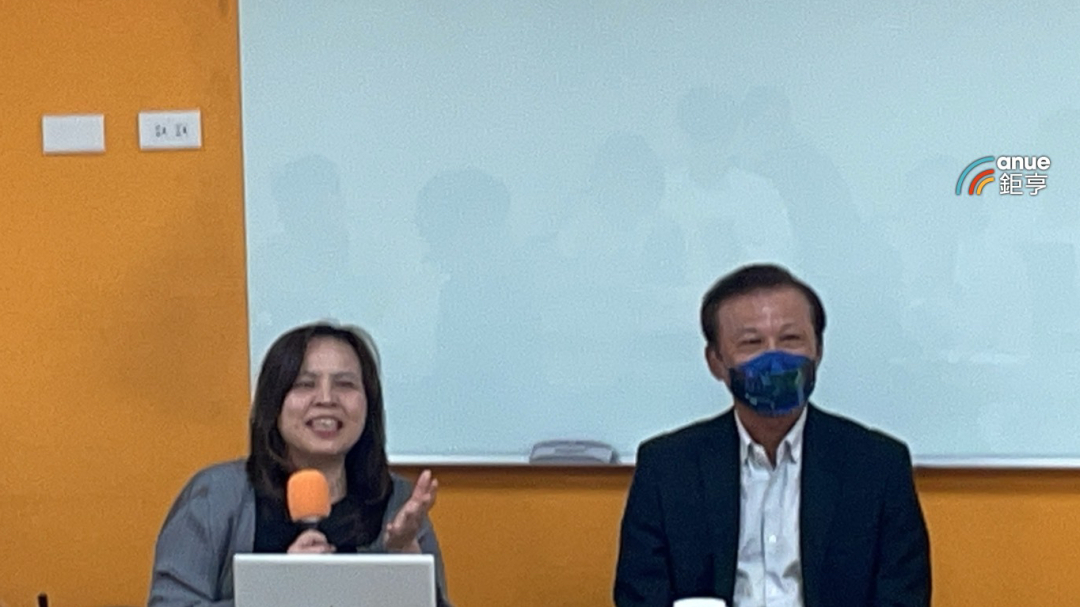
Zycoo Technology (4915-TW), a computer peripherals manufacturer, held its earnings conference call today (5th) and simultaneously announced its second-quarter financial results. Zycoo's Q2 net profit reached NT$580 million, showing declines both sequentially and year-on-year, with earnings per share (EPS) at NT$1.26. Senior Manager Tseng Ya-Lan noted that Q2 revenue growth outperformed expectations, driven by increased shipments from AIoT projects. However, profitability declined due to RMB depreciation and changes in product mix.
Zycoo's Q2 revenue was NT$17.21 billion, up 8.1% quarter-on-quarter and 18.0% year-on-year. Gross margin was 14.8%, down 1.1 percentage points sequentially and 2.7 percentage points year-on-year. Operating profit was NT$640 million, down 6.7% QoQ and 8.7% YoY. Operating margin was 3.7%, down 0.6 percentage points QoQ and 1.1 percentage points YoY. After-tax net profit was NT$580 million, down 3.3% QoQ and 20.9% YoY, with EPS at NT$1.26.
Zycoo's cumulative revenue for the first half of the year reached NT$33.13 billion, up 12.8% year-on-year. Gross margin was 15.4%, down 1.9 percentage points YoY. Operating profit was NT$1.33 billion, down 7.7% YoY. Operating margin was 4.0%, down 0.9 percentage points YoY. After-tax net profit was NT$1.18 billion, down 19.9% YoY, with EPS at NT$2.55.
Tseng Ya-Lan pointed out that two major factors negatively impacted gross margin in Q2. First, the RMB depreciated approximately 5% against the USD. Since about 30%-35% of Zycoo's costs are denominated in RMB, this led to a 1.1 percentage point decline in gross margin. Second, the revenue share of low-margin smart lifestyle products surged to 25%, unfavorably impacting gross margin by approximately 1.7 percentage points, contributing to the profit decline this quarter.
Zycoo's CEO and CFO, Hsiao Ying-I, mentioned that the current market environment is 'material-driven,' with significant price increases in key raw materials such as PCBs, MLCCs, DRAMs, panels, and copper. Suppliers' pricing remains firm, placing heavy burdens on downstream manufacturers. As many critical component prices exceed expectations, Zycoo is continuously negotiating with customers on cost-sharing and pass-through mechanisms. However, customers' willingness to fully absorb these costs in the short term is limited.
Hsiao stated that while transferring costs, Zycoo is also actively conducting internal production adjustments and supply chain optimization to mitigate the dual impact of rising material costs and exchange rate fluctuations. Although some customers provide project-specific subsidies or support, downstream manufacturers across the industry still generally face severe cost pressures.
In terms of product revenue mix, among the three major product lines, smart lifestyle products showed the most significant year-on-year growth of 59%. Information products' revenue share decreased to 44% but still grew 5.6% YoY. Automotive and smart mobility revenue share rose to 31%, up 11.8% YoY. Professional acoustics showed strong growth, but some AIoT projects experienced slightly negative YoY growth due to DRAM and other component shortages and soaring prices, resulting in slower shipment schedules.
FACT BOX
- Source: PR Times
- Category: News