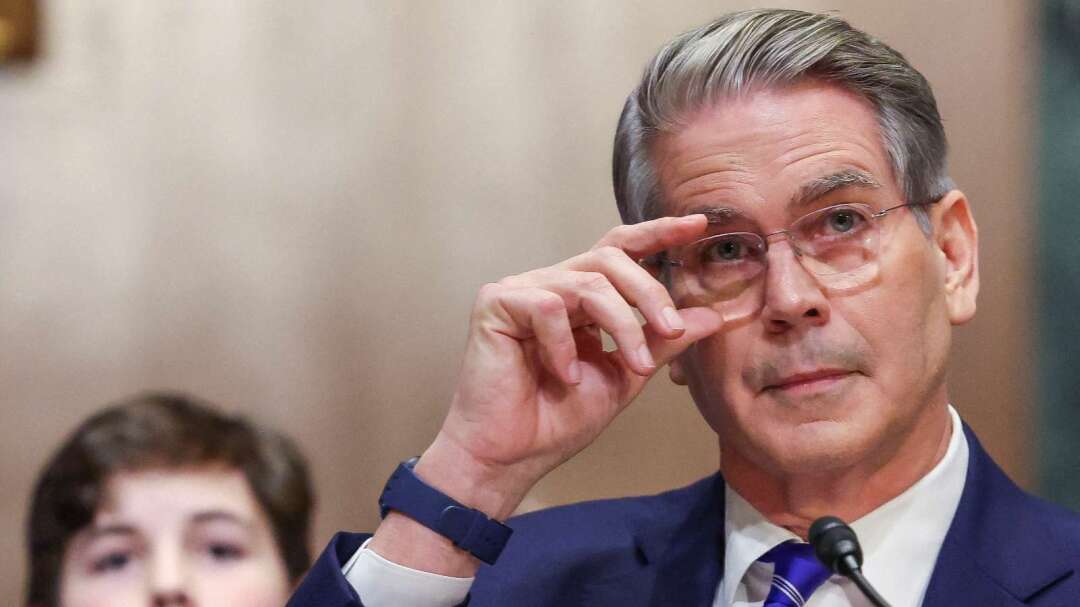
US Treasury Secretary Janet Besent is urging the Federal Reserve (Fed) to expand the 'Foreign and International Monetary Authorities Repo Facility' (FIMA Repo), originally established during the 2020 dollar shortage. This expansion would allow Japan to borrow more dollars by pledging its US Treasury holdings, enabling it to purchase yen and stop the currency’s ongoing depreciation, while also avoiding Tokyo being forced to sell large volumes of US Treasuries to raise intervention funds.
On Monday, the Japanese government announced plans to utilize the Fed’s FIMA Repo Facility to secure dollars for future currency interventions. Although this mechanism was not originally designed to support foreign currencies, it could now become a crucial source of funding for Japan to defend the yen—sparking debate over whether the Fed should assist the Trump administration in executing exchange rate and foreign policy goals.
Using US Treasuries as Collateral: Japan Can Access Dollars Without Selling Its $1.1 Trillion Holdings
The FIMA mechanism was established during the early stages of the pandemic. At that time, the dollar funding market faced severe stress, and foreign central banks without swap lines to the Fed risked being forced to sell US Treasuries to obtain dollars—further exacerbating liquidity crises in the Treasury market. To prevent this, the Fed allowed foreign monetary authorities to temporarily exchange US Treasuries for dollars via repurchase agreements.
Under this new application, Japan could temporarily transfer US Treasuries to the Fed in exchange for dollars, then sell those dollars in the foreign exchange market to buy yen—supporting the exchange rate without having to permanently sell Treasuries. As of the end of May, Japan holds approximately $1.1 trillion in US Treasuries. The real constraint on its financing capacity isn’t a lack of collateral, but rather the FIMA facility’s $60 billion borrowing cap per counterparty.
Besent publicly stated on Sunday via social media platform X that the Fed could help raise this limit and encouraged the central bank to expand the cap in the coming months. If the cap is increased, Tokyo could rapidly convert more US Treasuries into usable intervention funds and signal to markets that Japan’s anti-depreciation toolkit is broader than it appears—raising the cost for speculators betting against the yen.
Japanese Finance Minister Katsumi Kakizawa confirmed on Monday that Tokyo is preparing to use the FIMA mechanism to fund future interventions. Prior to this, the US and Japan conducted a joint operation last Friday, simultaneously buying yen—the first such coordinated action since 1998. President Trump described the move as a symbol of friendship between the two nations, while the yen recently hit a 40-year low.
Washington Aims to Save More Than Just the Yen: Preventing Japanese Treasury Sales
Washington’s support for stabilizing the yen is also driven by concerns over the US Treasury market. When countries defend their currencies, they typically sell foreign reserves and buy back their domestic currency. Japan’s reserves are primarily composed of US Treasuries. If Tokyo were to intervene over the long term using traditional methods, it might be forced to sell large volumes of US Treasuries.
Currently, the yield on US 30-year Treasuries has risen to its highest level since 2007, raising concerns about market absorption capacity. Allowing Japan to pledge Treasuries via the FIMA mechanism to obtain dollars could prevent intervention efforts from further pushing up Treasury yields—making this a key reason why Washington wants to facilitate this arrangement.
Besent could bypass the Fed by having the US Treasury issue bills to raise dollars and then provide funds through the Exchange Stabilization Fund (ESF), which has a capacity of around $200 billion. However, this approach would be more transparent in scale and clearly more limited in resources, reducing its deterrent effect on markets compared to the Fed’s financing tools.
Derek Tang, economist at Monetary Policy Analytics, pointed out that if Besent fails to gain Fed support, his credibility in verbally pressuring markets would diminish. Publicly requesting an expansion of the FIMA cap could be a cost-free strategic signal—making markets believe Japan has stronger firepower. Alternatively, it could be a way to pressure other members of the Federal Open Market Committee (FOMC).
A weak yen simultaneously raises inflation expectations in Japan, prompting investors to demand higher returns to hold Japanese government bonds. Japan’s 10-year JGB yield has risen by 75 basis points this year. Since Japanese financial institutions are the world’s largest cross-border creditors, rising domestic yields reduce their incentive to hold overseas bonds—potentially attracting capital that would otherwise flow into US, German, and UK bonds back to Japan.
Should the Fed Comply? Waller’s Independence Faces First Test
Raising the FIMA facility’s $60 billion per-counterparty borrowing cap requires approval from at least some FOMC members. The Fed typically only expands the use of such tools when market dysfunction or threats to financial stability could impair monetary policy transmission—conditions that do not currently appear to be met. A Fed spokesperson declined to comment.
This request marks the first major test for Chair Waller since taking leadership of the Fed in May—challenging how he will delineate boundaries between the central bank and the Trump administration. The Fed’s independence is usually most evident in interest rate decisions, as rates are most susceptible to political pressure. However, the boundary between the central bank and the executive branch has historically been blurrier regarding other functions, such as lending to foreign central banks.
In written responses submitted to senators before his confirmation, Waller stated that the Fed enjoys the highest degree of independence in setting interest rate policy, but not fully so in other areas. On international financial issues, Fed officials do not have special decision-making authority and should cooperate with the government and Congress.
Yet, during a congressional hearing last month, when asked a similar question, Waller referred to the Fed’s standing dollar liquidity arrangements with foreign central banks as part of monetary policy. It remains unclear whether he will classify assisting Japan’s yen intervention as monetary policy or as the Trump administration’s diplomatic and fiscal policy. With Besent and Waller frequently communicating, this decision will test whether the new Fed chair can balance cooperation with the government while preserving the central bank’s autonomy.
FACT BOX
- Source: PR Times
- Category: News