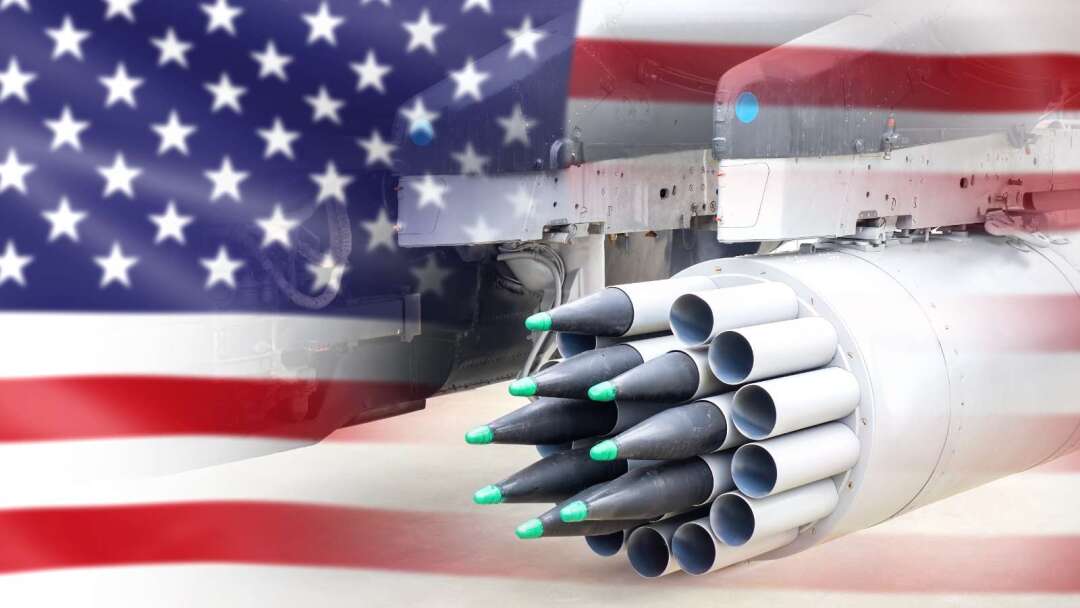
The US Army has depleted a significant portion of its globally deployed stockpile of high-precision long-range missiles during five months of conflict with Iran. Three individuals familiar with the data say this has raised concerns about the US military’s readiness for future conflicts.
According to a Reuters report, these missiles include the US Army’s ground-to-ground weapons: the Army Tactical Missile System (ATACMS) and the Precision Strike Missile (PrSM). Two of the sources said the US has used "almost all" of these weapons.
Each of these long-range munitions costs over $1 million and is a critical component of the US military arsenal, enabling forces to conduct precision strikes from a safe distance.
The ATACMS provided by the US to Ukraine have played a key role in the Russia-Ukraine war, allowing Ukrainian forces to strike targets inside Russia. PrSM, on the other hand, is a newer, more advanced system that will eventually replace the shorter-range ATACMS.
With precision long-range missile inventories significantly reduced, the US may have to rely more heavily on higher-risk manned aircraft bombing missions if President Trump launches another large-scale attack on Iran.
Sources declined to disclose the current remaining quantities of various munitions. As the conflict continues, three individuals with knowledge of the situation are concerned that declining missile stocks could weaken US deterrence capabilities against adversarial powers including Russia and China.
Another individual familiar with the situation said that despite the high consumption of precision weapons, the US still has the ability to replenish its stockpiles. This person noted that US Central Command, responsible for overseeing US military operations in the Middle East, has already been able to reallocate weapons from US military inventories around the world.
In response to media inquiries about US military ammunition stockpiles, the White House released a statement from Trump: "The United States has far more ammunition than any other country in the world, and in quantities far exceeding our needs."
Trump stated: "Our defense industry is currently producing ammunition at the highest rate in history, and we are also expanding factories and equipment on a record scale."
Analysts agree that certain types of munitions, including artillery shells and various missiles, are indeed being produced at record speeds. However, they warn that if the war continues, current supply levels may still be insufficient to meet demand.
Lockheed Martin (LMT-US), which produces ATACMS, PrSM, and the THAAD anti-missile system, did not immediately respond to inquiries regarding Trump’s claims or the status of weapons supply.
Raytheon Technologies (RTX-US), responsible for producing the Tomahawk cruise missile and Patriot interceptor—two critical US weapons—also did not respond immediately.
In response to media questions, Pentagon spokesperson Sean Parnell said: "The US military is the most powerful force in the world, possessing all the capabilities needed to execute missions at the time and place chosen by the President. We have conducted multiple successful operations across several combatant commands while ensuring that US forces maintain sufficient and robust capability reserves to protect the American people and national interests."
Data on ammunition supplies has circulated within the US government over the past week. The Trump administration is holding tense discussions about how long the US can continue attacking Iran and how to avoid depleting stockpiles to a level that would impair the military’s ability to respond to crises in other regions.
Weapons supply shortages have triggered warnings.
One source said the sharp decline in ATACMS and PrSM inventories reflects the Trump administration’s choice to avoid higher-risk attack methods, such as sending manned aircraft to drop bombs on Iranian targets.
Analysts point out that because these long-range weapons allow the US military to strike from a distance, they hold significant strategic value when facing adversaries with strong air defense capabilities, such as China.
A March report by the Center for Strategic and International Studies (CSIS) stated that the US military has already used such weapons to strike targets inside Iran.
According to the report, because PrSM is a newer munitions system, initial US stockpiles were relatively low. However, the US military has ordered large quantities of PrSM, expected to be delivered by 2027. The US Army says ATACMS is being phased out of service, with production focus shifting to the newer PrSM missiles.
Two sources said senior US military officials have been warning Trump for weeks that defensive weapon inventories, including Patriot interceptors, are rapidly declining. The Patriot system is a key defensive weapon against ballistic missiles.
Last week, multiple media outlets reported that Trump decided not to launch another large-scale offensive inside Iran, partly due to military advisors warning about the current state of ammunition stockpiles.
However, one US official denied this, saying the main reason Trump refrained from further attacks was pressure from Gulf states.
The Middle East conflict has sparked intense debate over whether the Trump administration has the authority to continue military actions against Iran without congressional authorization.
Currently, the US government has not requested a declaration of war or sought authorization for the use of military force from Congress.
Defensive weapon inventories also sharply declined
CSIS also released a report last week stating that approximately 65% of US Patriot interceptor missiles were consumed between February and July this year, and the number of THAAD interceptors in US stockpiles has decreased by at least 38% since the start of the war.
Both the Patriot and THAAD systems are capable of detecting and destroying incoming missiles and are among the most effective defensive systems in the US arsenal.
Two sources said that although Reuters did not obtain the relevant supply data, these figures align with internal US government information.
One source revealed that since the war began, the US has consumed slightly less than half of its global inventory of Tomahawk cruise missiles. These missiles are typically launched from naval vessels.
Reuters said it could not independently verify this data.
The Tomahawk cruise missile is a key weapon for the US Navy, launchable from destroyers, cruisers, and submarines. It has long been considered the primary means for the Navy to attack heavily defended targets without risking pilots.
Raytheon, the core defense business unit of Raytheon Technologies, has reached a preliminary arrangement with the Pentagon on a multi-year agreement aimed at increasing Tomahawk missile production while also boosting output of other munitions. The US government is accelerating efforts to replenish its dwindling weapons stockpiles.
FACT BOX
- Source: PR Times
- Category: News
- Products / services: ATACMS / PrSM