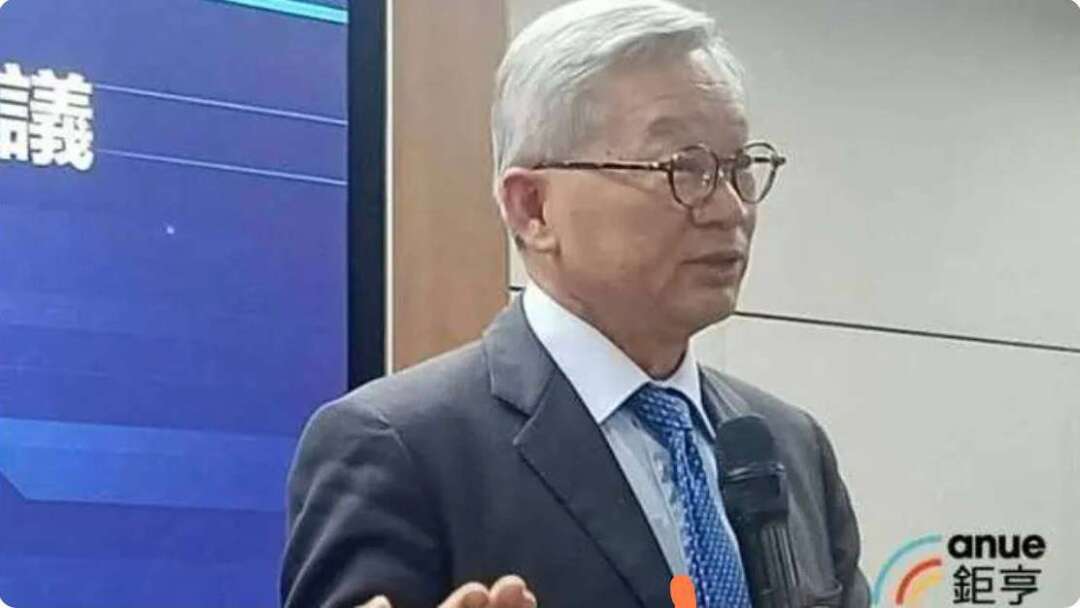
The central government's overall budget proposal for fiscal year 2027 has been finalized. On the 5th, Dr. Winston D. W. Wu, Chairperson of Taiwan's National Science and Technology Council (NSTC), announced that next year's science and technology budget will reach a record NT$182.3 billion, representing a 9.47% increase compared to 2026. Key priorities include increased investment in sovereign AI computing power and foundational infrastructure, building Smart Nation 2.0, and leveraging Taiwan's technological industrial strengths to drive digital transformation and AI integration among small, micro, and medium enterprises.
Dr. Wu emphasized that while Taiwan already possesses strong capabilities in semiconductors and AI hardware, it must remain vigilant amid intense global competition. Continuous enhancement of R&D capabilities and international competitiveness is essential. Amid evolving geopolitical dynamics and global AI competition, Taiwan must not only strengthen its semiconductor and AI advantages to secure its technological strategic position and economic prosperity but also recognize it is at a critical juncture of industrial structural transformation. The nation should leverage its technological strengths to foster prosperity across all sectors of society.
Wu noted that although the 2026 central budget is still under discussion in the Legislative Yuan, the Executive Yuan has already completed planning for the 2027 budget. Next year's science and technology budget will set a new high at NT$182.3 billion, growing approximately 9.47% from this year. Most significantly, additional funds will be allocated to boost sovereign AI computing power and infrastructure, enabling the construction of Smart Nation 2.0 and driving SME transformation and AI adoption, thereby promoting comprehensive prosperity across all industries.
Wu stressed that the 2027 Executive Yuan science and technology budget will first ensure stable growth in fundamental academic research, while strategically investing in key technologies under the "Top 10 AI Infrastructure Projects" and the "Five Trusted Industries." These include high-performance computing, quantum technology, smart robotics, silicon photonics and optical communications, and sovereign AI.
Specific investment initiatives highlighted by Wu include: First, NT$8.4 billion for the "Greater Southern Silicon Valley" project to accelerate the development of an AI industry ecosystem in southern Taiwan. Second, NT$20.7 billion for the "Semiconductor Innovation Taiwan" initiative to implement the four pillars of Taiwan's semiconductor policy—continuity of advantage, international expansion, application innovation, and sustainable adaptation—and advance industrial technology deployment. Third, NT$400 million for Next-Generation Communications to seize opportunities in the low-orbit satellite communications industry and establish a competitive edge in 6G communications. Fourth, NT$2.2 billion for Smart Robotics to promote R&D and ecosystem development in intelligent robotics.
Fifth, NT$6.9 billion for Phase III of the Space Program to develop low-orbit communication satellites and advanced remote sensing satellite systems, fostering international collaboration in the space industry. Sixth, NT$2.2 billion for the Marine Technology Initiative to develop technologies that enhance maritime security, enable intelligent marine industries, and integrate marine culture into daily life. Seventh, NT$10.8 billion for Net-Zero Technology to advance carbon neutrality and carbon cycle technologies, accelerating commercialization through real-world validation and community implementation. Eighth, NT$1.6 billion for Aging Society Technology to promote R&D, develop application service systems, conduct field validations, and support industrialization in aging-related technologies.
Wu added that starting next year, the Executive Yuan will integrate resources across all central ministries to advance the "Smart Nation 2.0" initiative. By collaborating with local governments, AI technologies will be transformed into practical AI applications across various industries, enabling intelligent small and micro enterprises to thrive and moving toward a nationwide smart living environment for all citizens.
FACT BOX
- Source: PR Times
- Category: News