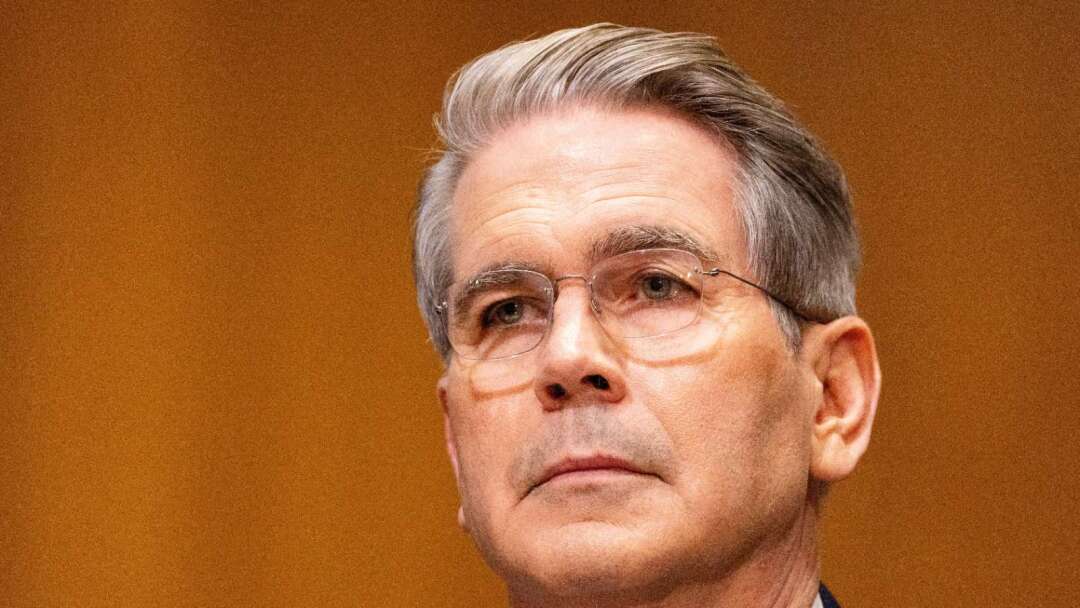
Federal Reserve Chair Kevin Warsh remained silent on the future direction of interest rate policy during his second meeting since taking office, failing to dispel concerns over the Fed's commitment to inflation control. In response, U.S. Treasury Secretary Scott Bessent has publicly voiced his support.
On Tuesday (April 4), Bessent said in a CNBC interview: "When I entered Wall Street in 1984, you never knew what the Fed would do next. Markets had to position themselves accordingly and do their own research."
Regarding Warsh's decision to stop pre-emptively signaling rate moves, Bessent described it as "a detox, not just for financial markets, but also for financial journalists."
Bessent's comments highlight the divide between supporters and critics of Warsh.
Supporters argue that reducing "forward guidance" helps restore the Fed's policy independence. Critics, however, contend that while Warsh repeatedly emphasizes fighting inflation, his failure to outline a concrete policy path only increases market uncertainty.
Warsh has repeatedly stated that the Fed remains committed to bringing inflation down to its 2% target. Yet, last week, the Fed voted 9 to 3 to hold the federal funds rate steady at 3.5% to 3.75% for the fifth consecutive time. At the post-meeting press conference, Warsh said, "We are in a period of cautious observation for now."
Markets are questioning: How can inflation be suppressed without a clear strategy?
Douglas Porter, Chief Economist at BMO Capital Markets, pointed out that what truly surprised markets was Warsh's strong stance on inflation without indicating any near-term policy action.
Mark Cabana, Head of Interest Rate Strategy at BofA Global Research, compared Warsh to someone who declares they want to lose 15 pounds but does neither exercise nor diet, nor use GLP-1 weight-loss drugs.
"Having determination is good," Cabana said, "but if you don't explain how you'll achieve it, no one will believe you. You can't fool the bond market." The market's reaction last week reflected investors' doubts about the Fed's policy credibility.
Bond markets are warning that the Fed's credibility is under scrutiny.
Most economists believe that to effectively curb inflation, rate hikes are still necessary.
Although the Fed operates independently of the White House by law, markets and policymakers are closely watching whether Warsh will lean toward the Trump administration's advocated rate-cutting stance.
Bill Dudley, former President of the Federal Reserve Bank of New York, said rising long-term Treasury yields indicate declining confidence in the Fed. "Warsh has revealed almost nothing about how the Fed thinks about monetary policy or how it will adjust policy based on economic data. His silence is almost deafening."
Torsten Slok, Chief Economist at Apollo Global Management, also said markets cannot understand how the Fed plans to bring inflation down, which is pushing up long-term yields. "Markets are starting to worry that it might take longer to control inflation, or that policy mistakes could occur."
On the other hand, some analysts believe Warsh is facing stricter scrutiny than previous Fed chairs because he is widely perceived to have close ties with President Trump.
Robert Brusca, Chief Economist at FAO Economics, said: "Markets have always deeply suspected that Warsh is, at heart, a Trump man who will ultimately align with Trump's policies. Unless he proves otherwise, markets are unlikely to truly trust him."
Despite rising Treasury yields increasing government borrowing costs and potentially dragging down the economy, Bessent continues to support Warsh. He said: "I think Warsh wants to keep policy options open to achieve the best outcome. I believe under his leadership, the Fed can balance both economic growth and inflation control."
Regarding market bets on the Fed possibly hiking rates again, Bessent is skeptical. He asked: "What effect does raising short-term interest rates actually have?"
Bessent pointed out that even if the Fed raises rates now, the impact typically takes a year or longer to show up in the economy. Moreover, excluding volatile items like energy, U.S. core inflation is actually quite stable. "I think this situation will continue," Bessent said.
FACT BOX
- Source: PR Times
- Category: News
- Organizations: BMO Capital Markets