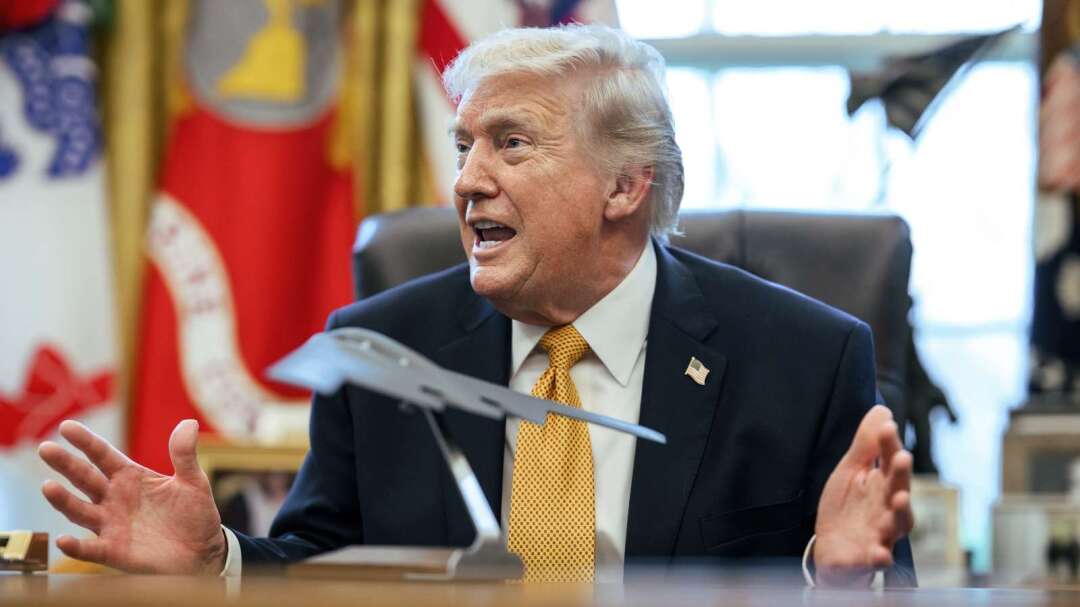
The Trump administration in the United States is considering issuing an executive order related to vaccines and autism as early as next week, indicating that the White House may further advance related policies. According to Bloomberg’s citation of informed sources, this move stems from President Trump’s desire for the government to take more action, though the content of the executive order has not yet been finalized and the release timeline could still change.
To date, the U.S. Department of Health and Human Services (HHS) has not responded to these reports, and the White House has not officially confirmed the details of the executive order.
Over the past year, Trump has repeatedly questioned the link between vaccines and autism, claiming that childhood vaccines and pregnant women’s use of the pain reliever Tylenol (acetaminophen) might be associated with autism. However, such claims are not supported by mainstream scientific research. The U.S. Centers for Disease Control and Prevention (CDC), the World Health Organization (WHO), and multiple large-scale epidemiological studies have all concluded that there is no credible scientific evidence linking childhood vaccines to autism.
Markets are also watching whether U.S. Health Secretary Robert F. Kennedy Jr. will play a more significant role going forward. Kennedy has long expressed skepticism about vaccine safety. In January, he restructured the federal committee responsible for advising on national autism policy, appointing 21 new members at once—some of whom have previously publicly supported unproven theories linking vaccines to autism, raising concerns within the medical community.
In fact, the Trump administration has already adjusted its vaccine policies multiple times this year. In May, Trump signed an executive order requiring the CDC and its vaccine advisory committee to re-evaluate the U.S. childhood vaccine schedule, referencing vaccination systems in other developed countries, aiming to revise core childhood vaccine recommendations. The White House stated at the time that the move was intended to establish a vaccine policy based on 'the best scientific evidence,' although it still drew criticism from parts of the medical community.
However, some of Kennedy’s proposed vaccine policies were blocked by a federal court in March. A federal judge ruled to temporarily halt his sweeping changes to childhood vaccine recommendations and the restructuring of the CDC’s vaccine advisory committee, placing legal constraints on the administration’s reform efforts.
Recent U.S. media reports have revealed that Trump continues to urge Kennedy to intensify investigations into the vaccine-autism issue. The Wall Street Journal reported that Trump personally asked Kennedy in May to further study whether a connection exists and to reconsider childhood vaccination recommendations—even as some White House political aides had hoped to downplay the vaccine issue before the midterm elections.
Experts note that the causes of autism are highly complex. Current research suggests they are primarily linked to genetic and multiple environmental factors, but no single cause has been identified. Over the past several decades, numerous large-scale studies involving millions of children have found no causal relationship between childhood vaccines and autism. Recent medical journals have pointed out that some studies previously cited to support a vaccine-autism link have been retracted or are under re-examination due to major methodological flaws.
Analysts believe that if the White House ultimately issues a new executive order, it will inevitably reignite intense debate in the U.S. over public health policy, vaccine safety, and scientific evidence—and could bring new impacts on the CDC’s future vaccine recommendations, autism research directions, and U.S. vaccination policy.
FACT BOX
- Source: PR Times
- Category: News
- Organizations: CDC / WHO / HHS