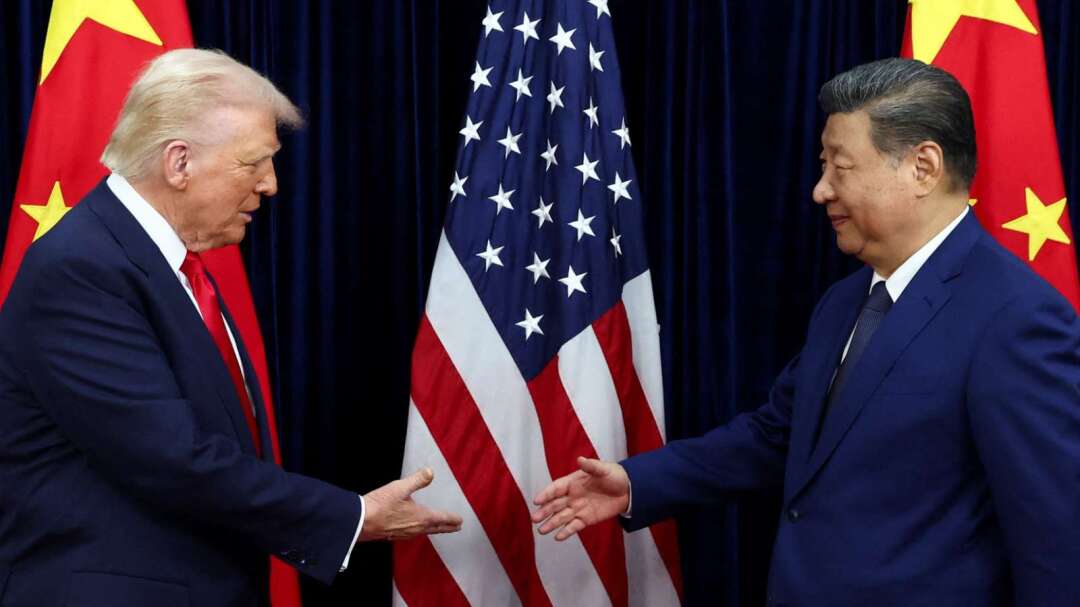
China has launched a coordinated series of new countermeasures against the United States this week, deploying an expanding arsenal of legal and regulatory tools. These include initiating a national security investigation under its newly revised Foreign Trade Law for the first time, tightening export controls on drone-related products, sanctioning seven U.S. entities, and suspending cooperation with U.S. authorities on inspections of goods bound for China. Beijing is demonstrating its retaliatory capabilities ahead of President Xi Jinping’s expected visit to the U.S. next month, while still preserving space for de-escalation, aiming to warn Washington against further tightening technology restrictions on China.
On July 28, the U.S. imposed restrictions on certain foreign-made robots and power inverters—two sectors dominated by Chinese firms. Three days later, the U.S. Department of Homeland Security added 43 Chinese companies to a blacklist over alleged forced labor. In response, China issued five statements within a week, swiftly countering with measures whose speed and breadth indicate Beijing’s growing ability to rapidly escalate trade and technology disputes.
China’s Ministry of Commerce announced a national security investigation into printers, copiers, and other office imaging equipment that use foreign software. This marks the first use of the investigation mechanism under the revised Foreign Trade Law, which took effect in March. The new law expands the Chinese government’s authority to respond to foreign sanctions and other restrictive measures, giving Beijing more policy tools in future trade disputes.
The following day, China’s cybersecurity regulator announced it would formally launch a security review of products sold in China by U.S. cybersecurity firm Palo Alto Networks (PANW-US), citing the need to protect critical infrastructure. The official statement was brief and did not explicitly state whether this move was a retaliatory measure against the U.S., but the timing has sparked external speculation.
China has also tightened export reviews on drone-related products and sanctioned seven U.S. entities. Unlike past sanctions that mostly targeted U.S. defense suppliers with little business in China, this round directly targets compliance, traceability, due diligence, and auditing firms that assist U.S. enforcement of restrictions—potentially impacting multinational companies’ daily supply chain operations.
Six entities, including Applied DNA Sciences and the Responsible Business Alliance, were sanctioned for allegedly participating in U.S. restrictions on Chinese firms over forced labor concerns in Xinjiang. Beijing also targeted Arizona-based Compliance Testing, accusing it of assisting the U.S. Federal Communications Commission (FCC) in implementing China-related restrictions.
Additionally, China’s certification authority decided to suspend authorizations for U.S.-based certification bodies to conduct follow-up factory inspections for products seeking China Compulsory Certification (CCC). CCC is a mandatory safety and quality certification required for designated products sold in China, applicable to both domestically manufactured and imported goods.
This means U.S. manufacturers may now have to use qualified inspection bodies outside the U.S., increasing costs and potentially causing delays in certification and product shipments to China.
Ryan Etzcorn, Senior Director at Ankura China Advisors, said this round of countermeasures will create tangible compliance challenges for multinational firms. China is using existing tools to directly target risk consultants and due diligence service providers, extending retaliatory measures from symbolic sanctions to the everyday supply chain compliance operations of manufacturers across industries.
Despite the broad scope of retaliation, Beijing appears to be keeping its actions calibrated to deter the U.S. without breaking the current trade truce. President Xi Jinping is expected to meet President Trump at the end of September, and the one-year agreement reached at their South Korea summit will expire in November unless extended.
That agreement led both sides to pause certain tariffs, rare earth export restrictions, and investigations into China’s shipbuilding industry. A spokesperson for China’s Ministry of Commerce described the latest countermeasures as "overall restrained" and urged the U.S. to return to negotiations to resolve differences through dialogue, while warning that Beijing would not hesitate to take further action if Washington imposes new restrictions.
Analysts at Eurasia Group, including Dominic Chiu, noted in a report that if the Trump administration takes more aggressive steps—such as restricting access to open-weight AI models in China or banning Chinese firms from accessing chip computing power via cloud services—it would represent a major shift in U.S. policy and could collapse the current trade truce.
During high-level calls last week, Chinese Vice Premier He Lifeng expressed "serious concerns" over recent U.S. trade restrictions, while U.S. Treasury Secretary Bessent urged Beijing to fully honor its commitments, including ensuring rare earth supplies and purchasing U.S. agricultural products.
Domestic nationalist sentiment in China has welcomed Beijing’s firm response. Hu Xijin, former editor-in-chief of the Global Times, posted on Weibo that China is no longer in a position to passively endure U.S. pressure and that its retaliatory tools are ready. If the U.S. chooses to escalate bilateral trade tensions and technology export controls, China will respond in kind, he said.
FACT BOX
- Source: PR Times
- Category: News
- Organizations: Palo Alto Networks / Applied DNA Sciences / Responsible Business Alliance