According to Reuters, the US Department of Commerce announced on Thursday (6th) that it will ban exports of tungsten scrap and battery waste to drive the development of domestic recycling industries and boost critical mineral production.
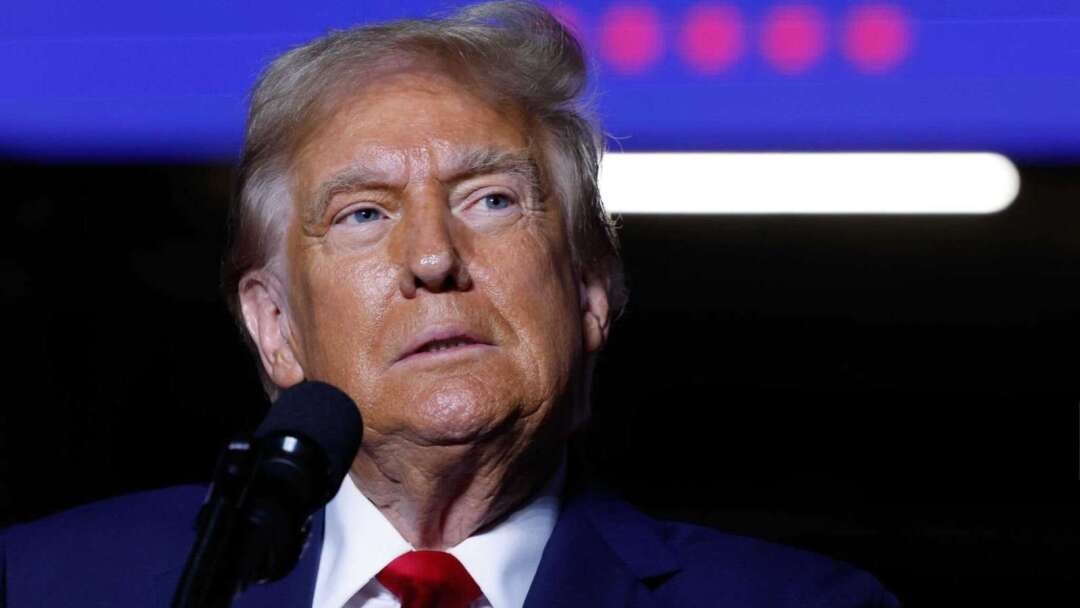
This measure aligns with market expectations. Last week, President Trump signed an executive order authorizing federal officials to restrict the export of waste containing high-value critical minerals to China and other countries.
The order prohibits the export of materials known as 'black mass'—crushed lithium-ion batteries—as well as tungsten-containing scrap. Tungsten is widely used to increase the hardness of steel and is a crucial material for the defense industry.
This action is among the latest steps by the US to reduce its dependence on China. China currently dominates global processing of critical minerals, which are widely used in electric vehicle batteries, weapons systems, and other products.
As competition intensifies between the US and China over critical mineral supplies, Washington has been rebuilding its domestic supply chains in recent years through export controls, tariffs, and domestic subsidies.
According to the order published in the Federal Register, the Bureau of Industry and Security (BIS) under the US Department of Commerce stated that the new rules will take effect on August 27 and remain in place for one year.
Zubeyde Oysul, Critical Minerals Policy Manager at Washington think tank SAFE, said, 'We are pleased to see the government recognize the importance of recovering reusable critical materials from waste.'
Under the order, exemptions may be granted on a case-by-case basis only if companies can demonstrate they would face 'undue hardship' or 'irreparable harm.'
Data from environmental group Basel Action Network shows that the US exports nearly 33,000 metric tons of electronic waste and other scrap each month, much of which contains recyclable critical minerals.
Such exports have long drawn criticism from US recyclers, who argue that retaining these materials domestically would help strengthen the country's critical mineral production capabilities.
However, the US still lacks sufficient recycling capacity to process all generated waste. Moreover, over the past 18 months, several recycling companies—including Li-Cycle (LICYQ-US) and Ascend Elements—have filed for bankruptcy.
Private tungsten recycler Amermin welcomed the ban but noted that the US still needs to further enhance its domestic waste processing capabilities.
Ryan McAdams, CEO of Amermin, said, 'This ban is just a stopgap measure. It buys us time, but we still need to start building the necessary infrastructure here in the United States.'
McAdams revealed that Amermin received a $11.5 million grant from the US Department of Energy last year, but the funds have yet to be disbursed. He said that if the company had received the funding at the time, its commercial recycling plant could have started operations at least six months earlier.
FACT BOX
- Source: PR Times
- Category: News
- Organizations: Li-Cycle(LICYQ-US) / Ascend Elements / Amermin