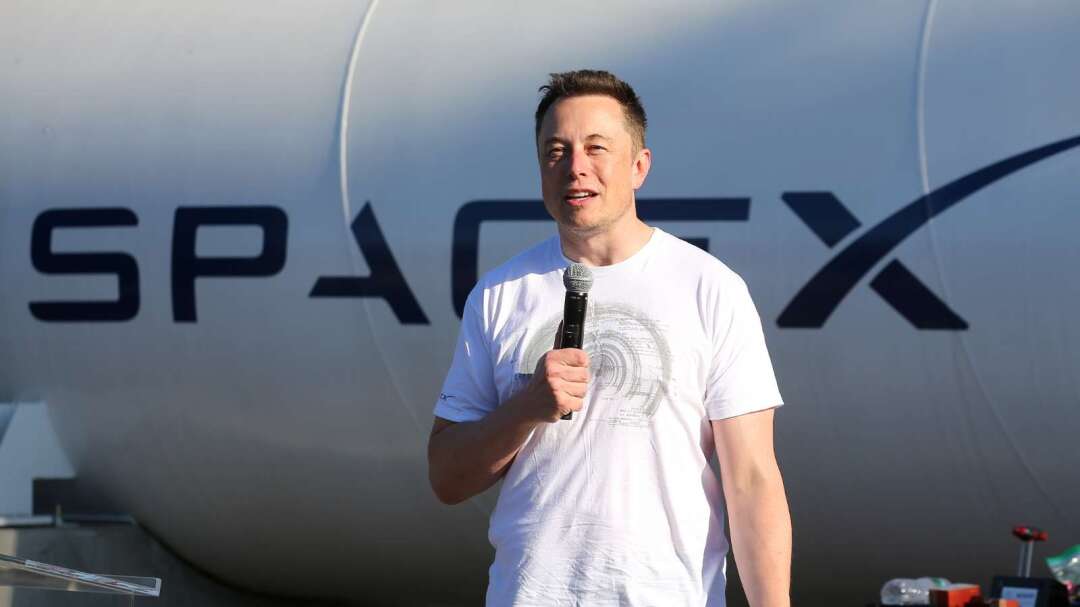
Elon Musk’s business empire spans energy, electric vehicles, rockets, robotics, and AI, with a common core across all ventures: his ability to attract, shape, and monetize global attention. However, a Bloomberg column argues that this 'attention economy,' which has underpinned the high valuations of Tesla (TSLA-US) and SpaceX (SPCX-US), is gradually declining, as investors grow fatigued by Musk’s relentless stream of sci-fi visions.
Musk has recently been highly visible—hosting earnings calls for Tesla and SpaceX and appearing in a lengthy interview with The Economist, where he discussed AI, humanity’s future, and the space economy. He remains active across social media, financial markets, infrastructure, and politics, yet his ability to move markets with grand narratives appears to be weakening.
The column emphasizes that Musk’s influence is built on real and significant achievements. Tesla mainstreamed electric vehicles, while SpaceX drastically reduced rocket launch costs and expanded satellite network coverage. Yet these accomplishments don’t mean he is always right, nor do they guarantee that markets have fairly valued his businesses.
Valuations Based Entirely on Future Promises—Investor Fatigue Sets In
Tesla’s market cap exceeds $1 trillion not because of current profits, but due to expectations of future success. Similarly, SpaceX’s lofty valuation rests on anticipated future wealth, not its still-growing current losses. NVIDIA trades at an estimated P/E ratio of around 22x, while Tesla’s stands at 159x and SpaceX’s at 89x—highlighting how Musk’s charisma has been directly converted into valuation.
However, since mid-June when SpaceX shares peaked, the combined market cap of Tesla and SpaceX has evaporated by approximately $1.4 trillion—equivalent to losing an entire Tesla. This downturn hasn’t reversed despite Musk unveiling 'ultra-sci-fi' visions during earnings calls; in fact, such statements may have deepened investor skepticism.
Musk predicted that SpaceX might launch a rocket at least once per day within a year and moved up its internal $1 trillion annual revenue target from 2031 to 2030—or even 2029. By contrast, the market consensus forecast for 2029 is just $234 billion, which itself is already considered highly optimistic.
He also envisioned using robots to build lunar launch facilities up to 1,000 times, or even a million times, larger than those on Earth. In his Economist interview, Musk further predicted that AI would surpass human capabilities within the next decade and that by 2036, 'money will no longer matter.'
Bloomberg questions: If money truly becomes irrelevant in ten years, why should investors pay today’s prices—equivalent to decades of future profits—for Tesla and SpaceX? Musk’s visions grow ever grander, but so does the gap between promise and reality.
Tesla investors are no strangers to such contradictions. For years, the company has promoted self-driving cars while downplaying rival Waymo, yet actual progress remains limited. Products once touted as market-disrupting—like solar roofs, the Dojo supercomputer, and the affordable Model 2—have all faded from the company’s core narrative.
Promises Now Subject to Verification—Burn Rates Make Stories Harder to Sustain
At Tesla’s latest earnings call, AI software lead Ashok Elluswamy claimed that Tesla’s Robotaxi had driven 380,000 miles without a 'notable incident.' While this sounds impressive, it actually reflects a far smaller operational scale compared to Waymo. Tesla’s stock plunged the next day and has mostly remained low; SpaceX, already below its IPO price, also fell sharply after Musk’s first earnings call.
The problem is that Musk is now on a treadmill requiring ever-larger predictions. Tesla’s valuation story was previously built on rising profits, rapid EV sales growth, advances in autonomous driving, and the imminent arrival of Robotaxi. But with intensifying competition and Musk’s political activities hurting brand and sales, the company has pivoted to position Robotaxi as its next growth pillar.
Unlike vague long-term visions, Robotaxis operating on public roads can be directly observed, and rocket launch frequency cannot be hidden. Markets will be able to verify next year whether SpaceX truly achieves daily launches. Musk’s claim that revenues will grow 43-fold within three to four years comes with clear numbers for validation. All these promises hinge on whether the massive Starship can achieve reliable, fully reusable operations soon.
Financial pressure also makes it harder for Musk to rely solely on future visions to support valuations. After completing the largest IPO in history—raising about $86 billion—SpaceX burned through nearly a fifth of that amount in the same quarter. Tesla, meanwhile, is expected to consume about a third of its net cash in the second half of this year.
Bloomberg likens Musk to someone simultaneously spinning more and more sticks, each topped with larger, faster-spinning plates. Even after steep stock declines, his publicly traded ventures are still valued at $2.7 trillion—but the visions supporting this valuation are rapidly inflating in both time and scope. Investors haven’t fully abandoned Musk, but they’re now demanding a higher 'attention premium': promises must not only be bigger, but delivered faster.
FACT BOX
- Source: PR Times
- Category: News
- Organizations: Waymo / NVIDIA
- Products / services: Tesla Robotaxi / SpaceX Starship