The semiconductor industry is entering an extraordinary growth phase, primarily driven by AI infrastructure and severe supply bottlenecks in advanced logic and memory components. According to the June 2026 update of the McClean Report, the global semiconductor market is expected to grow 98.3% in 2026, reaching approximately $1.7 trillion, and further expand to over $2.2 trillion in 2027.
This is not a typical cyclical recovery but reflects a structural shift in market demand driven by the rapid construction of AI data centers. In these data centers, GPUs, high-bandwidth memory (HBM), advanced DRAM, NAND flash memory, advanced wafer foundry capacity, and advanced packaging technologies have all become supply bottlenecks.
From a technical standpoint, memory is the most critical driver. The report forecasts that the memory market will grow 298% by 2026, reaching $916.4 billion. This growth is primarily price-driven: memory shipments are expected to increase by only 8%, but average selling prices are projected to rise by 268%.
This gap is crucial, indicating that the industry is not simply selling more chips, but selling scarce and strategically valuable chips at much higher prices.
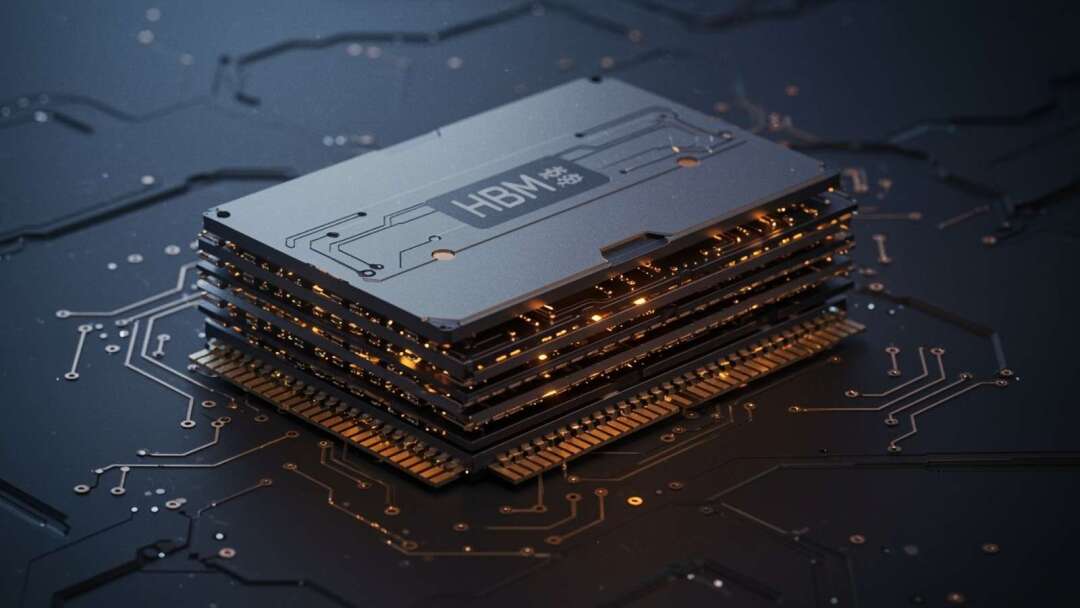
HBM is at the heart of this growth, as AI accelerators require extremely high memory bandwidth to continuously feed large volumes of data to GPUs during training and inference. HBM uses vertically stacked memory connected via advanced packaging, enabling far higher bandwidth than traditional memory architectures.
However, the rise of HBM also brings production trade-offs. The report notes that HBM of the same capacity requires about three times the wafer area of standard DDR5 and incurs manufacturing costs approximately four times higher. As companies like Samsung, SK Hynix, and Micron shift more wafer capacity toward HBM, supply of mainstream DRAM tightens accordingly.
This not only pushes up HBM prices but also drives up prices for non-HBM DRAM used in PCs, servers, smartphones, automotive systems, and industrial electronics. This means AI demand is affecting the entire technology supply chain, not just AI hardware suppliers.
Logic chips are also benefiting from this trend. The MOS logic market is expected to grow 32% by 2026, reaching $577.5 billion, with GPUs serving as the primary growth engine. GPU revenues are projected to grow 31% in 2026, driven by increased shipments and higher average selling prices.
These GPUs are the computational cores of AI data centers, executing parallel processing for Transformer model training, inference, simulation, and increasingly widespread Physical AI applications in robotics, automotive, healthcare, and other fields.
Additionally, microprocessors (MPUs) and microcontrollers (MCUs) are also expected to resume growth, supported by operating system upgrades, recovering industrial demand, and sustained strength in the automotive market.
This is significant because the semiconductor industry is transitioning from a mere component supplier to a strategically vital core industry.
Today, chips determine the pace of AI deployment, cloud computing expansion, autonomous systems, robotics, medical devices, smart infrastructure, and advanced consumer electronics.
If, by 2027, advanced wafer capacity, high-bandwidth memory supply, lithography equipment, and advanced packaging technologies remain constrained, companies with stable supply agreements will gain a significant competitive advantage. Conversely, companies relying on spot market purchases or generic memory may face higher costs, longer lead times, and delayed product launches.
The report also raises a critical question: Is this merely a temporary super-cycle, or a permanent structural transformation?
Historically, semiconductor booms have often ended in oversupply and price collapses due to suppliers over-expanding capacity. The McClean Report acknowledges this risk between 2028 and 2029.
However, the report also suggests that artificial intelligence may represent a more enduring source of demand. If AI inference workloads continue expanding into consumer, enterprise, industrial, and edge computing domains, semiconductor demand may remain high even as new capacity comes online.
In reality, the semiconductor market is no longer centered on PC and smartphone cycles but increasingly focused on the global race to build AI infrastructure.
As a result, memory bandwidth, GPU supply capacity, advanced packaging, and leading-edge process capabilities have become key indicators for measuring future technological development, corporate competitiveness, and economic growth.
FACT BOX
- Source: PR Times
- Category: Survey
- Products / services: HBM / GPU