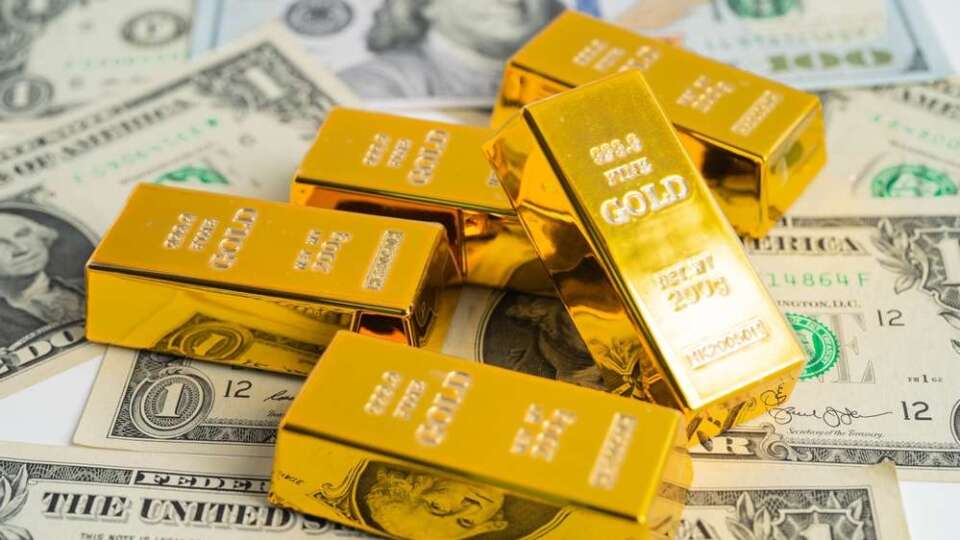
Geopolitical tensions have taken a turn for the better, and combined with multiple macroeconomic factors, international gold prices demonstrated strong rebound momentum today (7th). Following a 4.2% surge the prior day, gold briefly climbed to $4,304 per ounce during early Asian trading, hitting a 7-week high. UBS CIO sees gold's target price reaching $5,200 per ounce by June next year, primarily due to heightened market expectations for the reopening of the Strait of Hormuz. U.S. President Trump has indicated that negotiations with Iran have resumed. Although no formal agreement has been reached yet, the strait is partially open, and talks are progressing well overall.
UBS CIO notes that beyond easing geopolitical tensions, Chinese buying interest, continuous net inflows into exchange-traded funds (ETFs), a dovish interest rate environment, and renewed market focus on reserve diversification are all providing robust support for gold prices. Additionally, earlier joint measures taken by the U.S. and Japanese governments to stabilize the yen effectively prevented a sell-off in U.S. Treasuries, offering tangible support to gold.
UBS CIO emphasizes that gold’s latest movements further validate earlier assessments. Under the combined influence of macroeconomic conditions, capital flows, and portfolio diversification demands, gold remains solidly supported. Considering that U.S. bond yields may trend lower, the dollar is expected to weaken further, and central banks continue purchasing gold, UBS CIO continues to anticipate gold prices could surpass $5,000 in the first half of next year, with a target of $5,200 per ounce by June.
Given this outlook, UBS CIO maintains that allocating a low single-digit percentage (approximately 4% to 6%) of gold within a well-diversified investment portfolio is an appropriate strategy. The firm also advises investors to consider broad exposure to commodities to further enhance portfolio resilience and diversification.
From a global market perspective, institutional players broadly favor gold’s long-term bullish trajectory. Mancini, manager of the Gabelli Gold Fund, states that rising government debt, central banks’ efforts to diversify away from dollar assets, de-dollarization trends, and geopolitical uncertainties will continue to support a long-term bull market for gold, potentially pushing prices back above the $5,000 mark. While higher oil prices may fuel inflation and prompt the Federal Reserve to hike rates again—causing short-term volatility in gold prices—this is unlikely to reverse the long-term trend. Moreover, large gold miners are reporting strong profits and cash flows, and valuations remain relatively low. If gold prices sustain elevated levels, gold mining stocks may outperform physical gold.
According to Taiwan Bank’s International Gold Market Daily Report, the World Gold Council noted that global central banks net purchased 51 tonnes of gold in June, with Uzbekistan, Kazakhstan, and China continuing to add to their reserves. For the first half of the year, Poland led with 82 tonnes purchased, followed by Uzbekistan with 41 tonnes, China with 40 tonnes, and Kazakhstan with 27 tonnes.
Regarding ETF fund flows, the combined holdings of the world’s 17 major gold ETFs increased by 3.626 tonnes on August 5, 2025, bringing the total to 3,010.50 tonnes. On August 6, the world’s largest SPDR Gold ETF added 0.571 tonnes, raising its holdings to 1,014.72 tonnes, indicating sustained inflows of both institutional and retail capital into the gold market.
FACT BOX
- Source: PR Times
- Category: News
- Products / services: ETF