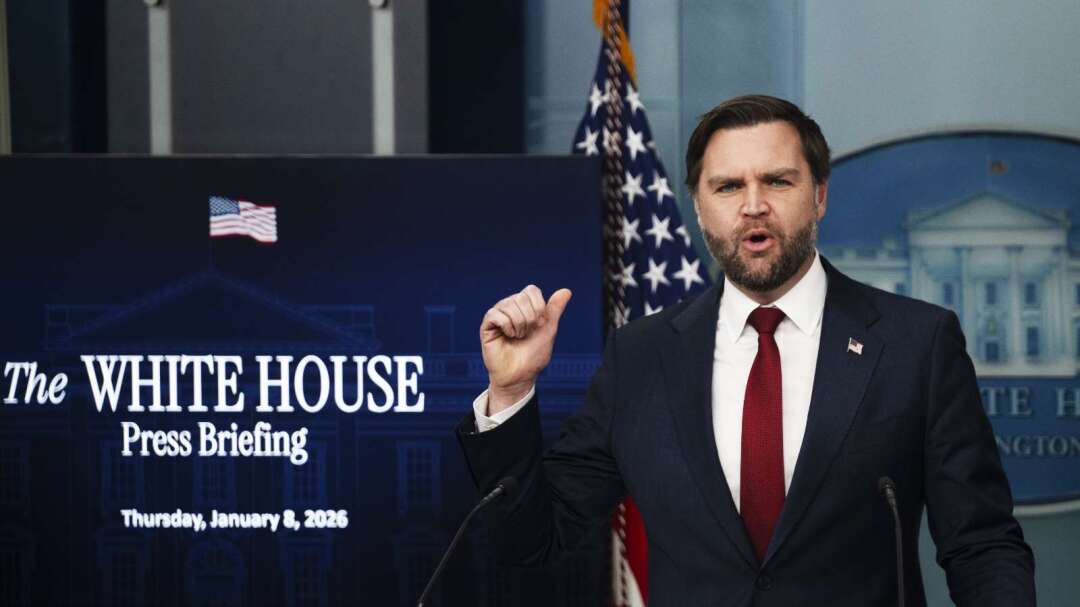
U.S. Vice President Vance said in a Saturday (8th) broadcast interview on U.S.-Iran tensions that Washington is 'still in the bargaining process,' actively employing a combination of diplomatic, economic, and military measures to 'secure the best possible outcome for the American people.'
He acknowledged that recent days have seen 'some progress' in negotiations with Iran but stressed that having 'strong confidence in ultimately achieving our goals' does not equate to easing pressure at this stage.
Regarding energy supplies from the Persian Gulf, Vance stated that the U.S. expects oil and gas exports from the region to return to pre-conflict levels. 'Iran has told us they will do so, but we won’t take their word for it—we will verify,' he asserted.
Vance’s remarks align with the White House’s recent stance on the Strait of Hormuz transit agreement—namely, that temporary arrangements and mine clearance may be negotiable, but Tehran’s commitments must be validated through actual shipping movements and loading data, not verbal assurances.
Analysts note that Vance’s phrasing of 'don’t trust, but verify' signals a shift in U.S. policy toward Iran into a 'conditional observation period.' This approach aims to avoid repeating the 2024–2025 scenario where the blockade of Hormuz triggered panic-driven oil price spikes, constraining the Federal Reserve’s room to cut interest rates, while simultaneously preserving military options to deter Iran from leveraging supply resumption as a bargaining chip to gain sanctions relief, only to later restrict flows again.
FACT BOX
- Source: PR Times
- Category: News