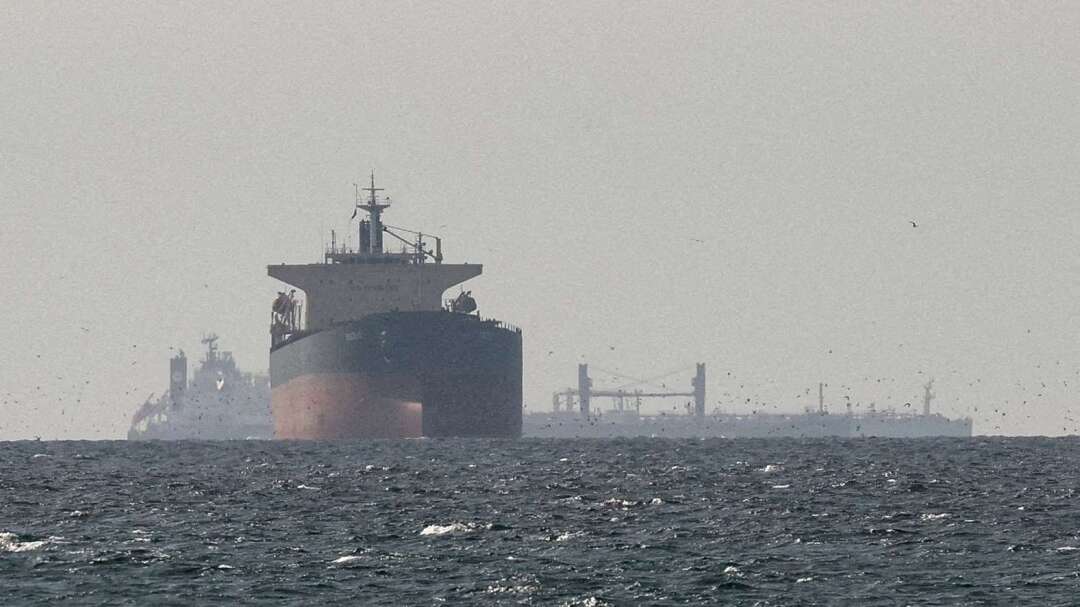
The Abu Dhabi National Oil Company (ADNOC) stated that one of its vessels was attacked by a missile while passing through the Strait of Hormuz early on Saturday (August 8). Meanwhile, the Iranian military emphasized that the Strait of Hormuz will not reopen unless the United States accepts Iran's proposed conditions.
According to a CNBC report, ADNOC stated in a statement: "This incident did not result in any injuries, and the situation is currently under control."
The United Arab Emirates posted on X, strongly condemning "an attack on an oil tanker belonging to ADNOC while passing through the Strait of Hormuz."
According to reports, the attack occurred while US Vice President JD Vance, in an interview with Fox News on Saturday, stated that Iran and its Gulf neighbors, particularly Oman, are discussing how to ensure safe passage for ships through the Strait of Hormuz.
Vance mentioned that the relevant plans include formulating ship passage schemes, removing mines from the waterways, and requiring Iran to commit to not firing on commercial ships.
Vance said, "We don't trust, we will verify." He added that the United States will judge Iran based on its actual actions, not verbal promises.
Sardar Mohbi, a spokesman for Iran's Islamic Revolutionary Guard Corps, released a statement on Telegram stating: "The reopening of the Strait of Hormuz depends on the specific mechanisms and conditions proposed by the Islamic Republic of Iran and has nothing to do with the negotiations between Iran and Oman."
US Treasury Secretary Scott Bessent stated on Tuesday (August 4) that the US and Iran could reach an agreement as early as Wednesday (August 5) to allow ships to resume free passage through the Strait of Hormuz. US President Donald Trump and Secretary of State Marco Rubio had also stated that an agreement was imminent.
However, as of now, the relevant agreement has not been announced. Meanwhile, according to data from the maritime trade intelligence company Kpler, the number of ships passing through the Strait of Hormuz on Friday decreased by 33% compared to the previous day.
According to media reports, Iran and Oman are negotiating an agreement on the passage routes through the Strait of Hormuz. In this context, incoming ships will pass through Iranian waters, while outgoing ships will pass through Omani waters.
However, Iranian state media published a draft of the Strait of Hormuz passage restrictions on Thursday. According to the Iranian state media Fars News Agency, the draft is currently being reviewed by the Iranian parliament.
According to the draft, Iran will ban the passage of US and Israeli ships through the Strait of Hormuz; other countries that have caused damage to Iran will also not be allowed to pass until compensation is paid.
The international benchmark Brent crude oil futures rose more than 1% on Friday, closing at $83.55 per barrel; US West Texas Intermediate (WTI) crude oil futures also rose by about 1%, closing at $78.18 per barrel. However, both have recorded a cumulative decline of more than 7% this week.
On Thursday, Iran's chief negotiator accused Trump of engaging in "performance diplomacy." Previously, the US and Iran had made contradictory statements regarding their diplomatic contacts aimed at ending months of hostile actions.
Iranian Parliament Speaker and Chief Negotiator Mohammad Bagher Ghalibaf posted on X on Thursday, seemingly mocking Trump: "A massive attack is coming... Wait, they want to negotiate." This is the repeatedly replayed performance diplomacy."
This statement was made a few days after Trump announced the cancellation of a planned military strike and stated that a general framework for the agreement had been reached with Tehran. However, Iranian officials denied this claim, stating that no negotiations had taken place.
Meanwhile, the conflict is expanding across the entire region, with energy infrastructure and critical maritime bottlenecks in the Gulf once again facing threats.
FACT BOX
- Source: PR Times
- Category: News
- Organizations: CNBC / Kpler