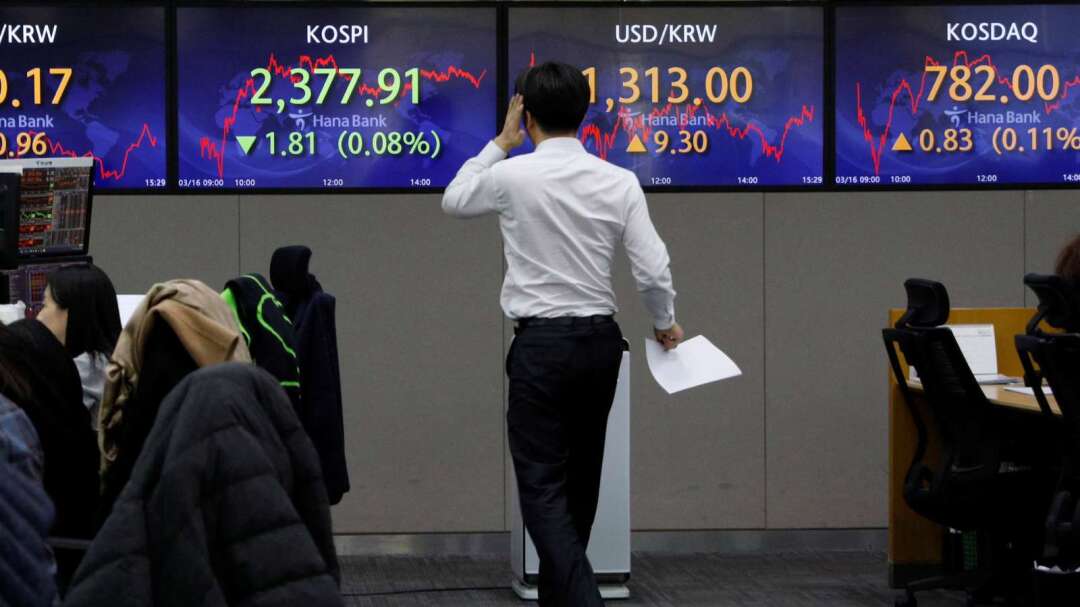
The collapse of South Korea's stock market in July is undermining government efforts to encourage local retail investors—known as "ants"—to return to the domestic market. According to the Korea Securities Depository, the KOSPI index recorded its largest monthly drop since the height of the 2008 global financial crisis. At the same time, South Korean retail investors poured $4.6 billion into U.S. stocks in July—far exceeding the 2025 monthly average of $2.7 billion. For all of 2025, South Korean investment in U.S. equities more than tripled compared to the previous year.
Reuters calculations show that in July, South Korean retail purchases of U.S. stocks exceeded those of Korean stocks for the first time since February, highlighting the rapid erosion of investor confidence in the domestic market.
Analysts warn this shift could revive a long-standing trend of South Korean retail capital flowing overseas, weakening the won and derailing government initiatives aimed at boosting domestic investment.
"When the domestic market performs well, capital outflows slow down," said Kwon Ah-min, foreign exchange analyst at NH Investment & Securities in Seoul. "But with the KOSPI crash, outflows have accelerated again, reinforcing the belief among investors that 'the U.S. market is the right choice.' They've grown tired of the domestic market."
South Korea's small retail investors are nicknamed "ants" due to their tendency to act collectively. They have long favored U.S. markets, while interest in domestic equities often fluctuates with the fortunes of export-driven giants in electronics, shipbuilding, and manufacturing.
However, signs of change emerged earlier this year. Fueled by the artificial intelligence (AI) boom and government tax incentives encouraging investors to sell overseas holdings and reinvest domestically, retail capital briefly surged into the KOSPI.
For years, the South Korean government has promoted improved shareholder returns and corporate governance reforms. But the KOSPI has fallen 33% from its June peak, gradually eroding retail patience.
Samsung Electronics and SK Hynix, the two major chipmakers, have underperformed significantly—accounting for 76% of the 2,257.8 trillion won in total market value lost on the KOSPI. Leveraged ETFs tied to chip stocks have further amplified market volatility.
In contrast, the Nasdaq Composite remained largely flat during the same period. Bank of America (BofA) analysts cautioned: "If the Korean market continues to lag behind U.S. equities, we fear retail capital outflows could re-emerge."
The situation is compounded by the won’s appreciation, which increases the incentive for South Korean retail investors to buy foreign assets. The won strengthened 8% in July—the best monthly performance since November 2022—reaching a nine-month high, primarily driven by SK Hynix raising $26.5 billion and repatriating part of the funds.
A stronger won reduces the incentive to bring overseas investment profits back home and may encourage new foreign asset purchases, especially as investors anticipate favorable U.S. interest rates.
Data from the Korea Financial Investment Association (Kofia) shows that deposits into the government’s tax-advantaged "Re-shoring Investment Accounts" (RIA), launched in March, declined month-on-month for the first time in July.
While some funds still flowed into assets linked to South Korea—including $319 million invested last month into the Direxion Daily MSCI South Korea Bull 3X ETF (KOFU)—larger sums are moving toward U.S. stocks and U.S.-focused funds.
Since August began, amid Wall Street’s record highs and continued volatility in South Korea, South Korean retail investors have net purchased $278 million in overseas equities.
Meanwhile, deposit balances in domestic stock trading accounts continue to fall. A key indicator of domestic market demand, it dropped to 102.8 trillion won by this past Monday—the lowest since mid-February—far below the all-time high of 140 trillion won reached in early June.
FACT BOX
- Source: PR Times
- Category: News
- Organizations: Samsung Electronics / SK Hynix / NH Investment Securities
- Products / services: ETF