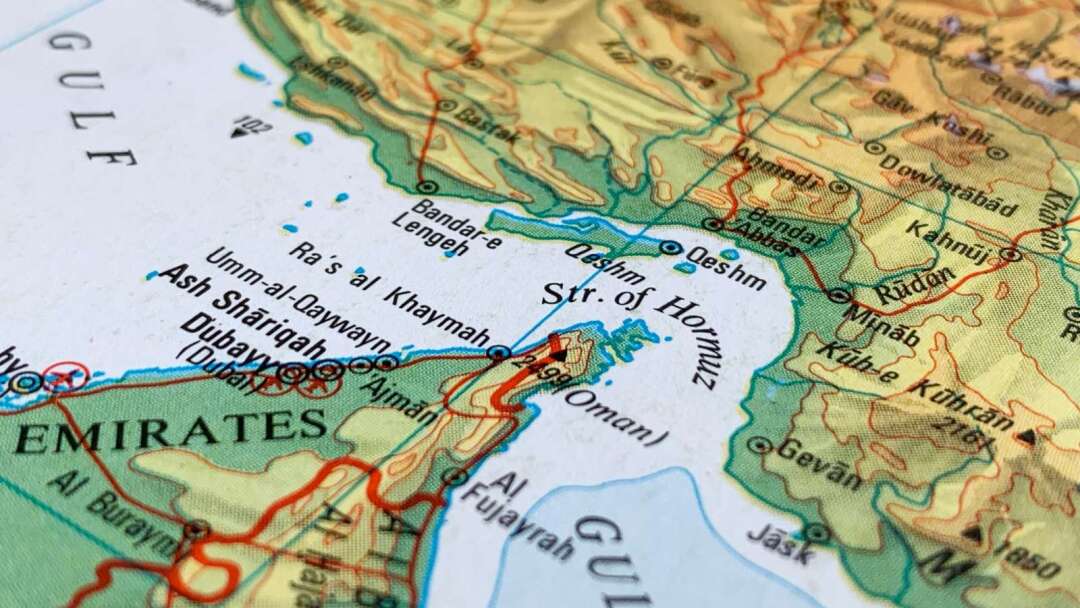
Iran has announced it is nearing an agreement with Oman on a new maritime shipping route through the Strait of Hormuz. The two nations are 'very close' to finalizing a temporary passage for vessels entering and exiting the Persian Gulf.
However, Iranian Foreign Minister Abbas Araghchi warned on Saturday (8th) that even if an agreement is reached, the Strait of Hormuz will not immediately reopen, meaning relief for energy supplies could be limited.
Araghchi added: 'The reopening of the Strait of Hormuz depends on other conditions, including compensation for damages caused by the U.S. violation of the Islamabad Agreement.' He referred to a now-defunct memorandum of understanding signed in June, which collapsed within a month due to disagreements over control of the Strait.
Mohammad Bagher Zolghadr, Iran's Supreme National Security Council chief and a hardliner, stated that in addition to demanding compensation from the U.S., Iran also requires the lifting of maritime blockades, withdrawal of military forces deployed around Iran, removal of sanctions on Iran, and unconditional unfreezing of frozen Iranian assets.
Oman, meanwhile, posted separately on the social platform X, stating that negotiations are making progress in a 'positive and constructive atmosphere,' and called for halting actions in the Strait of Hormuz to avoid undermining diplomatic efforts toward a navigation agreement.
It remains unclear how the U.S. will respond to any final agreement. For months, U.S. President Trump has insisted on restoring freedom of navigation through the Strait of Hormuz and has threatened to attack Iran again if it fails to reopen the waterway.
U.S. Vice President JD Vance said negotiations have made some progress in recent days but stressed that it is still uncertain whether the final outcome will satisfy the United States.
Speaking to Fox News on Saturday, Vance said: 'I'm trying to remind people that we're really at a critical juncture in this game.'
He noted that the key question now is whether Iran can 'provide those things we need, that satisfy us, that make us feel that through this specific engagement and negotiation, we have achieved the results we require.'
Vance also said that mines laid by Iran in the Strait of Hormuz during the early stages of the war must be cleared, and Tehran must commit to not firing on commercial vessels passing through the Strait.
He said: 'What we're really dealing with now is how to establish a navigation mechanism to ensure safe passage for vessels going through the Strait.'
According to the United Arab Emirates' state-run WAM news agency, one of the vessels operated by Abu Dhabi National Oil Company came under missile attack while transiting the Strait of Hormuz early Saturday morning.
The report stated that no injuries occurred, and the situation is under control. Earlier this week, three other vessels belonging to the UAE's largest oil producer were also attacked.
The incident highlights the ongoing risks faced by shipping operators attempting to cross the Strait of Hormuz amid continued conflict.
Rob Haworth, Senior Investment Strategy Director at Bank of America Wealth Management, said: 'An agreement to reopen the Strait of Hormuz remains difficult to achieve, and investors are wavering in this game of brinkmanship. Shipping traffic remains low, and the outlook for a durable and stable agreement remains unclear.'
Washington has repeatedly hinted that the U.S. is part of the negotiations over control of the Strait of Hormuz, but Iran denies this. According to a U.S. official, once Oman and Iran announce an agreement to restore commercial shipping, the U.S. will withdraw restrictions related to its blockade measures.
Oil prices fluctuated this week as traders closely monitored the possibility of an agreement. Markets anticipate that once an agreement is reached, it could pave the way for millions of barrels of oil per day to resume exports from the Persian Gulf. Brent crude ultimately closed above $83 per barrel, marking its third consecutive weekly decline.
Since the war began, shipping through this maritime chokepoint has largely stalled, though some vessels have continued moving cargo through a shuttle transport program with U.S. military assistance. Many vessels disable their Automatic Identification System (AIS) transponders during transit, making their movements harder to track.
Any agreement on the Strait of Hormuz must be approved by Iran's Supreme Leader, Mojtaba Khamenei. Iranian officials say it takes time to communicate with the Supreme Leader, which could delay the announcement of any agreement. There is currently no indication that Mojtaba has approved the current plan.
Meanwhile, the conflict between Iran-backed Houthi militants and the Saudi-backed, internationally recognized Yemeni government forces could further escalate tensions in the Middle East.
Yemen announced on Saturday that its armed forces launched a military operation against Houthi militants, who control most of the country, in the previous night. This is the first known retaliatory action following a series of attacks earlier in the week.
The Houthis and the Saudi-led coalition have maintained a ceasefire since 2022, but hostilities have reignited in recent weeks, including incidents in the Red Sea region. Since the closure of the Strait of Hormuz, most of Saudi Arabia's oil exports have shifted to the Red Sea shipping route.
FACT BOX
- Source: PR Times
- Category: News