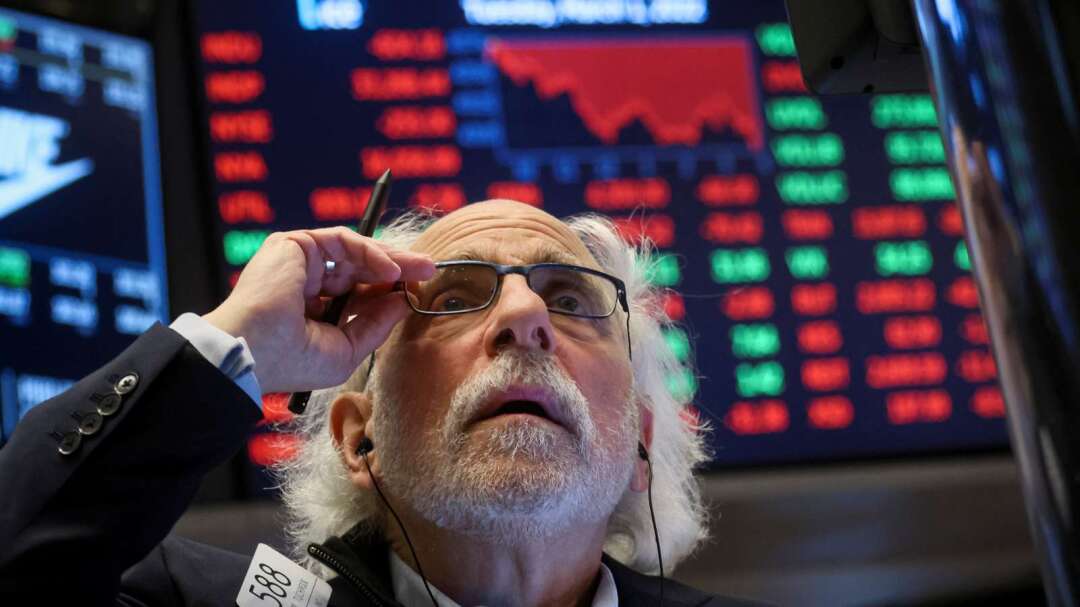
Bank of America's strategy team has warned that the current bull market could face a significant test in the coming months, with the key risk factor being the midterm elections scheduled for November.
According to a report by Business Insider, the strategy team led by Michael Hartnett has indicated in its latest report that the US stock market may face a "sharp" reversal risk following the conclusion of the November midterm elections.
The bank's recent client report suggests the election could turn into a "referendum between populist capitalism and populist socialism," and does not rule out the possibility of the Democratic Party gaining full control of Congress.
The team advises investors to avoid high-risk assets in the short term and shift toward defensive positions. It recommends gold as a hedge against the dual risks of a K-shaped economy and voter dissatisfaction with the economy.
The K-shaped economy refers to the widening wealth gap between high-income groups and middle-to-low-income households. While rising stock and housing markets have allowed high earners to accumulate wealth, many middle- and low-income Americans are under dual pressure from rising inflation and a weakening job market.
Bank of America strategists further analyze that recent economic growth has largely relied on the wealth effect driven by stock market gains. Over the past two years, investors have accumulated $9 trillion in market gains. If the market reverses, shrinking paper wealth could make consumers more cautious, thereby dragging down overall economic growth.
In addition to election-related risks, Bank of America highlights the potential threat of rising Treasury yields. As investor concerns over inflation and the US fiscal outlook deepen, continued yield increases could severely suppress risk assets in a worst-case scenario, potentially bursting the long-feared AI bubble.
"Every boom and bubble is often ended by the bond market," strategists said. "Once a warning signal of 'higher yields, weaker dollar' emerges, forcing a sharp turn in fiscal policy and a shift in asset allocation from stocks to bonds, the current bubble will end."
They describe yields as the current "canary in the coal mine."
In fact, yields have already started to rise due to hotter inflation data, though the market has so far been able to absorb this increase. The current 10-year US Treasury yield is around 4.67%, above the psychologically significant 4.5% level closely watched by investors.
Other Wall Street institutions have also warned that market volatility could intensify as the midterm elections approach.
Analysts at Oppenheimer previously pointed out that in midterm election years during a president's second term, the S&P 500 index often experiences a pullback in the third quarter.
Historical data from Goldman Sachs strategists shows that since 1974, the median return of the S&P 500 index from August 1 to the November election date in all midterm election years has been 0%.
FACT BOX
- Source: PR Times
- Category: Survey
- Organizations: Oppenheimer / Goldman Sachs