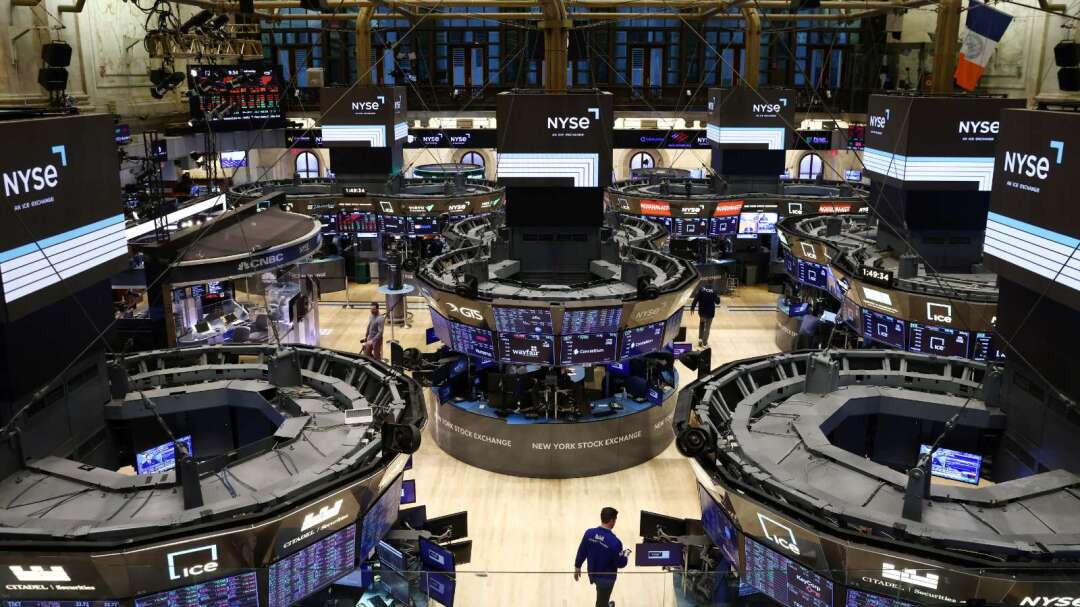
International oil prices jumped about 5% on Monday (10th) as the U.S. and Iran failed to make progress on reopening shipping through the Strait of Hormuz, reigniting market concerns over inflation and Federal Reserve rate hikes. Major U.S. indices traded mixed, with the Dow Jones and S&P 500 closing slightly lower, while the Nasdaq Composite fell 0.32%, dragged down by weak performance in chip stocks like Intel and Nvidia. The Philadelphia Semiconductor Index plummeted nearly 3%.
Market focus has shifted back to Middle East tensions. Iran recently stated it is nearing an agreement with Oman to reopen the Strait of Hormuz, but Tehran continues to refuse direct negotiations with the U.S. until several conditions are met.
Iranian Foreign Minister Abbas Araghchi said on Sunday that talks cannot resume unless the U.S. stops violating the memorandum of understanding signed in June and compensates for these 'violations'.
Meanwhile, President Trump demanded that Iran provide 'compensation' for deaths caused by wars, attacks, and protests, downplaying the progress of negotiations.
Amid rising supply concerns, U.S. West Texas Intermediate (WTI) crude futures surged about 5.1%, closing at $82.13 per barrel. Brent crude futures jumped about 5%, closing at $87.72 per barrel.
Additionally, the U.S. Strategic Petroleum Reserve (SPR) has dropped below 300 million barrels, the lowest level since January 1983, deepening market concerns about the U.S.'s ability to respond to energy supply disruptions.
Despite the major indices closing lower, U.S. equities remain supported by strong corporate earnings. LSEG data shows that as of now, 436 S&P 500 companies have reported earnings, with about 85% exceeding market expectations. The S&P 500 hit a record closing high last Friday, and all three major indices posted their best weekly performance since April.
The unexpected drop of 23,000 jobs in the U.S. non-farm payrolls for July reduced market bets on a Fed rate hike in September. According to the CME Group's FedWatch tool, traders now estimate a 52% chance of a rate hike in September, down from 67% a week earlier.
However, higher oil prices could push up energy and transportation costs, creating headwinds for inflation cooling. Cleveland Fed President Beth Hammack said the Fed may need multiple rate hikes to bring inflation back to target, but she refrained from predicting the terminal rate.
U.S. stock market performance on Monday (10th):
Dow Jones Industrial Average fell 60.95 points, or 0.11%, to 53,975.98. Nasdaq Composite declined 85.26 points, or 0.32%, to 26,605.36. S&P 500 dropped 4.53 points, or 0.06%, to 7,753.11. Philadelphia Semiconductor Index plunged 362.93 points, or 2.94%, to 11,993.86. NYSE FANG+ Index rose 33.89 points, or 0.18%, to 18,756.93.
Key stocks:
Tech giants in the NYSE FANG+ Index mostly rose. Meta (META-US) gained 0.48%; Apple (AAPL-US) fell 1.53%; Alphabet (GOOGL-US) rose 0.91%; Microsoft (MSFT-US) gained 1.21%; Amazon (AMZN-US) rose 1.32%.
Philadelphia Semiconductor stocks broadly weakened. AMD (AMD-US) fell 2.86%; Broadcom (AVGO-US) dropped 1.25%; Nvidia (NVDA-US) declined 2.86%; Applied Materials (AMAT-US) plunged 3.16%; Qualcomm (QCOM-US) fell 3.39%; Micron (MU-US) dropped 1.89%.
Taiwan ADRs mixed. TSMC ADR (TSM-US) fell 0.37%; ASE ADR (ASX-US) rose 0.53%; UMC ADR (UMC-US) gained 0.37%; Chunghwa Telecom ADR (CHT-US) fell 0.42%.
Company news:
Intel (INTC-US) announced a planned issuance of up to $15 billion in common stock. Investors worried about share dilution, sending Intel's stock down over 4% to $97.52, dragging down the broader semiconductor sector.
Citi's latest report, citing accelerated expansion by Chinese memory makers, forecasts that DRAM and NAND price increases will gradually moderate over the next four quarters. The firm slashed Micron's price target from $1,400 to $1,150. Micron shares fell nearly 2% to $861. SK Hynix ADR (SKHY-US) also declined 1.90%.
Nvidia (NVDA-US) closed down 2.86% at $217.55. Reports indicate several Wall Street financial institutions are collaborating with Nvidia on a $500 billion AI financing scheme, raising investor concerns about capital demands and risk exposure in AI infrastructure.
Apple (AAPL-US) slipped about 1.5% to $308.26. Jefferies downgraded Apple from 'Hold' to 'Underperform' and cut its price target, citing challenges in iPhone outlook and product innovation.
Microsoft rose 1.21% to $506.06. Foreign media reported Microsoft plans to launch its next-generation Maia 300 AI chip this fall, partnering with TSMC for production, aiming to secure capacity for over 300,000 chips by 2027. Microsoft plans to significantly increase Maia 300 output next year, with a long-term goal of deploying self-developed chips at multi-GW scale.
Wall Street analysis:
Jose Torres, analyst at Interactive Brokers, said the lack of substantive talks between the U.S. and Iran is concerning Wall Street, as investors last week believed a deal pathway was emerging.
Zachary Hill, Portfolio Management Director at Horizon Investments, noted that markets are fatigued by the recurring U.S.-Iran negotiation headlines. However, each escalation in Middle East tensions elicits a smaller market reaction than before, and with solid earnings fundamentals, stock declines remain limited.
Investors will closely watch Wednesday's release of the U.S. July Consumer Price Index (CPI). Bloomberg surveys show economists expect July CPI to rise 0.1% month-on-month, a sharp rebound from June's -0.4%. Higher-than-expected inflation could revive Fed rate hike expectations.
This week will also see earnings reports from Applied Materials (AMAT-US) and Cisco (CSCO-US).
(All figures are updated as of press time; actual prices may vary.)
FACT BOX
- Source: PR Times
- Category: News
- Organizations: Intel / NVIDIA / Apple