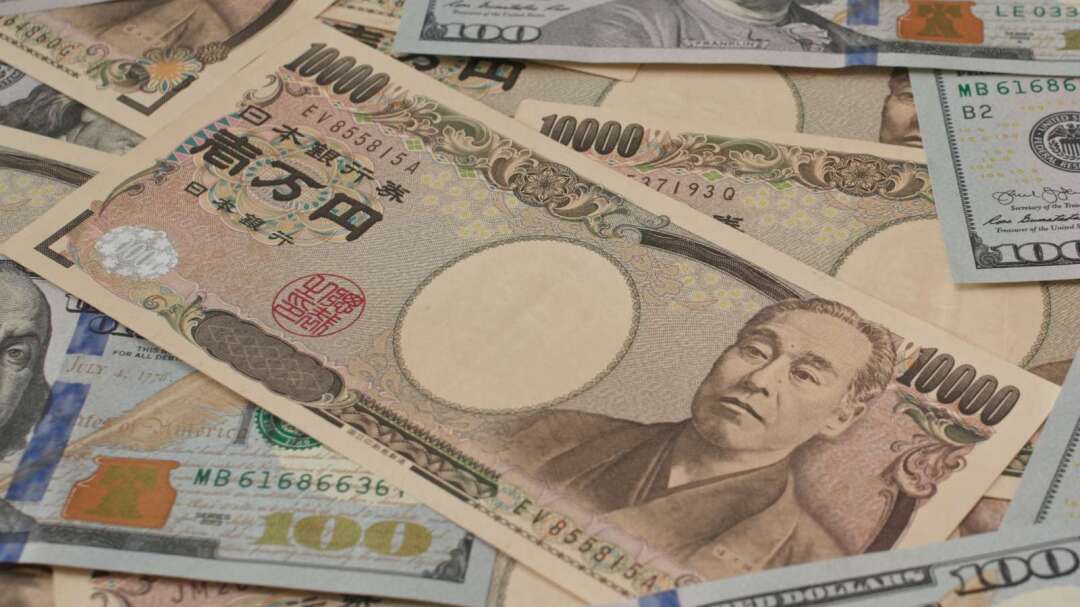
Latest foreign exchange market data shows that the yen's gains from the rare U.S.-Japan coordinated intervention are quickly evaporating.
The yen-dollar exchange rate fell to around 164 at the end of last month, hitting a 40-year low. Subsequently, the U.S. and Japan jointly intervened by buying yen, temporarily pushing the rate back to the 155 level. However, within just a few weeks, nearly half of that rebound has been erased.
The dollar weakened on Monday (10th), pushing the yen up to 159.36, but a slight reversal the next day brought it back down to around 159.08, indicating that intervention-driven buying cannot withstand the fundamental pressures of interest rate differentials and capital flows.
According to the latest position data from the U.S. Commodity Futures Trading Commission (CFTC), leveraged funds still hold a net short position in yen, having only slightly reduced it after the intervention.
Van Luu, Global Solutions Strategy Head at Russell Investments, said, "The effect of intervention is fading. To sustain a stronger yen, monetary policy coordination is essential."
Currently, market consensus is becoming clearer: unless the Bank of Japan (BOJ) follows through with tightening, Japan's Ministry of Finance spending money to halt depreciation only buys time, not a trend reversal.
Attention has therefore shifted to the BOJ. Although the central bank decided at its last meeting to keep interest rates unchanged at 1%, both the meeting summary and minutes sent hawkish signals, with some members stating that core inflation is approaching 2% and "the pace of rate hikes could exceed market expectations."
Traders currently estimate a 50% chance of a 25-basis-point rate hike in September. Goldman Sachs and Citigroup even forecast that the BOJ will accelerate rate hikes from September, potentially raising the benchmark rate to 2% by the end of next year.
However, the interest rate differential remains an overwhelming "gravitational force." Even if the BOJ raises rates to 2%, it will still be far below the U.S. federal funds rate range, meaning the carry trade logic persists and large-scale position unwinding remains unlikely.
JPMorgan's Chief Japan Economist Ayako Fujita believes that a short-term narrowing of interest rate differentials is insufficient to reverse structural trends. "Only when Japan's long-term yields gradually converge with overseas levels will carry trade volumes meaningfully shrink," she said, emphasizing this is a medium- to long-term process.
What's making traders cautious is that the current situation bears some resemblance to the period before the August 2024 "Black Monday": the yen is in a weak range, short positions are large, the BOJ is at a rate hike juncture, and if U.S. data softens, it could trigger a rapid repricing of "Fed dovish turn + BOJ hawkish turn," leading to a sharp yen rally and concentrated carry trade unwinding, potentially repeating the severe volatility in global risk assets. However, multiple institutions also warn that current leverage and position concentration are milder than in 2024, and if the Fed cuts rates in an orderly manner, an extreme market stampede may not be replicated.
If the yen breaks below 160 again—a red line that has repeatedly triggered Japan's unilateral intervention—imported inflation pressure will intensify. Washington will also worry about Japan using its massive U.S. Treasury holdings to expand intervention, potentially backfiring on the U.S. Treasury market. In other words, the expensive floor of ¥8.45 trillion in single-day intervention has temporarily held the line but has not created a new trend. The upcoming U.S. CPI, retail sales data, and the BOJ's September meeting in the coming weeks will be the true arbiters of whether the yen's move is merely "halfway rebound" or a full return to square one.
FACT BOX
- Source: PR Times
- Category: News