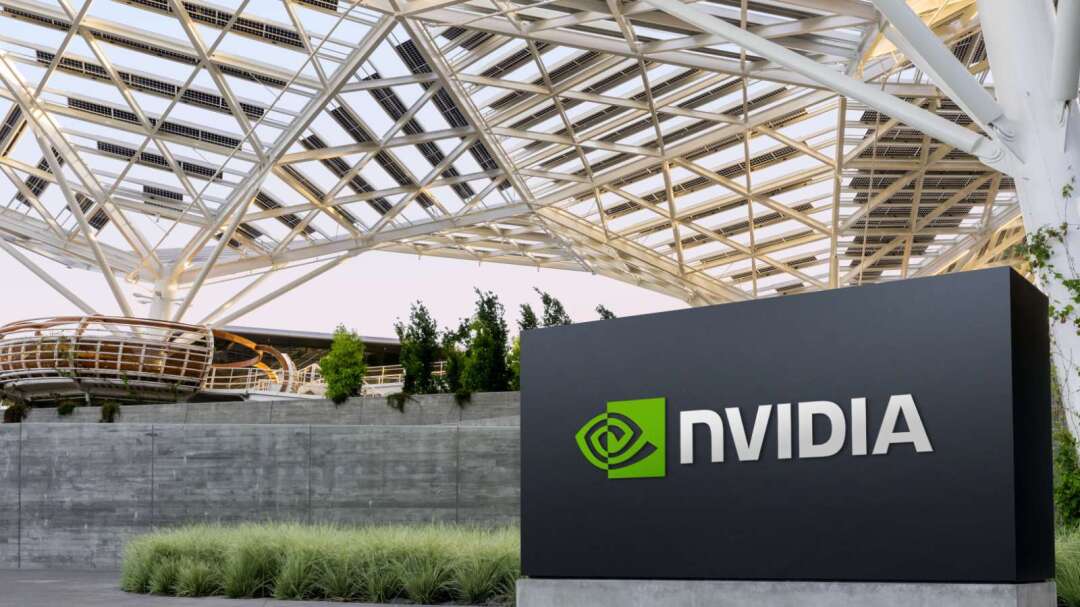
NVIDIA (NVDA-US) is on the cusp of entering the Rubin era of its next-generation AI chip architecture. Wall Street investment bank Bank of America (BAC-US) believes the new platform could initiate a fresh multi-quarter upgrade cycle, elevating NVIDIA to 'Top Pick' status with a $350 price target. This implies a potential 56.3% upside from its then-current share price of $223.96.
In a recent report, BofA analyst Vivek Arya noted that market focus has shifted from whether AI demand can sustain, to risks such as memory costs, gross margin pressure, competition from custom chips, and NVIDIA's capital investments in AI customers. However, investors may be underestimating the next phase of growth driven by the Rubin architecture, Vera CPU, and continued increases in cloud capital expenditures.
NVIDIA is set to report its second fiscal quarter results on August 26. BofA forecasts second-quarter revenue between $94 billion and $95 billion, $3–4 billion above the company’s prior guidance of around $91 billion. The bank also expects third-quarter revenue guidance of $107–108 billion, surpassing the market’s consensus of approximately $104 billion.
If BofA’s projections hold, NVIDIA could not only exceed its own guidance for the second quarter but also deliver third-quarter outlook above market expectations, further reinforcing confidence in the ongoing AI data center investment cycle.
NVIDIA’s previously reported earnings already demonstrated strong AI data center demand. The company’s fiscal 2026 fourth-quarter revenue reached $68.127 billion, up 73% year-over-year, with data center revenue hitting $62.3 billion, up 22% sequentially and 75% year-over-year. Full-year data center revenue totaled $193.7 billion, up 68% annually. At the time, NVIDIA projected fiscal 2027 first-quarter revenue at $78 billion (±2%) and GAAP gross margins around 74.9%.
On the product front, Rubin is expected to become NVIDIA’s next major growth pillar. The company has officially unveiled the Vera Rubin platform, comprising six new chips designed to reduce inference token costs by up to 10x compared to the Blackwell platform. Cloud providers including Amazon Web Services (AWS), Google Cloud, Microsoft Azure, and Oracle are expected to be the first to deploy Vera Rubin systems.
BofA believes the launch of Rubin shipments, volume ramp-up of the new Vera CPU, and continued cloud provider capex increases could jointly trigger a 'multi-quarter upgrade cycle.' Thus, Rubin’s significance extends beyond a single quarter’s earnings report, potentially supporting sustained upward revisions to NVIDIA’s revenue and profit forecasts over the coming quarters.
This has prompted the market to reassess the per-unit value of NVIDIA’s next-generation systems. BofA estimates the Vera Rubin NVL rack price could reach $7–8.5 million, significantly higher than the estimated $4 million for Blackwell Ultra.
Higher system pricing implies that even as memory, advanced packaging, and other component costs rise, NVIDIA may absorb some cost pressures through higher system selling prices. In other words, Rubin is not just about boosting compute performance but could also increase revenue per AI system.
Memory cost is one of the market’s top concerns. Rapidly increasing demand for high-bandwidth memory (HBM) in AI servers has led to persistent supply tightness, raising fears that rising memory prices could erode NVIDIA’s gross margins.
However, BofA estimates that higher memory costs would negatively impact Rubin compute rack gross margins by about 60 basis points—less severe than some investors feared. The bank still expects NVIDIA’s long-term gross margins to remain around 73%–74%, slightly below the current ~75% level.
BofA argues that NVIDIA’s strong pricing power, priority access to memory supply, and ability to adjust product pricing in response to component cost changes mean rising memory prices won’t necessarily translate fully into margin pressure.
Recent market concerns over memory supply have indeed intensified. Analysts note that HBM4 and HBM4E supply constraints could lead to price increases exceeding earlier expectations. NVIDIA’s Rubin series’ demand for high-bandwidth memory will further become a key variable across the entire AI supply chain. Major memory suppliers like Micron Technology (MU-US), SK Hynix, and Samsung Electronics are thus key beneficiaries of the AI capex cycle.
But for NVIDIA, the real question isn’t how much memory prices rise, but whether GPU and full AI system costs can be passed on to customers.
A key observation from BofA is that rental prices for NVIDIA GPUs such as the A100, H100, and B200 remained near historical highs as of August. This indicates strong ongoing demand from cloud providers and AI enterprises for high-end compute power, suggesting customers are still willing to pay premium prices for scarce NVIDIA compute.
If GPU rental prices and AI compute service revenues remain high, NVIDIA could have sufficient pricing power to pass on rising memory and component costs to customers. This would be a critical factor in maintaining high gross margins during the Rubin era.
Additionally, NVIDIA faces competition from custom AI chips. Custom chips, including ASICs developed in-house by large cloud providers, are becoming a significant competitive force in the AI accelerator market. There are concerns that if hyperscalers increase their use of in-house chips, reliance on general-purpose GPUs could decline.
However, NVIDIA is countering this by building a deeper ecosystem integrating GPUs, CPUs, networking hardware, NVLink, CUDA software, and full AI data center platforms—reducing the risk of any single chip being replaced.
NVIDIA’s competitive advantage is no longer solely based on GPU performance. As AI inference demand surges, customers need not just individual GPUs but complete computing systems that integrate thousands or even tens of thousands of processors, memory, networking, and software.
The recently announced Rubin platform exemplifies this direction. NVIDIA states Rubin will further reduce AI inference costs and improve compute efficiency for emerging workloads like agent-based AI. CEO Jensen Huang previously noted that AI agents are driving a new inflection point in compute demand, and enterprise investment in AI infrastructure is accelerating rapidly.
On valuation, BofA sees NVIDIA’s current stock price as another bullish signal. The bank estimates NVIDIA’s forward P/E ratio at around 16x, one of the relatively cheaper valuations over the past decade.
More importantly, BofA expects NVIDIA’s EPS to rise from $4.55 in calendar 2026 to $9.09 in 2027—nearly doubling in one year.
This combination of 'rapid earnings growth with compressed valuation multiples' is precisely why BofA remains bullish on NVIDIA. In other words, the current valuation does not fully reflect the earnings growth the bank anticipates.
Therefore, BofA believes Rubin should not be viewed as just a new product launch but as a catalyst that could prompt the market to re-evaluate NVIDIA’s earnings power and fair valuation.
Nonetheless, NVIDIA still faces several risks, including whether AI capex can sustain its current pace, whether hyperscalers increase ASIC adoption, whether memory and other component costs continue to rise, and whether improvements in AI model efficiency reduce per-unit compute demand.
Moreover, AI data center capex has reached extremely high levels, and the market is beginning to question whether large tech companies investing hundreds of billions in AI infrastructure will generate sufficient returns. If AI service revenue growth fails to keep pace with infrastructure investment, cloud providers may slow capex, ultimately affecting demand for NVIDIA’s GPUs.
Thus, the August 26 earnings report is not just a quarterly performance check—it could be a critical window to assess whether the Rubin cycle has officially begun. If NVIDIA reports revenue and outlook above market expectations while confirming Rubin shipments and supply chain readiness, market confidence could strengthen further.
FACT BOX
- Source: PR Times
- Category: New Product
- Organizations: Google Cloud
- Products / services: Vera CPU