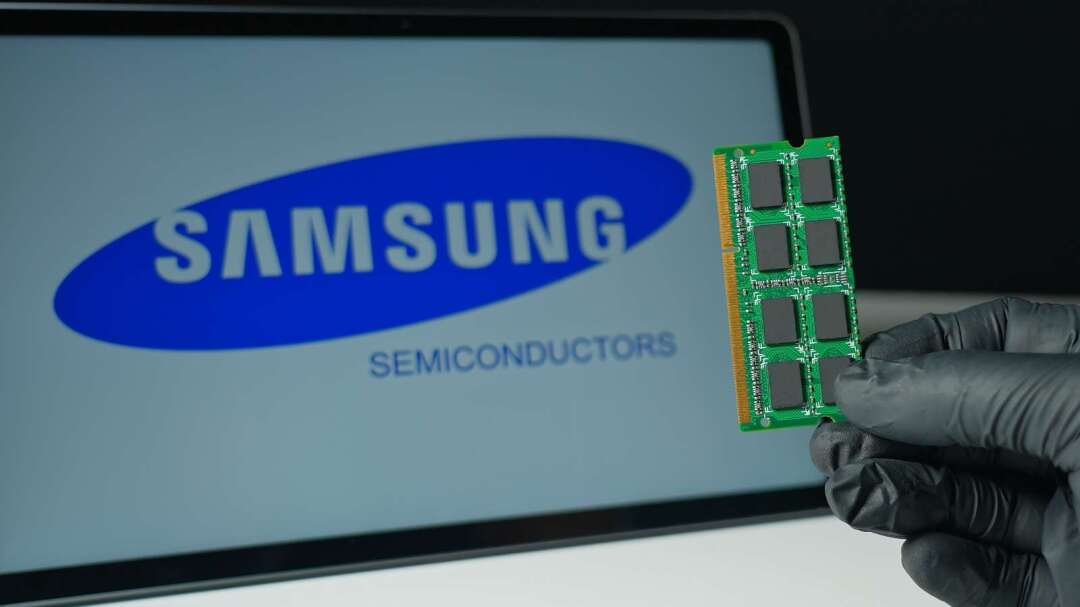
South Korean media reported last Sunday (9th) that Samsung Electronics' HBM4 mass production yield had broken the 80% 'golden yield threshold' at the beginning of this month, achieving the target approximately four months ahead of the original year-end schedule.
In February this year, Samsung's HBM4 yield was still below 60% at the start of mass production. The company has now raised it by over 20 percentage points in just six months. With defect rates now under control and a foundation for scalable profitability established, this marks Samsung's official launch of a comeback in the HBM race.
According to Counterpoint data, in the first quarter of this year, SK Hynix held 58% of the HBM market share, leading the market, while Samsung and Micron each held 21%. However, Samsung's overall DRAM market share reached 39%, clearly lagging behind in the HBM segment.
Following the yield leap, Samsung has set phased targets: HBM4 revenue to increase more than threefold quarter-on-quarter in Q3 this year, HBM revenue in the second half to account for over 60% of total HBM revenue, and HBM market share to close in on approximately 38% by year-end, matching its DRAM share.
UBS predicts that, based on bit shipment share, SK Hynix will maintain its lead with 48% in 2026, but in 2027, Samsung will narrowly surpass Hynix with 41% to 39%, taking the top spot for the first time. Samsung has already advanced HBM4E development (target yield 70%, to be launched in the first half of next year) and customized HBM deployment. Sample shipments of 12-layer stacked HBM4E were completed in May.
With yields stabilizing, HBM competition is shifting from 'R&D race' to 'capacity battle'. The expansion speed of Samsung and SK Hynix in the fourth quarter of this year will determine who claims the throne in 2027.
FACT BOX
- Source: PR Times
- Category: News
- Organizations: Counterpoint
- Products / services: HBM4 / HBM4E