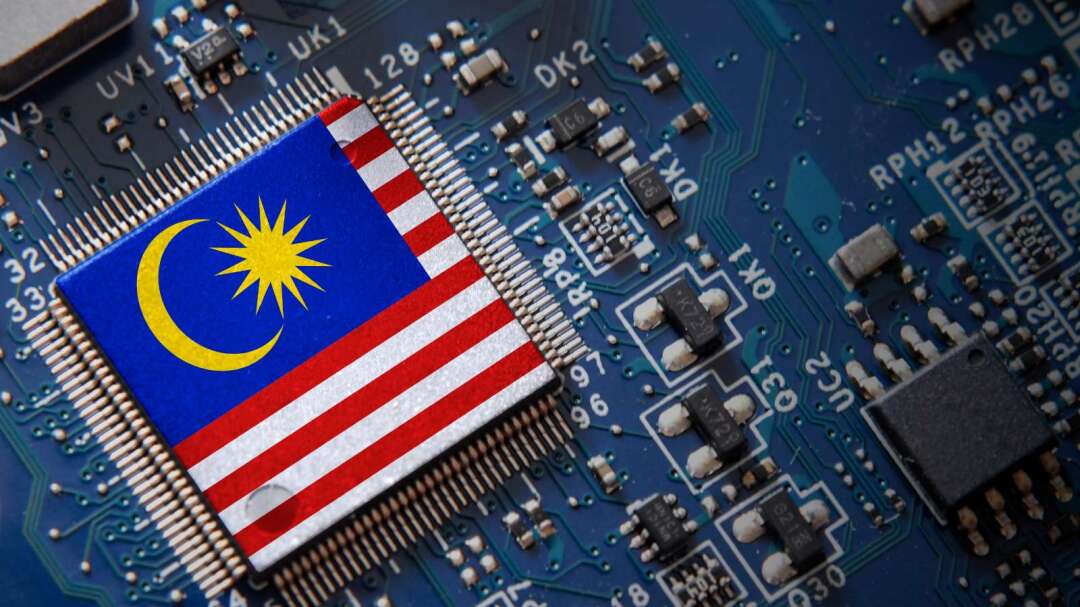
The Hong Kong Trade Development Council (HKTDC) hosted a major promotional event titled 'Hong Kong – Unlimited Business Opportunities' (Think Business, Think Hong Kong) in Kuala Lumpur, Malaysia, on Tuesday (the 11th). The event attracted approximately 1,600 political and business leaders from both regions and facilitated the signing of multiple cooperation agreements, with deep semiconductor industry alliances and the promotion of 'new-type industrialization' drawing significant external attention.
Connecting a Semiconductor Packaging Hub with an International Gateway
Vivian Au, a reporter from the South China Morning Post, observed that Hong Kong and Malaysia are building 'deeper ties' in critical sectors such as semiconductor manufacturing, identifying semiconductors as a top priority for collaboration.
According to data from the Malaysia Semiconductor Industry Association (MSIA), around 13% of global chip packaging and testing (back-end operations) takes place in Malaysia, making it an indispensable physical node in the global semiconductor supply chain.
Malaysian Transport Minister Loke Siew Fook stated at the event that Malaysia’s exports are increasingly shifting toward high-value goods such as electronics and semiconductors, and that Hong Kong’s strengths in logistics, trade finance, and legal services serve as a 'natural complement' for Malaysian companies seeking to rapidly bring their products to global markets.
Malaysia currently hosts semiconductor giants including Intel (INTC-US), Infineon, GlobalFoundries, and ASE (Advanced Semiconductor Engineering), with the country’s semiconductor exports projected to reach USD 197 billion by 2026.
The 'Super-Connector' Role and New-Type Industrialization
During the event, the Hong Kong Productivity Council (HKPC) signed a Memorandum of Understanding (MoU) with the Federation of Malaysian Manufacturers (FMM) to jointly promote 'new-type industrialization,' focusing on smart production lines and innovative technology R&D.
Frederick Ma, Chairman of the HKTDC, emphasized that as businesses face geopolitical uncertainty and evolving supply chains, 'trusted connections and robust networks are more valuable than ever.'
Algernon Yau, Secretary for Commerce and Economic Development of Hong Kong, further explained that Hong Kong possesses the expertise to help Malaysian companies enter the mainland Chinese market, while also supporting mainland Chinese enterprises in expanding overseas via Hong Kong. The delegation included business leaders from mainland China, highlighting Hong Kong’s active role as a 'super-connector'—assisting mainland semiconductor supply chains in securing stable overseas production bases to hedge against supply chain disruptions caused by geopolitical risks.
Strategic Positioning Amid Geopolitical Tensions
Data indicates that amid escalating U.S. technology restrictions on China, packaging and testing processes currently remain on the edge of regulatory avoidance. Mainland Chinese chip design firms (such as HiSilicon and Horizon Robotics) require reliable advanced packaging and testing capacity. Malaysia offers mature production capabilities largely based on U.S.-made equipment and has not been directly targeted by regulations.
Through Hong Kong’s financial and legal hub, companies can conduct technology licensing and joint talent development with far fewer practical barriers than direct transfer of original equipment. Malaysia’s national goal is to break free from its current reliance on packaging alone and compete in higher-value fields such as chip design and artificial intelligence (AI) applications.
Although Malaysia has previously faced diplomatic pressure from the U.S. to 'prevent becoming a backdoor for sanctioned technologies,' Malaysian authorities have repeatedly stated their willingness to strengthen compliance, provided it is done under the premise of 'upholding multilateral rules and free trade.'
FACT BOX
- Source: PR Times
- Category: Partnership
- Organizations: Intel (INTC-US) / Infineon / GlobalFoundries