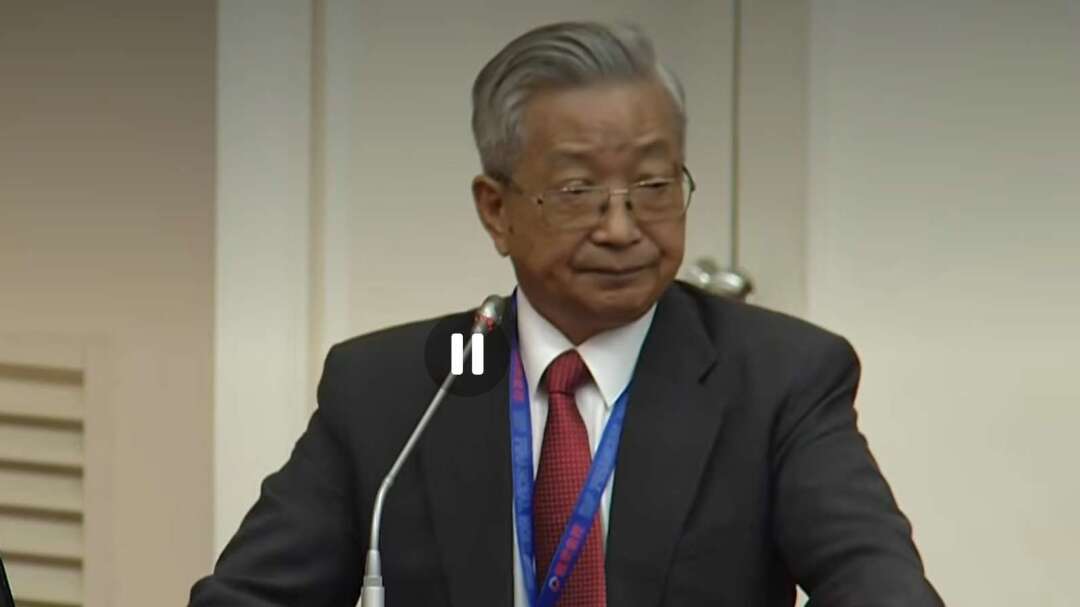
KMT legislator Lai Shih-pao hosted a public hearing today (12th) on the 'Merger Plan for Publicly-Influenced Financial Institutions,' inviting union representatives from the financial sector, executives from publicly-influenced banks and financial holding companies, and heads of government agencies to discuss the merger plan, employee rights, and asset allocation. The spotlight was on Kuo Piao Financial Holding (2889-TW), where Chairman Chang Chao-shun directly addressed questions on potential mergers, executive compensation disputes, and internal restructuring.
Chang began by joking that Kuo Piao Financial is seen by some as a 'rotten apple,' but emphasized that his mission is to 'make Kuo Piao Financial beautiful so everyone wants to merge with us!' However, he stressed that transformation takes time and urged other publicly-influenced institutions to wait and see. Due to its small scale, Kuo Piao Financial will either acquire others or be acquired. The priority now is to eliminate internal inefficiencies and strengthen the company’s fundamentals.
Chang explained that Kuo Piao Financial was previously a very small institution with a capital base of only NT$33.6 billion and net assets of approximately NT$45.3 billion. Over NT$6 billion of that has been invested in a digital-only bank, leaving limited available funds. Nevertheless, in the first half of this year, the company achieved a standout return on equity (ROE) among non-public financial holding companies. While earnings per share (EPS) and profit growth still have room for improvement, Chang affirmed that all employees have demonstrated high efficiency and deserve recognition.
Following the shareholder meeting at the end of May, government-influenced shareholders secured a majority by winning eight board seats through proxy voting and strategic alliances, leading to Kuo Piao Financial being scrutinized under public-sector standards. Chang pointed out that Kuo Piao Financial was originally a privately-run entity with a compensation structure different from public-sector banks. He opposed the immediate application of public-sector low-pay standards to evaluate or demand changes from Kuo Piao employees after a merger or government takeover, calling it extremely unfair.
He argued that compensation must be tied to 'contribution' and 'performance,' not simply reduced across the board. He noted that Kuo Piao employees’ pay still lags behind that of public-sector bank staff, and a sudden full adoption of public-sector standards would be unjust. He emphasized that he was appointed precisely to eliminate long-term internal conflicts and improve the compensation system.
On the much-discussed merger topic, Chang vividly outlined three conditions for a 'marriage': protection of employee rights, benefits for shareholders, and a high acquisition price from the other party. He added that in the past, when a merger was rumored, the target company (First Financial Holding) saw its stock price drop for three consecutive days—an outcome that harmed shareholders. His goal now is to reach a point where, when a merger is mentioned, the other party’s stock price rises for seven consecutive days, making both public and private financial holding companies take notice.
When questioned by legislators about whether high executive pay should be reduced to the public-sector chairman level of NT$7–8 million annually, Chang, who has previously served as chairman of several publicly-influenced financial institutions and banks, responded candidly. He noted that he was typically appointed to lead institutions in crisis, and if rationalization requires salary reductions, he is personally willing to cooperate fully. He emphasized that current executive compensation is assessed by the compensation committee based on performance and contribution, and will be comprehensively reviewed and rationalized to bring the company to its optimal condition.
FACT BOX
- Source: PR Times
- Category: News