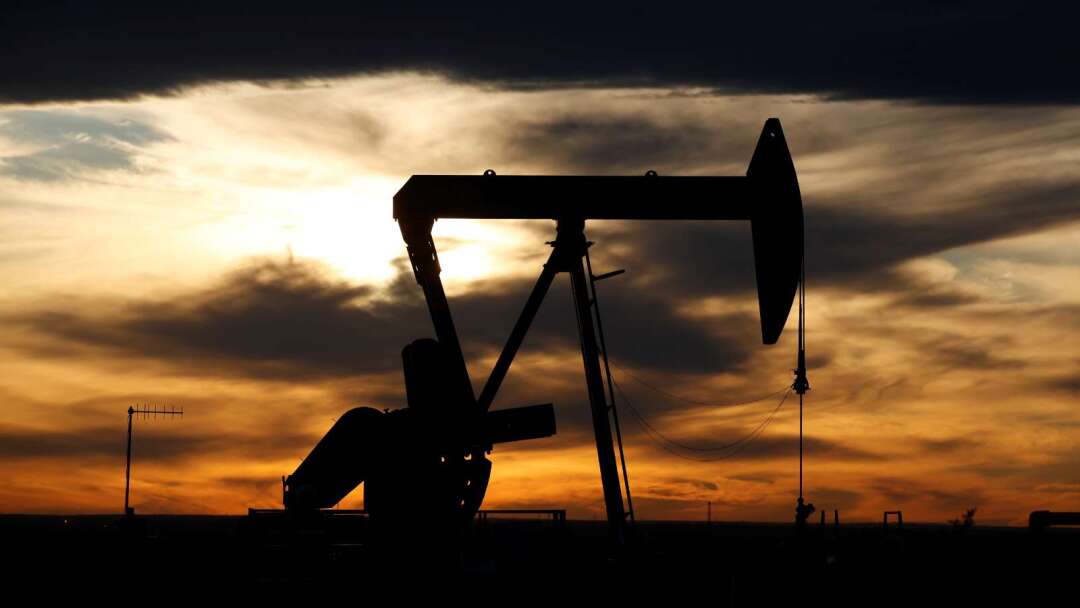
Brent crude futures edged higher on Wednesday (12th), as market concerns over ongoing shipping attacks in the Middle East and the stalled ceasefire talks between the U.S. and Iran provided support, while gains were limited by下调 in global energy demand forecasts and an unexpected increase in U.S. crude oil inventories.
Brent crude futures closed up 7 cents at $88.98 per barrel; U.S. West Texas Intermediate (WTI) crude futures also rose 7 cents to settle at $83.27 per barrel.
Oil prices were supported primarily by Middle East supply risks. A senior Iranian source told Reuters that Iran and the U.S. are not currently discussing an extension of the ceasefire agreement, as from Tehran's perspective, the agreement lacks a clear start date and therefore there is nothing to "extend."
Simon-Peter Massabni, Head of Business Development at XS.com, said oil prices remain supported as market skepticism grows over whether the U.S. and Iran can quickly reach an agreement to ease disruptions to Middle East oil shipments or prevent further escalation of conflict.
Shipping security risks further highlight the pressure on Middle East energy supplies. On Tuesday, the U.S. and Iran-backed Houthi rebels in Yemen separately reported shipping attacks near the Strait of Hormuz and the Bab el-Mandeb Strait. Both waterways are critical transport routes for oil and gas exports from the Middle East, and the Suez Canal is also a key global shipping lane for energy and commodities.
Shipping data shows that the number of vessels passing through the Strait of Hormuz dropped to a weekly low of just eight on Tuesday. In contrast, around 125 to 140 vessels passed through this vital energy corridor daily before the conflict, indicating severe disruption to shipping.
However, oil price gains were restrained by下调 in global oil demand forecasts. The Organization of the Petroleum Exporting Countries (OPEC) lowered its 2026 global oil demand growth forecast to 580,000 barrels per day in its latest monthly oil market report.
The International Energy Agency (IEA) further下调 its 2026 oil demand forecast, now estimating that global oil demand will contract by 1.6 million barrels per day this year. At the same time, the IEA expects global oil supply to decrease by 4.3 million barrels per day and projects a supply deficit of approximately 1.27 million barrels per day in the global crude market by 2026.
Simon Wong, Portfolio Manager at Gabelli Investments, said Asian refiners are struggling to secure sufficient crude supply after the closure of the Strait of Hormuz, forcing them to reduce refinery utilization rates. In this context, a downward revision in demand forecasts is not surprising. The key question now is the extent of the demand decline and how much of it is temporary demand management versus permanent demand destruction.
Wong said the critical issue post-conflict will be how much of the lost demand can recover, and he believes not all demand lost due to supply disruptions will return.
Rising U.S. crude inventories also limited price gains. The U.S. Energy Information Administration (EIA) reported on Wednesday that U.S. crude inventories rose unexpectedly last week, marking the largest weekly increase since January 2023.
Analysts noted that the sharp rise in U.S. crude inventories was driven by unusually weak crude exports and a surge in imports. Declining exports mean more crude remains in the U.S., and combined with higher imports, this pushed up commercial crude inventories.
Overall, the oil market is currently caught in a tug-of-war between supply risks and weak demand. On one hand, stalled U.S.-Iran talks, shipping attacks in the Strait of Hormuz and Bab el-Mandeb, and potential further disruptions to Middle East energy supplies are supporting prices. On the other hand, OPEC and IEA downgrading demand outlooks, Asian refiners cutting utilization, and an unexpected rise in U.S. crude inventories are limiting further upside. The market will continue to monitor progress in U.S.-Iran talks, the recovery of shipping through the Strait of Hormuz, and changes in global refining demand to determine whether supply shocks will evolve into sustained energy shortages or remain short-term market disruptions.
FACT BOX
- Source: PR Times
- Category: News
- Organizations: XS.com / Gabelli Investments / OPEC