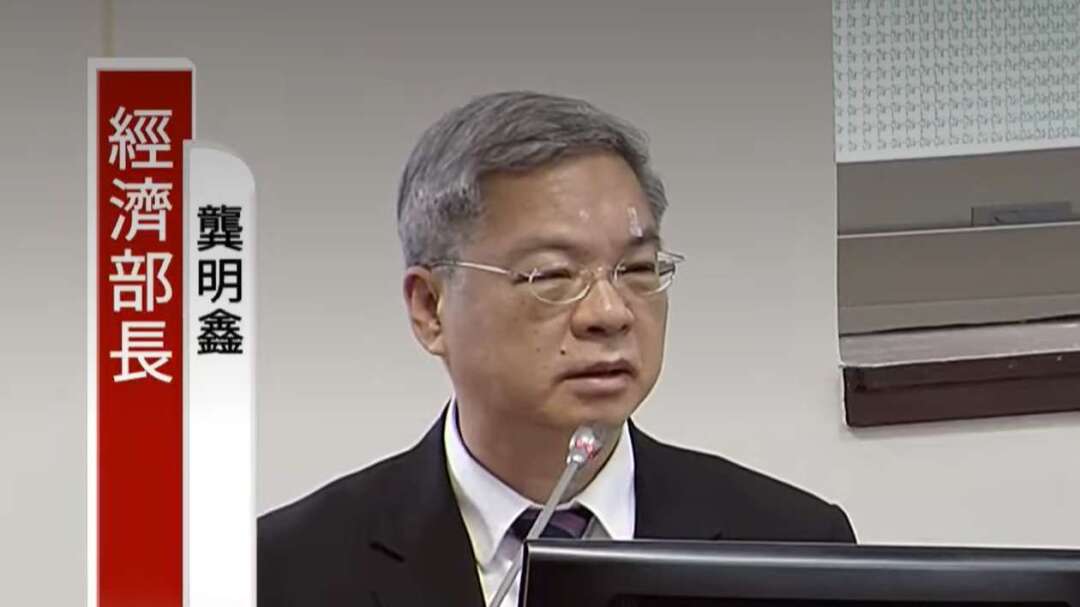
Economic Minister Kung Ming-hsin held a press briefing today (12th) before his regular departmental meeting, addressing recent cross-ministerial investigations into the illegal import of Chinese heavy machinery and his attendance at the Industrial Development Association’s board and supervisory meetings. Kung stressed that Taiwan's current legal framework does not permit the import of heavy machinery from China, whether as complete vehicles or through the importation of parts for local assembly—both are illegal. He added that the government remains open to resuming bilateral negotiations if China expresses willingness.
Regarding the joint inter-ministerial investigation into the illegal import of Chinese heavy machinery, Kung explained that under existing regulations, Taiwan has not opened its market to Chinese heavy machinery. In response to some netizens arguing that parts were imported through legal channels and should not be confiscated if used privately, Kung clarified that such imports are not permitted under current laws. Whether importing complete units or assembling from imported components, both violate regulations, and the competent authorities must enforce the law accordingly.
Kung further explained that trade between countries must be conducted through bilateral negotiations to clarify permitted products and reciprocal conditions. If other countries gain market access through negotiations, allowing Chinese products to enter Taiwan’s market without such talks would create an unequal and unfair situation. However, he noted that the current official negotiation mechanism between the two sides is suspended. If China wishes to allow its heavy machinery products into Taiwan’s market and is willing to restart negotiations, the government welcomes such a move.
On attending the Industrial Development Association’s board and supervisory meetings today, Kung said the purpose was to brief industry leaders on policy progress and future strategies since taking office. The report focused on four key areas: first, strengthening industrial infrastructure such as water and electricity, and accelerating AI computing power and talent training; second, assisting traditional industries and SMEs in upgrading and transformation; third, making forward-looking strategic deployments in high-tech industries; and fourth, advancing international market expansion and continuing to gather industry feedback.
Regarding industry requests raised by the association’s representatives, Kung mentioned that concerns were diverse. For example, the construction sector raised issues about disposal sites for excavated soil, requesting government assistance in providing temporary storage or designated areas. Some members also expressed interest in easing credit controls, and Kung indicated he would help relay these concerns if time permits. On energy issues, the meeting did not revisit old debates such as extending the operation of Nuclear Plants No. 2 and No. 3. Instead, industry representatives offered concrete suggestions on promoting and demonstrating new stationary fuel cell technologies.
FACT BOX
- Source: PR Times
- Category: 政策