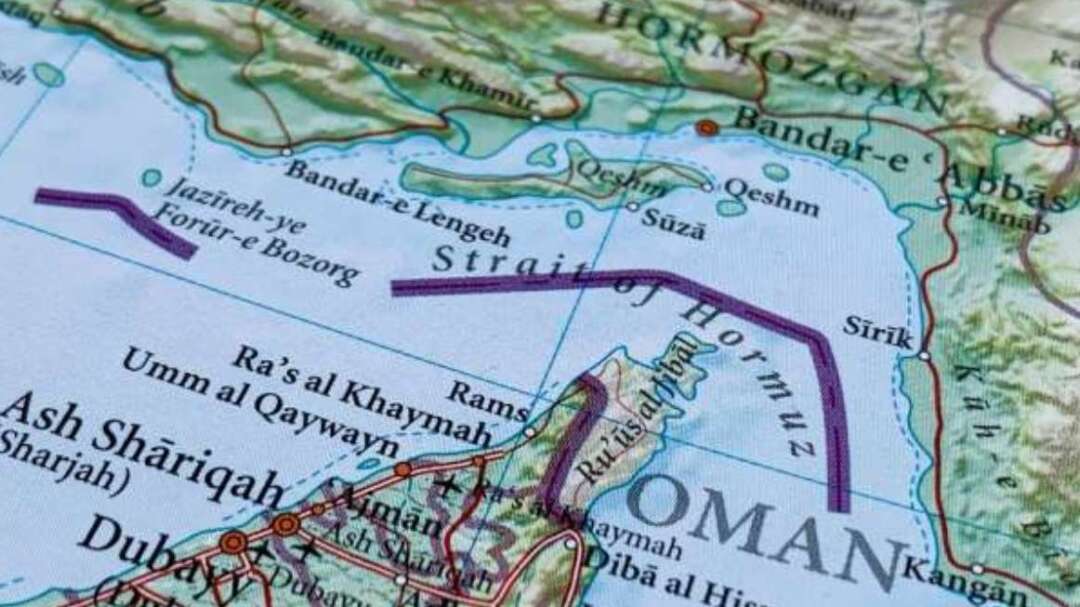
Former U.S. President Donald Trump stated on Wednesday (the 12th) that the United States has fully secured control of the Strait of Hormuz, yet real-world maritime data paints a completely different picture.
According to the Wall Street Journal (WSJ), vessel tracking data shows only 14 ships traversed this critical waterway on Tuesday—down from over 130 daily before the outbreak of war. Of these 14 vessels, 11 sailed through routes administered by Iran.
Traffic remained depressed throughout July, averaging just 26 transits per day compared to 33 in June, primarily due to Iran resuming attacks on commercial vessels, disrupting prior agreements to keep the strait open.
This gap between Trump’s claim and reality highlights how Tehran has effectively maintained control over maritime transport through minimal drone and missile strikes. In essence, Iran does not need to defeat the U.S. Navy; it only needs to instill fear among shipping companies, captains, and insurers that defying orders could endanger their vessels.
Rachel Ziemba, adjunct senior fellow at Washington-based think tank Center for a New American Security (CNAS), said: "Iran is leveraging the 'fear factor' of real physical risk to maintain a degree of control. For many of the world’s oil tankers, the risk-reward ratio is simply not worth it."
On Wednesday, Trump countered via social media, arguing that Iran's armed forces have been severely weakened by war and its domestic economy trapped in a vicious cycle, rendering it incapable of imposing its will on the strait.
He claimed: "The United States has complete control over the Strait of Hormuz. I believe we will continue to maintain it! And Iran can do nothing about it."
Although pressure on energy markets eased slightly after the U.S. Navy escorted several oil tankers through the strait, this remains a marginal effort. Amin Nasser, CEO of Saudi Aramco, noted last week that over 2.6 billion barrels of oil have been lost globally since the U.S. and Israel launched military operations in February.
Iran’s actions have deterred many vessels from using the U.S.-protected route along Oman’s coast. According to vessel-tracking firm Kpler, in August, about half of the ships attempting passage chose Iranian-administered routes, while the other half turned off their location systems—making their paths untraceable. Out of 166 recorded crossings, only two confirmed voyages used the U.S.-supported southern Omani corridor.
Dimitris Maniatis, founder and CEO of maritime risk firm Marisks, said: "The southern Omani corridor cannot currently be considered a reliably protected transit route."
The International Energy Agency (IEA) stated on Wednesday that the fragile recovery of Persian Gulf oil supplies has derailed, as the Strait of Hormuz is effectively closed once again.
Last week, Trump said the U.S. blockade of Iranian ports means the Strait of Hormuz is now "half-open," though he acknowledged Tehran could still damage vessels using missiles, drones, and sea mines.
Ongoing disruptions to oil and gas flows pose global risks of rising energy and transportation costs fueling inflation and slowing economic growth. For Trump, high gasoline prices and inflation could also hurt Republican performance in upcoming midterm elections.
Iran’s attacks on the Strait of Hormuz have been sporadic, but this uncertainty alone provides powerful deterrence: Iran doesn’t need to sink ships to control traffic. The mere possibility of attack can increase insurance costs for a single voyage by millions of dollars.
According to insurance broker Marsh, war risk insurance premiums for transiting the Strait of Hormuz had eased during June’s ceasefire but have now risen to 10% of a vessel’s value—potentially costing $3 million to $10 million for a single large oil tanker. Before the conflict, such premiums were around 0.25% of vessel value.
FACT BOX
- Source: PR Times
- Category: News
- Organizations: Saudi Aramco / Kpler / Marsh