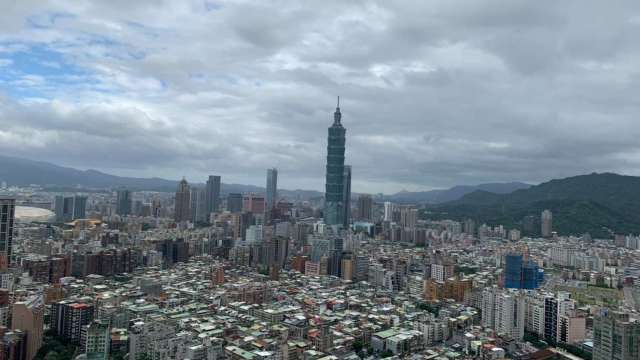
The U.S. Trump administration on Thursday (13th) designated over 40 trade partners, including Taiwan, as 'high-risk areas for illegal transshipment' to block the 'Trojan horse' practice of Chinese goods entering the U.S. market via third countries. This move targets Chinese products that undergo minimal processing, relabeling, or repackaging in other nations to falsify their origin and circumvent U.S. tariffs.
The White House Office of Trade and Manufacturing Policy (OTMP) released a nearly 10,000-word report on the same day, using the metaphor of a 'Trojan horse' to describe how Chinese goods infiltrate the U.S. market through third countries. The report labels such practices as a 'large-scale transshipment fraud.'
According to the report, transshipment to evade tariffs has significantly increased since the Trump administration imposed additional tariffs on Chinese goods in 2018 under Section 301 of the Trade Act. Some Chinese products are being exported to the U.S. as new 'origin' goods after only minor processing, repackaging, or label changes in other countries.
OTMP指出 that these practices have evolved from isolated tariff evasion into industrial-scale customs fraud, even forming an international business model. The report warns that countries beyond China may now use similar tactics to avoid high tariffs.
Based on a mid-range estimate from the White House Council of Economic Advisers, illegal transshipment may have cost the U.S. approximately $60 billion in lost tariff revenue last year. The U.S. has already established trade agreements with several Southeast Asian nations and plans to impose higher tariffs if transshipment activities are detected.
Peter Navarro, the White House's chief trade advisor, emphasized that the focus of this action is not directly on China, but on identifying and penalizing countries and companies that facilitate the rerouting of Chinese goods.
Taiwan, Japan, South Korea, and Western nations listed as Tier 1 transshipment risks
The report categorizes economies based on the scale of transshipment and their supply chain ties to China.
Taiwan, Canada, Mexico, the European Union (EU), India, Japan, and South Korea are classified as 'Tier 1' transshipment regions. Most of these are key U.S. allies or trade partners.
Brazil, Indonesia, Malaysia, Thailand, Turkey, and Vietnam are listed as major 'Tier 2' transshipment countries. The White House believes these nations not only handle significant volumes of transshipped goods but are also deeply integrated with China's supply chains, regional logistics, and transshipment routes.
Navarro warned that even if these countries' actions do not explicitly violate trade agreement terms, the U.S. may still take action if they breach the spirit of such agreements.
AI 'Detective Border' to trace the true origin of goods
Modern supply chains span multiple countries, making it difficult to determine a product's true origin based solely on customs documentation. To address this, the Trump administration plans to deploy an AI-powered 'Detective Border' system to analyze global trade and shipping data.
This system will compare declared origins, shipping routes, component sources, and typical supply chain patterns to detect anomalies in large datasets. It will help customs officials identify suspicious transactions that would be difficult to uncover manually.
U.S. shifts from broad tariff hikes to enhanced enforcement
This report comes as the Trump administration seeks to reinstate broad tariffs that were struck down by the Supreme Court earlier this year. In addition to reimposing tariffs, the U.S. aims to close loopholes for Chinese goods rerouted through trade hubs like Vietnam by strengthening trade agreements.
However, Navarro stressed that this report is entirely separate from the ongoing Section 301 investigations launched over forced labor concerns. Previous such investigations led to tariffs of up to 12.5% on dozens of countries.
Treyz, Director of Economic Policy Research at Veda Partners, believes the Trump administration is increasingly frustrated with tariff evasion. However, amid ongoing inflation concerns and public resistance to new tariffs, 'enhanced enforcement' presents a politically easier path than reimposing a 40% blanket tariff.
Markets are watching whether the U.S. will launch another Section 301 investigation citing overcapacity. However, with Trump expected to meet Chinese President Xi Jinping in September, analysts believe the U.S. is unlikely to take actions that could severely disrupt U.S.-China relations before then.
William Reinsch, Senior Advisor at the Center for Strategic and International Studies (CSIS), predicts the U.S. may next redefine what constitutes 'substantial transformation'—the threshold at which a product qualifies for a third country's origin status. This adjustment is most likely to be introduced first during the renegotiation of the U.S.-Mexico-Canada Agreement (USMCA).
FACT BOX
- Source: PR Times
- Category: News
- Organizations: Veda Partners / CSIS