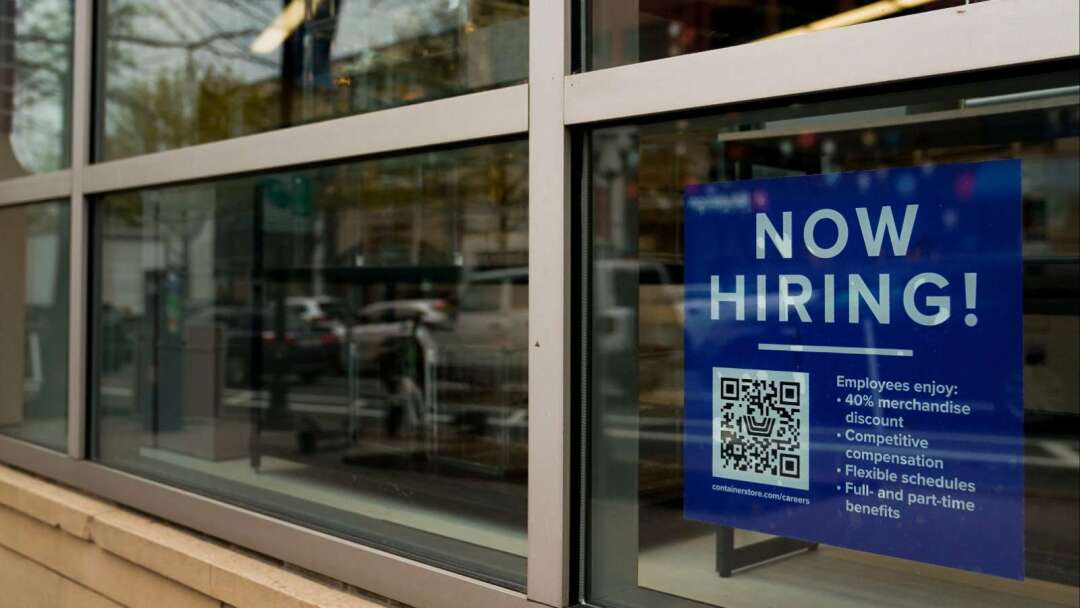
Initial jobless claims in the U.S. rose moderately last week and exceeded market expectations, yet remained near the low end of this year’s range, suggesting that despite the surprise contraction in July’s nonfarm payrolls, the labor market has not visibly worsened. The overall picture continues to show a 'no-hire, no-fire' pattern, where companies are not actively hiring nor engaging in large-scale layoffs.
The U.S. Department of Labor (DOL) reported on Thursday (the 13th) that seasonally adjusted initial jobless claims for the week ending August 8 increased by 9,000 to 209,000, surpassing the median economist forecast of 202,000 from surveys by Bloomberg and Reuters. Michigan and New York saw the largest increases, while Puerto Rico and Ohio recorded the biggest declines.
The four-week moving average of initial jobless claims, which helps filter out short-term fluctuations, remained unchanged at 199,000. Current claim levels remain close to the lower end of this year’s 189,000–230,000 range. The weekly rebound may have been influenced by seasonal factors such as summer hiring patterns, the end of the academic year, and holidays. Economists say more data will be needed to determine whether the labor market is undergoing a shift.
Continuing claims for the week ended August 1 decreased by 22,000 to 1.777 million, falling back below 1.8 million. This metric is often seen as an indicator of how difficult it is for unemployed individuals to find new work. Its recent decline suggests that while corporate hiring has cooled, the duration of unemployment has not noticeably lengthened.
U.S. nonfarm payrolls unexpectedly declined by 23,000 in July, with May and June figures also revised downward, briefly sparking market concerns about a rapid weakening of the labor market. However, a survey released this week by the National Federation of Independent Business (NFIB) showed that the small business employment index, which had declined for four consecutive months, rebounded in July—providing another piece of evidence supporting labor market stability.
If the labor market remains stable and the recent trend of moderating inflation continues, the Federal Reserve (Fed) may opt to hold rates steady at its September meeting. The Fed kept its benchmark interest rate unchanged last month at 3.5% to 3.75%, but three members of the policymaking committee advocated for a 25-basis-point rate hike, highlighting officials’ ongoing balancing act between inflation pressures and slowing employment growth.
FACT BOX
- Source: PR Times
- Category: News