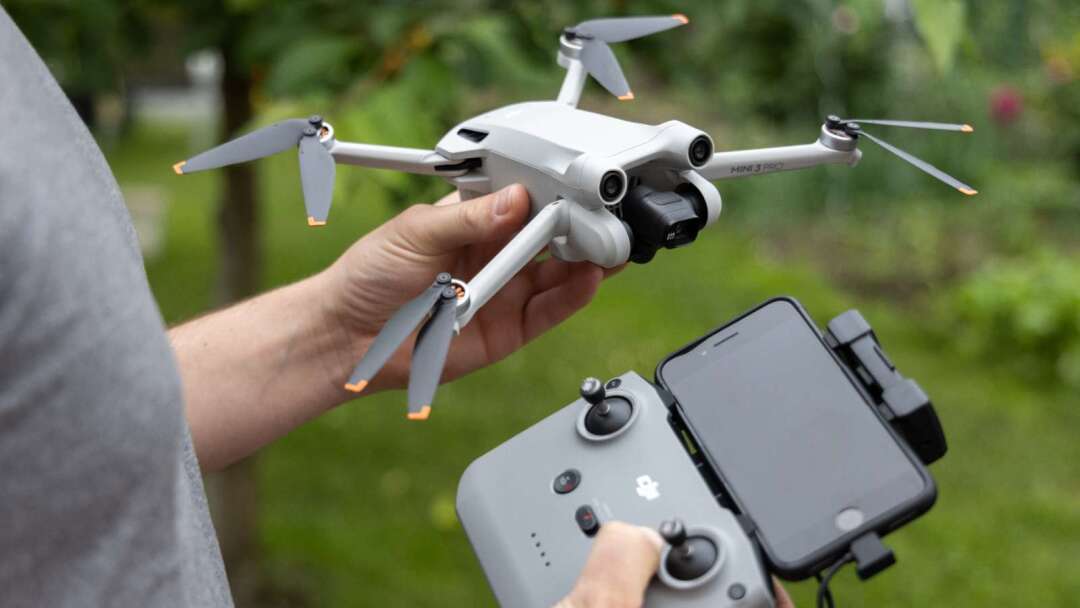
The Trump administration announced on Thursday (13th) that it will impose tariffs of up to 100% on imported drones and their components. This move is seen as a major escalation in the U.S. effort to reduce dependence on foreign suppliers and protect domestic industries, and could accelerate the 'decoupling' process between the U.S. and China in the drone supply chain.
According to the White House announcement, this tariff policy adopts a tiered structure: heavy drones weighing over 25 kilograms or possessing specific performance capabilities will face the highest rate of 100%; smaller drones will be subject to a 25% tariff.
To strengthen relations with allies, the U.S. has offered preferential rates to certain trading partners: drones from the European Union, Japan, Switzerland, and Taiwan will have their tariffs reduced to 15%, provided both hardware and technology originate locally or in the U.S., while the United Kingdom will be subject to a 10% rate. Most tariffs will take effect within 21 days of signing, with a 180-day grace period for some non-sensitive components.
This decision was made under Section 232 of the Trade Expansion Act of 1962, following an investigation launched on national security grounds. Commerce Secretary Howard Lutnick stated that the U.S. dependence on foreign drone systems has reached a 'substantial' level, posing a risk to national security.
In his statement, Trump emphasized that drone systems are critically important to America’s national and economic security. The war in Ukraine, in particular, has fully demonstrated the military effectiveness of drones in modern hybrid warfare, prompting Washington to act with greater urgency in supporting domestic industry and avoiding reliance on others in critical technologies.
Although the official statement did not explicitly name China, the target is clearly aimed at the world's largest drone manufacturer. Prior to this, the Federal Communications Commission (FCC) had already taken action to block the import of new models from DJI and other Chinese firms, with DJI previously capturing 70% of the U.S. commercial market. Experts analyze that the U.S. and China are sliding toward a 'hard decoupling' in certain types of drones, which has become part of the ongoing low-level confrontation beneath basic trade agreements.
Encouraged by this policy, U.S. domestic drone manufacturers such as AeroVironment and Aevex Corp saw their stock prices surge after the announcement. However, China has also launched countermeasures, implementing 'case-by-case review' export controls on military drones and key technologies.
FACT BOX
- Source: PR Times
- Category: News
- Organizations: AeroVironment / Aevex Corp