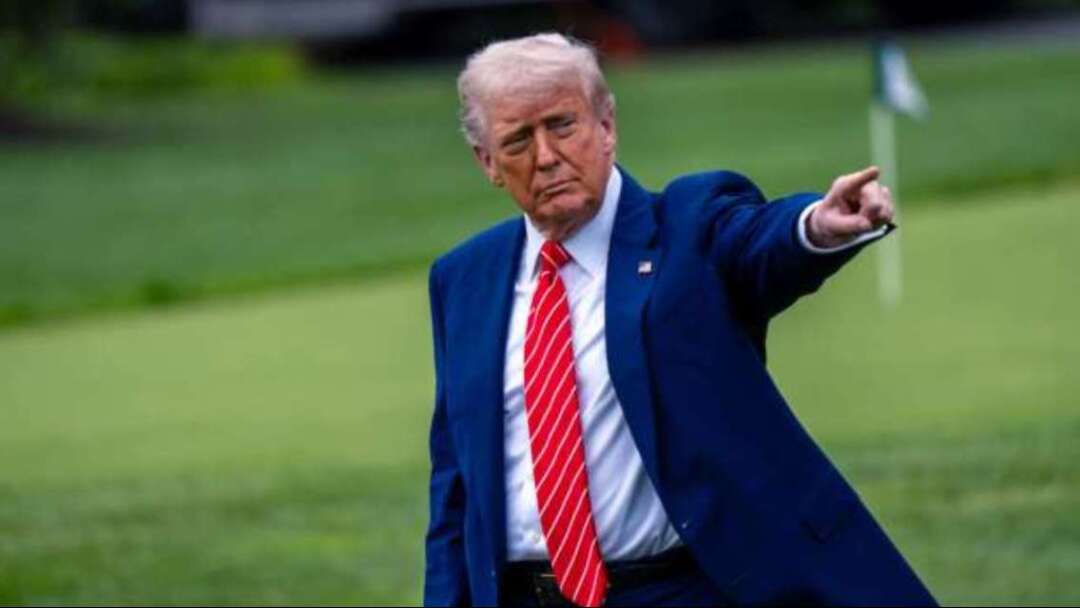
U.S. President Donald Trump announced on Thursday (13th) that he would impose tariffs of up to 100% on imported drones and their components, aiming to reduce America's "over-reliance" on overseas supplies.
The White House stated that the maximum 100% tariff will apply to drones of specific sizes or those equipped with national security-related functions. Other imported products will be subject to lower rates—for example, smaller-sized drones will face a 25% tariff.
The White House further indicated that tariffs on most products will take effect 21 days after the announcement. For drone components not falling into particularly sensitive categories, tariffs will be implemented 180 days after the signing.
Additionally, the White House noted that certain economies that have reached trade agreements with the Trump administration will be subject to a 15% drone tariff rate, provided all hardware and technology originate from these regions and the United States. Eligible regions include the European Union, Japan, Liechtenstein, South Korea, Switzerland, and Taiwan. Drones and components from the United Kingdom will be subject to a 10% tariff.
In the official proclamation released by Trump at the White House, Commerce Secretary Howard Lutnick found that foreign manufacturers' market penetration into the U.S. was "substantial," and that America's dependence on foreign drone systems and components was "excessive." Lutnick concluded that drones and components from certain foreign entities "pose a security and protection risk," and that domestic U.S. industry lacks sufficient capacity to meet national security needs.
Following the announcement, U.S. drone manufacturers AeroVironment (AVAV-US), Aevex (AVEX-US), and drone component maker Unusual Machines (UMAC-US) all saw their stock prices rise in after-hours trading.
Despite facing legal setbacks and criticism over his tariff policies, Trump continues to view them as a central pillar of his foreign and trade policy.
This drone tariff initiative is based legally on Section 232 of the 1962 Trade Expansion Act. This provision requires an investigation before import restrictions can be imposed on national security grounds. Trump previously used Section 232 to levy tariffs on steel, aluminum, semi-finished copper, and automobiles and auto parts. Investigations into robots and wind turbines are currently underway under the same Section 232 framework.
This announcement could significantly impact China's drone market and may further increase pressure on China ahead of a scheduled meeting between Trump and Chinese President Xi Jinping. China is the world's primary manufacturer of remotely piloted aircraft, with Shenzhen-based DJI Technologies accounting for approximately 70% of the U.S. commercial drone market as of last year.
FACT BOX
- Source: PR Times
- Category: News
- Organizations: AeroVironment / Aevex / Unusual Machines