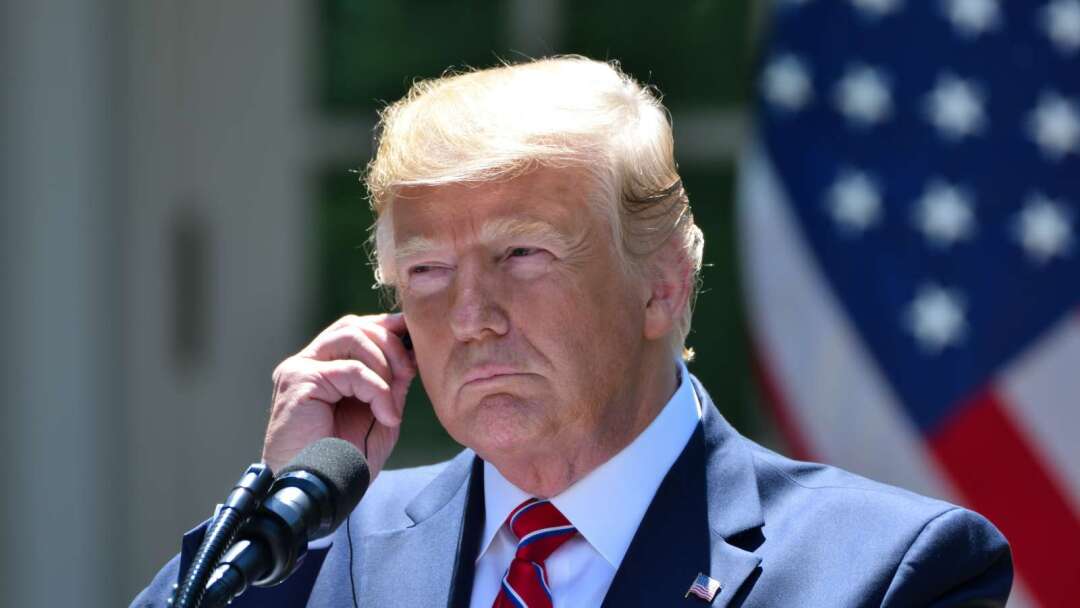
The U.S.-Iran Memorandum of Understanding (MoU) aimed at de-escalating tensions in the Strait of Hormuz expired on Monday (17th), with both sides failing to reach a breakthrough on extending the agreement or ending hostilities. President Donald Trump rejected any extension, demanding that Iran "surrender with a white flag" and asserting that the United States has established "complete control" over the Strait of Hormuz. Iran, in turn, accused the U.S. of repeated violations of the agreement and warned it is prepared to retaliate immediately if attacked again.
As negotiations remain deadlocked and U.S. sanctions and maritime blockades tighten, Trump’s call for Iranian surrender—alongside renewed threats to bomb Oman—has prompted Iran’s Revolutionary Guard to signal a potential shift from defensive to offensive military posture. Global concerns over crude oil supply have intensified, pushing Brent crude up 2.65% to close at $90.87 per barrel, while WTI crude rose 2.55% to $84.50 per barrel.
Trump explicitly denied seeking an extension of the MoU during remarks at the White House, declaring that the U.S. now holds "full control" over the Strait of Hormuz. He stated that while Iran remains open to talks, it refuses to accept conditions deemed essential by Washington, particularly regarding nuclear weapons development. The U.S., he reiterated, will not allow Iran to acquire nuclear arms.
In an interview with Fox News, Trump escalated rhetoric by demanding Iran "raise the white flag of surrender." He also claimed ongoing contact between the U.S. government and Iran’s Revolutionary Guard—a statement swiftly denied by the Guard itself.
On his previous suggestion to designate the Strait of Hormuz as U.S. territory, Trump called it a "great idea." He argued that the U.S. blockade has been effective, allowing millions of barrels of oil to pass through the region weekly. However, Trump offered no legal basis for America’s asserted control or territorial claim over the strait.
Iranian Foreign Ministry spokesperson Esmaeil Baghaei, speaking in Tehran, stated that the U.S.'s "serious violations" of the agreement have already rendered the expiration date meaningless. He emphasized that Iranian forces are ready to respond immediately to any further attacks and placed blame for the failed extension on Washington’s failure to uphold commitments—not on Iran’s refusal to negotiate.
The U.S. and Iran signed the MoU in June this year, aiming to reduce tensions in the Strait of Hormuz and create space for peace talks. However, both sides continued launching attacks during the agreement period, and negotiations stalled indefinitely, ultimately failing to produce a new consensus before the deadline.
Senior Revolutionary Guard commander Yadollah Javani announced that Iran is adopting a new "maximum deterrence" policy, potentially shifting its military posture from defense to offense. This signals a possible departure from passive responses to U.S. sanctions, maritime blockades, and military pressure, indicating a willingness to take more proactive military actions to establish deterrence.
With the MoU now失效, the limited crisis management mechanisms between the two nations have collapsed. Any renewed military conflict in the Strait of Hormuz could severely disrupt crude oil and liquefied natural gas shipments, triggering spikes in global energy prices and shipping costs.
Trump criticized Oman’s diplomatic mediation efforts, currently negotiating with Iran to reopen the Strait of Hormuz, calling their actions "not very good." He reiterated threats to bomb Oman, further complicating an already tense regional situation. On the same day, Omani Sultan Haitham met with UAE President Mohammed bin Zayed Al Nahyan in Abu Dhabi to discuss regional and international affairs, though their joint statement did not specify whether U.S.-Iran tensions or the Strait of Hormuz were directly addressed.
FACT BOX
- Source: PR Times
- Category: News