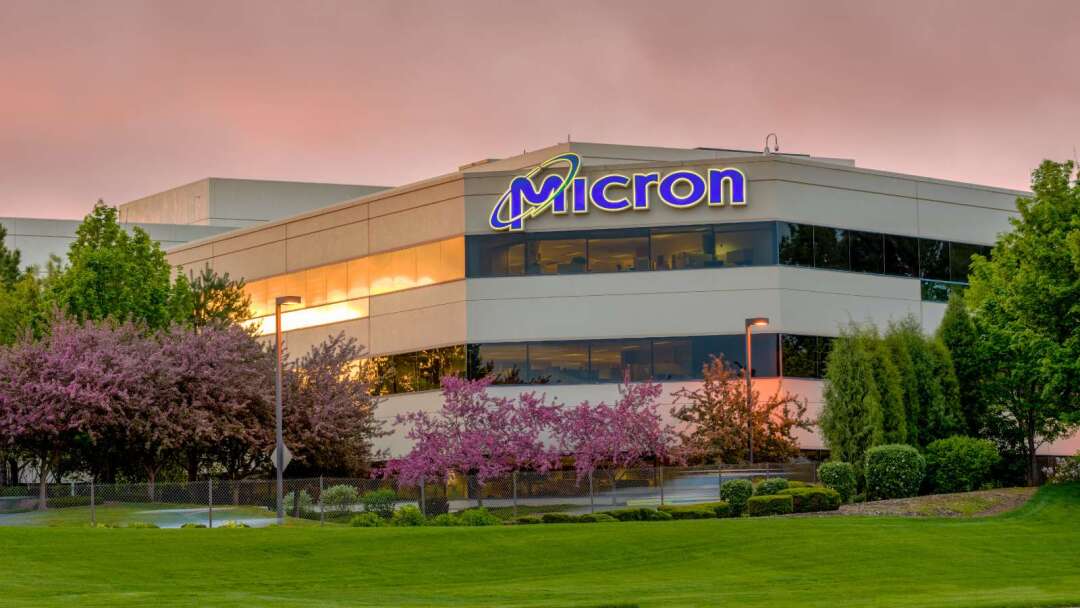
With the breakthroughs in artificial intelligence (AI) technology, Bank of America believes that AI may have broken the 'boom-bust' cycle of memory and predicts that Micron Technology (MU-US) will experience long-term and substantial growth in profits. In the third quarter of fiscal 2026, Micron demonstrated unprecedented financial data, with quarterly revenue reaching $41.46 billion and gross margin soaring from 38% last year to 85%. Among these, DRAM revenue increased by 343% year-over-year, and NAND revenue grew by 361%. The core of this momentum lies in high-bandwidth memory (HBM). Micron pointed out that the production of HBM is extremely challenging, as it requires more than three times the wafer capacity per bit compared to traditional DRAM. Due to the extremely high consumption of capacity and the urgent demand from hyperscale cloud service providers, the supply is currently in a restricted state and cannot immediately meet market demand. Currently, HBM4 has begun mass production and shipment, while HBM4E is expected to enter production in 2027. While people are still concerned that the memory boom may return to a bust due to increased supply, Bank of America has painted a very different future for Micron, which is much more optimistic than the market consensus. According to its 'SanDisk-like' assumption model, Micron's revenue in fiscal 2030 could reach $3,773 billion, far exceeding the market's general expectation of $2,805 billion. In terms of profit, Bank of America expects its EPS to reach $236.16, representing a compound annual growth rate of 34.1%. Despite this, the market's valuation of Micron remains relatively conservative, at only about 6 times the expected earnings for fiscal 2027. This shows that investors still view Micron with the eyes of a traditional 'cyclical stock,' worried that the memory boom will end too soon. Investors are also concerned that in the future, as competitors like SK Hynix and Samsung increase production capacity, whether pricing power can be sustained remains a key issue. Additionally, new technological architectures such as 'High Bandwidth Flash (HBF)' are emerging, aiming to fill the performance gap between HBM and SSD, indicating that the memory market is undergoing rapid evolution.
FACT BOX
- Source: PR Times
- Category: Survey
- Products / services: DRAM / NAND