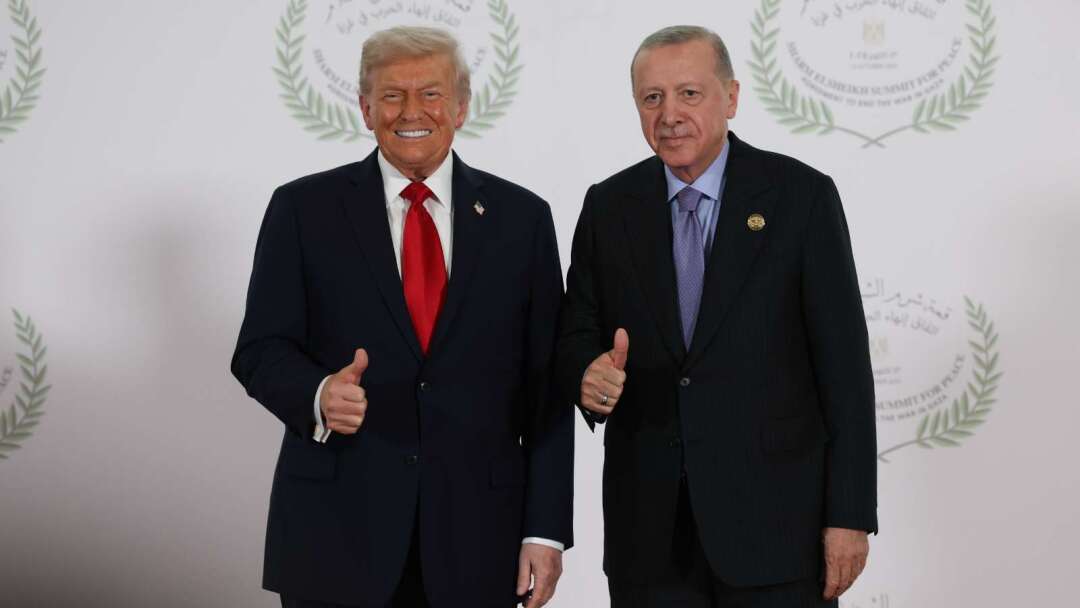
Turkish President Tayyip Erdogan held a phone call on Tuesday (18th) with U.S. President Trump, urging continued negotiations between the U.S. and Iran to reduce tensions, and offered Turkey’s support for peace efforts. As diplomatic progress between the U.S. and Iran stalls and the reopening of the Strait of Hormuz remains blocked, Turkey is leveraging its geopolitical advantage of maintaining relations with both the U.S. and Iran to act as a mediator.
According to the Turkish presidential office, Erdogan emphasized during the call that it is crucial to 'fully utilize diplomatic means' in addressing the tensions between the U.S. and Iran, and expressed hope that negotiations would continue, with Turkey continuing to support peace initiatives.
The call comes amid worsening U.S.-Iran relations. A senior Iranian official recently told Reuters that, due to the stagnation of talks on a permanent end to the war, Iran will shift to a 'full-scale offensive' military posture. Meanwhile, the U.S. has indicated it will not extend the temporary ceasefire arrangement, placing further strain on an already fragile diplomatic process.
Adding to energy market concerns, progress on reopening the Strait of Hormuz has also stalled. This strategically vital waterway, located between Iran and Oman, is one of the world’s most critical energy transit routes. After the U.S.-Iran conflict erupted, shipping through the Strait was severely disrupted. A temporary peace deal reached in June included provisions for resuming shipping, but as of August 17, the agreement has largely failed, with both sides blaming each other for failing to uphold commitments.
Turkey occupies a unique position in this crisis. As a NATO member with the alliance’s second-largest military and a neighbor to Iran, Turkey maintains security cooperation with the U.S. while also sustaining close diplomatic and economic ties with Iran. Turkey has recently maintained contact with the U.S., Iran, and other mediators such as Pakistan and Qatar, attempting to provide communication channels between conflicting parties.
Turkey has previously publicly criticized U.S. and Israeli military attacks on Iran, while also condemning Iran’s attacks on Gulf states and calling for the reopening of the Strait of Hormuz. On the 17th, Turkey’s foreign minister spoke by phone with Iran’s foreign minister to discuss the reopening of the Strait and ways to maintain the U.S.-Iran ceasefire.
During the call with Trump, Erdogan not only discussed the Iran issue but also addressed U.S.-Turkey bilateral relations, the Gaza war, and the recent defense agreement signed by Turkey, Saudi Arabia, and Pakistan.
Turkey, Saudi Arabia, and Pakistan signed a joint defense pact this month in Mecca. Though the agreement does not explicitly name any threat, it is seen as a significant step toward strengthening regional security cooperation among Gulf and Muslim nations. Erdogan told Trump that the pact demonstrates a 'firm stance' by regional countries to safeguard stability and security.
This defense cooperation has further drawn attention to Turkey’s geopolitical role in the Middle East. Analysts suggest that as the Iran conflict drags on, countries like Saudi Arabia, Turkey, and Pakistan are seeking to build a more autonomous regional security framework, reflecting a reassessment by some Middle Eastern nations of their traditional security dependencies.
The Gaza situation was also a key topic in Erdogan’s call with Trump. The Turkish presidential office stated that Erdogan told Trump that Israeli attacks on Palestinians have increased just as Trump’s Gaza peace plan was set to enter its second phase.
Recent diplomatic efforts have also hit roadblocks. Trump’s envoy Jared Kushner held two days of talks in the Middle East with Israeli Prime Minister Benjamin Netanyahu and Hamas political leaders but failed to achieve a major breakthrough. The peace roadmap proposed by the Trump administration includes Hamas disarming and Israel gradually withdrawing its forces, but both sides remain deeply divided over the implementation sequence.
Netanyahu insists Israeli troops will not withdraw before Hamas fully disarms, while Hamas demands Israel halt military operations first, leaving the Gaza peace plan effectively stalled.
The diplomatic impasse between Iran and the U.S. is closely tied to the Strait of Hormuz issue. Iran demands the U.S. lift blockades, withdraw some military forces, and provide war reparations, while Trump has rejected these demands and continues to pressure Tehran through sanctions and economic pressure.
The U.S. is also seeking additional diplomatic channels. Beyond traditional or regional mediators like Turkey, Pakistan, and Qatar, the U.S. has expanded diplomatic outreach to European countries such as Austria and Greece. These nations maintain some level of diplomatic or economic relations with Iran and are directly affected by disruptions in Strait of Hormuz shipping and regional conflict spillover.
The fate of the Strait of Hormuz directly impacts global energy markets. Iran has stated it will not reopen the Strait until the U.S. 'corrects' its behavior; both sides continue to dispute control over this strategic waterway.
With diplomatic progress stalled, oil prices have reacted to supply risks. Markets fear that prolonged blockage of the Strait could restrict crude oil and liquefied natural gas shipments, pushing up global energy prices. For Asia, where much of the Middle East energy supply relies on maritime transport through the Strait, the pace of shipping recovery is closely monitored by refiners and energy traders.
Turkey therefore hopes to advance diplomatic negotiations and the reopening of the Strait of Hormuz simultaneously. For Ankara, continued conflict not only increases security risks in neighboring regions but could also further drive up energy prices, disrupt trade, and destabilize regional economies.
However, Turkey’s mediation space remains constrained by the wide gap between U.S. and Iranian positions. Iran currently demands the lifting of blockades, resumption of shipping, and U.S. military withdrawal, while the U.S. continues pressuring Tehran to accept broader political and security conditions. With the original 60-day peace agreement expiring on August 17 without substantial progress, restarting negotiations has become even more difficult.
In this context, Erdogan’s direct appeal to Trump reflects Turkey’s desire to prevent a further escalation of U.S.-Iran conflict. Ankara has criticized both U.S.-Israeli military actions and Iran’s attacks on Gulf states, while maintaining diplomatic contact with Iran and working with Pakistan, Qatar, and others to find negotiation breakthroughs.
The White House has not yet responded to inquiries regarding Erdogan’s call with Trump. If the U.S. and Iran cannot resume effective negotiations in the short term, the continued restriction of the Strait of Hormuz, Iran’s shift toward a more aggressive military posture, and the stagnation of the Gaza peace plan could interconnect multiple Middle Eastern conflict lines, increasing the risk of regional escalation.
FACT BOX
- Source: PR Times
- Category: News