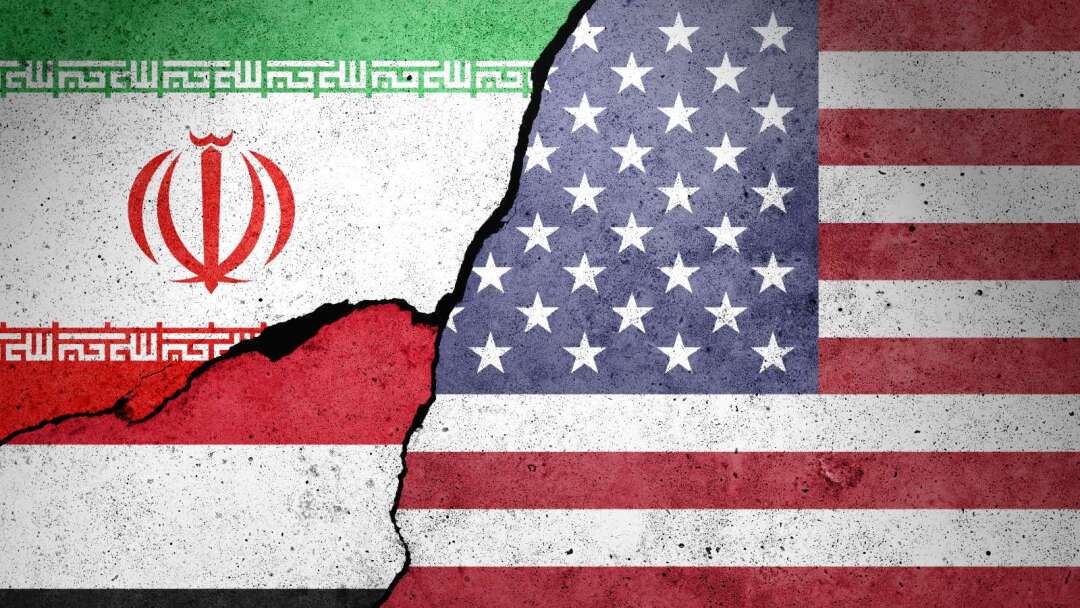
The Memorandum of Understanding (MoU) signed by the United States and Iran on June 17 officially expired on Monday (17th), but this agreement, originally intended to promote peace negotiations, had effectively become meaningless shortly after being signed. Just ten days after signing, both sides resumed hostilities, and U.S. President Trump announced on July 7 that the agreement was "over."
Although large-scale military conflict has temporarily subsided, negotiations remain deadlocked, and the war against Iran that began on February 28 has not truly ended.
### The 60-Day Negotiation Period Never Started
This 14-point MoU, brokered by Pakistan, was signed by Trump and Iranian President Pezeshkian, and was initially set for a 60-day period during which both sides would begin negotiations toward a comprehensive peace agreement.
Under the agreement, the U.S., Iran, and their allies were required to immediately cease all military operations across every front, including in Lebanon. Washington committed to lifting its maritime blockade within 30 days, withdrawing forces from around Iran upon final agreement, and working with regional partners to develop an Iran reconstruction and economic development plan worth at least $300 billion.
Washington also agreed to lift sanctions on Iran, exempt restrictions on Iranian oil exports, and allow Tehran to access frozen overseas funds.
In return, Iran pledged to remove sea mines from the Strait of Hormuz and allow free passage for commercial vessels for 60 days. Tehran also reaffirmed it does not seek nuclear weapons and expressed willingness to negotiate on uranium enrichment, with details to be included in a final UN-supported agreement.
However, this framework covering ceasefire, shipping, sanctions, and reconstruction failed from the outset due to ambiguous wording in key clauses, leading to fundamentally different interpretations among the parties.
### The Strait of Hormuz Shipping Route Became the Major Flashpoint
The biggest dispute centered on control over shipping lanes in the Strait of Hormuz.
Article 5 of the MoU required Iran to make efforts to ensure safe passage for commercial vessels and to discuss future management and maritime services in the strait with Oman and other Persian Gulf coastal states. However, the clause did not clearly define who would determine vessel routing.
Oman announced a shipping route near its coastline, backed by the U.S.; Iran, meanwhile, demanded vessels sail closer to its side and designated parts of the Omani side as restricted zones. This created a fundamental disagreement over approval authority and management rights of the strait.
On June 25, the Singapore-flagged cargo ship Ever Lovely was attacked by an unidentified projectile while traveling along the Omani-side route. Iran neither claimed responsibility nor explicitly denied involvement.
Washington immediately blamed Iran, with Trump calling the attack a "stupid violation" of the ceasefire agreement. On June 27, U.S. Central Command announced it had bombed Iranian missile and drone storage facilities and radar stations along Iran's southern coast in response to the attack on the merchant vessel.
Iran's Foreign Ministry accused U.S. forces of attacking coastal monitoring facilities, violating the MoU's commitment to halt all hostile actions. Tehran retaliated the same day by striking U.S. military installations in the region and warned that if the U.S. launched another attack, retaliation would escalate further.
In short, less than two weeks after signing the MoU, the U.S. and Iran were once again launching attacks against each other.
### Israel Was Not Included in the Lebanon Ceasefire Clause
A second structural flaw appeared in Article 1 of the MoU. While it required the U.S., Iran, and their allies to cease military operations on all fronts and specifically mentioned Lebanon's sovereignty and territorial integrity, it did not explicitly require Israel to comply.
Iran argued that Israel's military actions in Lebanon should be bound by the MoU; Israel rejected this interpretation and continued attacks on Lebanon and Gaza.
Al Jazeera reported that Israel still controls about one-fifth of Lebanon's territory and continues strikes in southern Lebanon, citing the need to target Hezbollah strongholds supported by Iran. As a result, the ceasefire clause, which claimed to cover "all fronts," proved unworkable in practice.
### The $300 Billion Reconstruction Commitment Lacked Details
Article 6 stated that the U.S. would work with regional partners to develop an Iran reconstruction and economic development plan worth at least $300 billion. However, the agreement did not specify which countries or institutions would bear the financial burden, nor did it outline fund usage or restrictions.
Sanctions relief also raised questions. While the document mentioned lifting sanctions on Iran, it did not clarify whether this applied only to unilateral U.S. measures or also included UN-authorized sanctions.
Joey Hood, former acting head of Iran affairs at the U.S. State Department, said the MoU's language was too loose, allowing Iran to interpret the terms as recognition of its dominant role over the Strait of Hormuz and Lebanon's future—making the agreement unsustainable from the start.
### Trump Declared the Agreement Over Within a Month of Signing
As military conflict reignited, Trump announced on July 7 that the MoU was "over," and U.S. forces continued attacks on Iran.
Tehran subsequently accused the U.S. of attacking civilian infrastructure in southern Iran, resulting in at least 50 deaths. Iranian officials stated that the U.S. had violated and terminated all commitments under the MoU, so Iran simultaneously ceased fulfilling its own obligations.
Iranian Foreign Ministry spokesperson Esmaeil Baghaei said the U.S. had massively breached the agreement just weeks after signing, preventing any negotiations from starting and rendering the planned 60-day window meaningless.
Iran has repeatedly emphasized recently that, due to U.S. violations, it will not engage in direct talks with America at this stage. Instead, Tehran is discussing future management arrangements for the Strait of Hormuz with Oman, while Pakistan continues efforts to facilitate renewed direct dialogue between the U.S. and Iran.
### Lack of Alternative Plans
Although this MoU was once seen as a foundation for a comprehensive peace agreement between the U.S. and Iran, with both sides blaming each other for breaches, there is currently no sign of reviving the original agreement or quickly reaching a new one.
Control over navigation and management of the Strait of Hormuz remains the biggest obstacle. Hood believes that if Iran agrees to restore free passage for vessels, the Trump administration might respond by lifting the maritime blockade and easing oil sanctions.
However, with neither side showing signs of flexibility, the expiration of the MoU is merely a formal endpoint. The real reasons for the agreement's failure were already evident when the vague wording, shipping disputes, and renewed U.S.-Iran hostilities emerged.
FACT BOX
- Source: PR Times
- Category: News