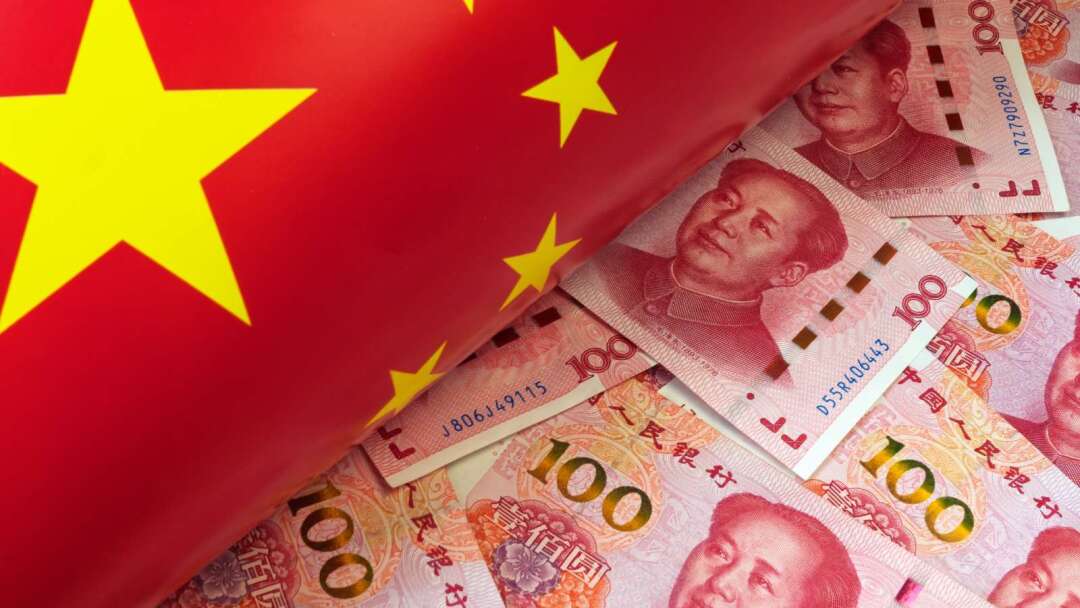
Latest data shows that amid a sell-off in U.S. Treasuries and a surge of over 250 basis points in the 10-year U.S. Treasury yield in July alone, foreign investors have net increased their holdings in Chinese government bonds for three consecutive months.
On Monday (17th), the Shanghai Headquarters of the People's Bank of China announced that foreign investors slightly increased their holdings in Chinese government bonds by approximately RMB 9.5 billion in July. Policy bank bonds saw a net increase of slightly over RMB 600 million, while negotiable certificates of deposit (NCDs) returned to net selling. Overall, foreign investors held RMB 3.21 trillion in interbank market bonds at the end of last month, a slight increase of about RMB 10 billion from the end of June.
The driving force comes from 'yield spread plus exchange rate return.' Escalating Middle East conflicts have heightened global inflation and expectations of Federal Reserve (Fed) rate hikes, leading to a clear sell-off in U.S. Treasuries. Meanwhile, Chinese government bond yields remained stable or slightly declined during the same period, and the RMB appreciated by over 0.5% in a single month, improving the foreign exchange return for holding RMB-denominated bonds.
Liu Jie, Head of Macro Strategy for Greater China at Standard Chartered, pointed out that in July, most global yield curves exhibited a 'bear steepening' trend, yet foreign investors still modestly increased their holdings in onshore Chinese bonds, reflecting that the Chinese market is increasingly gaining safe-haven asset status.
She also noted that foreign investors' positioning in Chinese bonds remains low, and previous capital outflows related to carry trades are weakening, forecasting that overseas investors will continue a moderate pace of net buying in the coming months.
Market interpretation suggests this round of buying is not a broad-based repositioning, but rather a 'relative value switch.' Amid heightened volatility in U.S. Treasuries, the stability of China's yield curve and exchange rate has made RMB-denominated bonds a low-correlation ballast within investment portfolios.
However, the scale of foreign buying remains at the hundred-billion-yuan level, making it difficult to claim a return to large-scale allocation. Future trends will depend on whether U.S. Treasury yields peak, the two-way fluctuation range of the RMB, and whether domestic interest rates face pressure from fiscal policy.
FACT BOX
- Source: PR Times
- Category: Survey