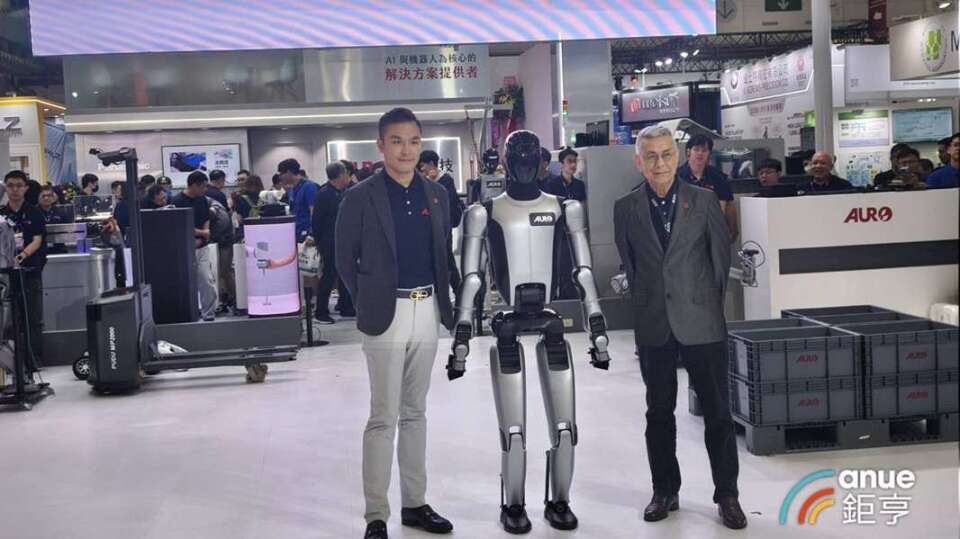
The Taipei International Industrial Automation Fair kicked off today (19th) and runs through August 22 at Halls 1 and 2 of the Taipei Nangang Exhibition Center, themed 'Human-Robot Collaboration. AI Empowerment.' Chang Yi-Sheng, Chairman of Harmony Chain (6215-TW), a long-time exhibitor and AI and robotics solutions system integrator, stated that global robotics has moved beyond mere technological demonstrations into an era of intelligent transformation, performing substantive tasks on production lines and delivering services in daily life. However, many Taiwanese enterprises still face three major bottlenecks during implementation: digital silos, validation traps, and excessively high hidden costs. Harmony Chain's future competitive core will focus on overall system integration and on-site deployment capabilities.
In 2026, Harmony Chain completed its generational leadership transition, with Chairman duties handed from Cheng Tien-Tsung, former Chairman and now Advisor and Honorary Chairman, to current Chairman Chang Yi-Sheng. Today, Chang led the current executive team, including all vice presidents and above, in their public debut.
Cheng Tien-Tsung noted that Taiwan was highly successful during the IT and notebook PC OEM era, but the supply chain landscape is entirely different in the age of AI robotics. Taiwan's supply chain may not maintain its strength in this new era, necessitating milestone-level changes in production models.
Chang analyzed three major trends in recent robotics and automation industries. First, the successful implementation of physical AI entities, driven by breakthroughs in edge computing and visual sensing technologies. The market forecasts a 30% annual compound growth rate for AI robots, transitioning from proof-of-concept to规模化 production lines.
Second, enterprise evaluations are shifting toward practical operational outcomes, with SMEs increasingly adopting the Robot-as-a-Service (RaaS) model to reduce capital expenditures. Third, the advancement of Industrial 5.0 integrates human-robot collaboration into daily operations rather than blindly pursuing full automation, enabling seamless integration of technology into everyday applications.
Chang also discussed pain points in Taiwan's robotics adoption, including the 'digital island' issue affecting over 70% of companies due to multiple brands and isolated systems that cannot interconnect. The 'validation trap' sees 60% of projects succeed in single-station validation but struggle to replicate across different sites. Additionally, over 60% of corporate budgets are spent on software customization and communication integration—hidden costs that result in subpar returns.
Today at the exhibition, Harmony Chain fully simulated a real warehouse environment, demonstrating integrated workflows involving five to six types of cross-brand, multi-form robots. Different robots collaboratively performed tasks from stockout detection and transportation to shelving, showcasing how AI-powered intelligent robots and diverse automated systems can jointly execute complete logistics operations within a single facility.
FACT BOX
- Source: PR Times
- Category: Event