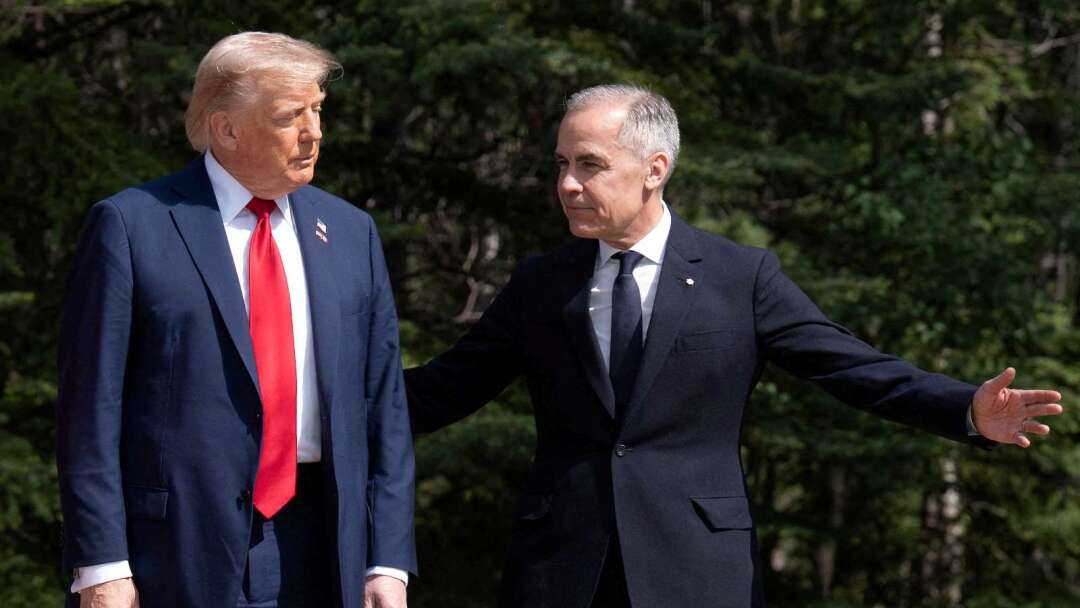
U.S. President Trump suddenly announced late Tuesday (18th) that he would suspend the implementation of 50% tariffs on certain Canadian imports for three days—just hours before the new tariffs were scheduled to take effect.
According to CNBC, Trump posted on Truth Social stating the reason for the pause was that "the United States and Canada have reached an agreement, but the paperwork is not yet complete!"
(Image: Trump's Truth Social post)
This announcement came shortly after trade talks between President Trump and Canadian Prime Minister Mark Carney on Tuesday.
The originally planned 50% tariffs were to apply to hockey sticks, wine, and various other Canadian imported goods. The Trump administration announced this measure last month, citing what it described as trade discrimination by Canada in the automotive, alcohol, and dairy sectors.
These tariffs were set to be implemented under Section 338 of the Tariff Act of 1930. This law dates back to the Great Depression era and has almost never been invoked in the past.
According to data from the Office of the U.S. Trade Representative, the new tariffs would have covered approximately $20 billion worth of Canadian imports.
While this represents only a small portion of the $382 billion in total goods the U.S. imported from Canada last year, the high tariffs on specific products could still pose significant challenges for Canadian exporters.
Dan Kelly, president of the Canadian Federation of Independent Business, said, "A 50% tariff essentially eliminates the economic viability of selling a product in a given market."
Kelly noted that many of the organization’s 103,000 members believe their sales in the U.S. could "come to a standstill" if the new tariffs are fully implemented.
He also pointed out that some businesses have already observed U.S. buyers holding off on placing future orders due to expectations that the new tariffs will soon take effect.
Ongoing U.S.-Canada Trade Tensions and Rising Pressure on Consumer Goods Sector
Trump has previously imposed multiple tariffs on Canada and its specific exports, including metals, lumber, and auto parts.
Additionally, Trump had previously levied high tariffs on Canadian goods over allegations of drug smuggling, but the U.S. Supreme Court overturned those measures in February.
However, Kelly stated that the Section 338 tariffs "directly hit the core of small and medium-sized enterprise trade between the U.S. and Canada," because many of the targeted goods are consumer-facing products.
He added, "This has caused deep concern among a large number of Canadian businesses."
Some of the tariffs proposed by the Trump administration on Canadian goods exempt items that comply with the rules of the trilateral U.S.-Mexico-Canada Agreement (USMCA).
Nonetheless, the Trump administration announced last month that it would not renew the trade pact and would instead initiate a series of annual review procedures, raising questions about the agreement’s future.
Neil Herrington, Senior Vice President for the Americas at the U.S. Chamber of Commerce, warned in a Tuesday morning statement that further tariff increases "will harm both U.S. and Canadian economies, raise costs for American families, further disrupt critical supply chains, and endanger 13 million American jobs reliant on USMCA trade."
FACT BOX
- Source: PR Times
- Category: News