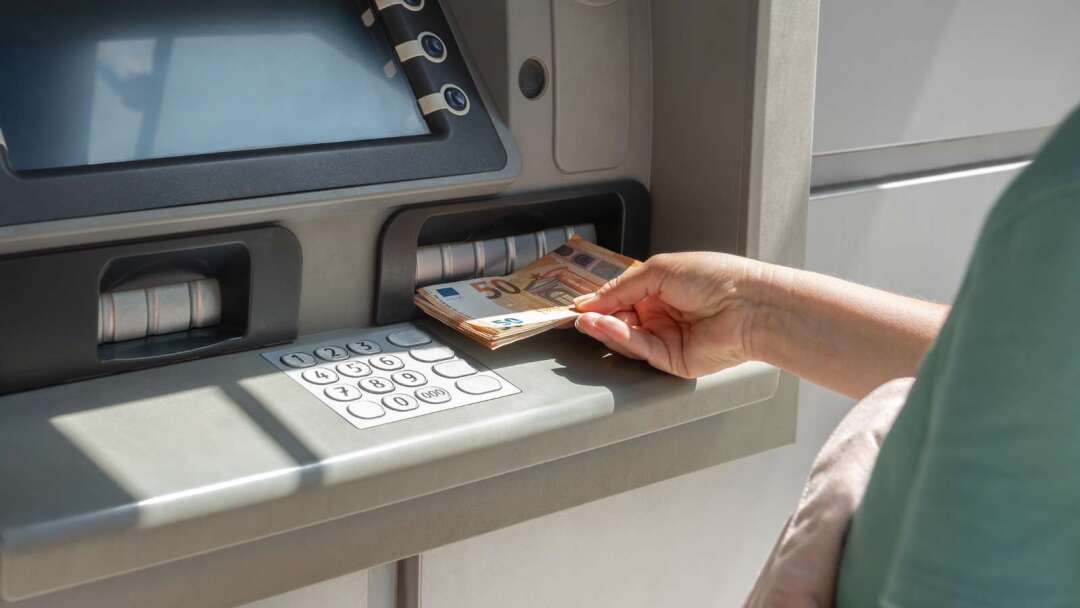
Foreign media reports indicate that European households, under the banner of 'rebuilding financial safety cushions,' are depositing over 14% of their disposable income into banks—a figure nearly two percentage points higher than the five-year average before the COVID-19 pandemic.
According to the Financial Times, recent statistics show that among the 18 European countries with first-quarter data for this year, 14 have savings rates higher than pre-pandemic levels, while the US savings rate has already fallen below its pre-pandemic level, widening the consumption momentum gap across the Atlantic.
EU Commission consumer surveys reveal that household willingness to save remains significantly higher than pre-pandemic levels, while consumer confidence continues to languish. Eurozone inflation rose to 2.9% in July, a sharp increase compared to the previous year. Escalating Middle East conflicts this month have driven up energy prices, further intensifying household concerns about a resurgence of inflation.
Sebastian Dullien, director of Germany's IMK Institute, stated, 'Energy prices have risen again this year, once more casting a shadow over the economic outlook.' He added that even if households draw on only part of their excess savings, it could significantly boost consumption—but current conditions lead people to continue hoarding cash.
Behind this 'hoarding' behavior lies repeated psychological shocks from successive crises.
Holger Schmieding, Chief Economist at Berenberg Bank, pointed out that labor markets in countries like Germany remain strong, and weak consumption is not driven by fear of unemployment, but rather by heightened sensitivity to negative news due to the constant stream of crises.
Schmieding said: 'Since the pandemic, crisis has followed crisis, severely damaging many people's optimistic expectations for the future. Private consumption will be the last sector of the economy to achieve substantial recovery.'
Marieke Blom, Chief Economist at ING Group, comparing both sides of the Atlantic, noted that amid strong demand for goods and services, US household spending continues to provide robust support, while European households’ cautious mindset leads high savings rates to drag down consumption.
According to International Monetary Fund (IMF) forecasts, US GDP growth this year will reach 2.3%, compared to just 0.9% for the eurozone and 1% for the UK.
Differences in asset structure further amplify the consumption divide. Data from think tanks such as the European Policy Centre show that nearly one-third of European households’ financial assets are held in cash and deposits, while US households hold only 12% in such forms. More funds in the US are channeled into stocks and investment funds, directly benefiting from the surge in US stock valuations—the so-called 'paper wealth effect.' European households lack this layer of 'paper prosperity,' naturally leading to weaker consumption.
Rolf Bürkl, head of the Consumer Climate Department at Germany’s Nuremberg Institute for Market Decisions (NIM), revealed the ranking of savings motivations: the most frequently cited reason is building emergency reserves, followed by inflation, with overall environmental uncertainty ranking third.
He said: 'Many households are trying to rebuild their own financial safety cushions. Inflation not only erodes purchasing power but also diminishes the real value of savings.'
In the first quarter of this year, the eurozone’s total savings rate stood at 14.3%, 1.8 percentage points higher than the pre-pandemic five-year average of 12.5%. Economists warn that unless energy price pressures ease and inflation expectations are re-anchored, this 'safety cushion' will continue to thicken at the expense of consumption recovery.
While American consumers are spending their post-pandemic wealth windfall, European households are still saving for the next unknown crisis—and this wave of saving has yet to recede.
FACT BOX
- Source: PR Times
- Category: Survey
- Organizations: IMF