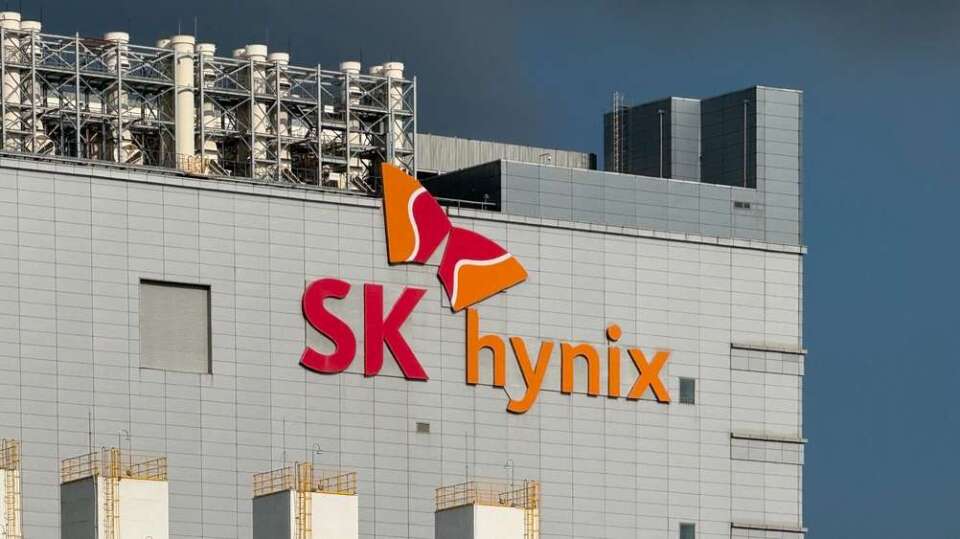
South Korea led the decline in Asian semiconductor stocks, as rising bond yields further heightened market concerns over massive investments by large technology companies.
The Korea Composite Stock Price Index (KOSPI) plunged nearly 6.8% during Wednesday’s (19th) trading session before paring losses. Samsung Electronics (005930KS) and SK Hynix (000660KS) both fell over 8% at one point. The Bloomberg Asia Semiconductor Index dropped 3.2%, with Japan’s NAND flash memory giant Kioxia tumbling as much as 11% intraday, while TSMC (2330-TW) also declined nearly 2%.
The fall in Asian chip stocks followed weaker performance in U.S. semiconductor and other AI-related stocks. Concerns over inflation and rising government debt have kept bond yields elevated. With ongoing uncertainty over Iran’s geopolitical situation, borrowing costs could rise further, adding to market anxiety.
Jung In Yun, CEO of Fibonacci Asset Management Global, said that while the long-term growth trend for AI remains intact, "rising interest rates and geopolitical risks are making investors increasingly reluctant to pay a premium for this growth." He added that the recent price declines also reflect some profit-taking, "given the unusually strong rally beforehand."
AI-related stocks had been buoyed recently by earnings reports showing continued robust capital spending. However, the Bloomberg Asia Chip Index has still fallen 19% since hitting a record high in June, as investors continue to exit crowded and overheated trading positions.
Andrew Jackson, Head of Japan Equity Strategy at Ortus Advisors, noted in a Smartkarma report that the recent AI rebound, which had just begun to regain momentum, was once again derailed by the sharp drop. He said persistently high long-term borrowing costs are leading many to question whether the massive debt taken on by major cloud service providers is sustainable.
South Korea remains a focal point for Asian tech stock trading. A previous investment boom briefly pushed the market capitalizations of Samsung Electronics and SK Hynix above $1 trillion each. The KOSPI’s intraday volatility remains above 5%, though the highly leveraged trading that previously drove volatility to historic highs has begun to unwind.
FACT BOX
- Source: PR Times
- Category: News
- Organizations: Fibonacci Asset Management Global / Ortus Advisors