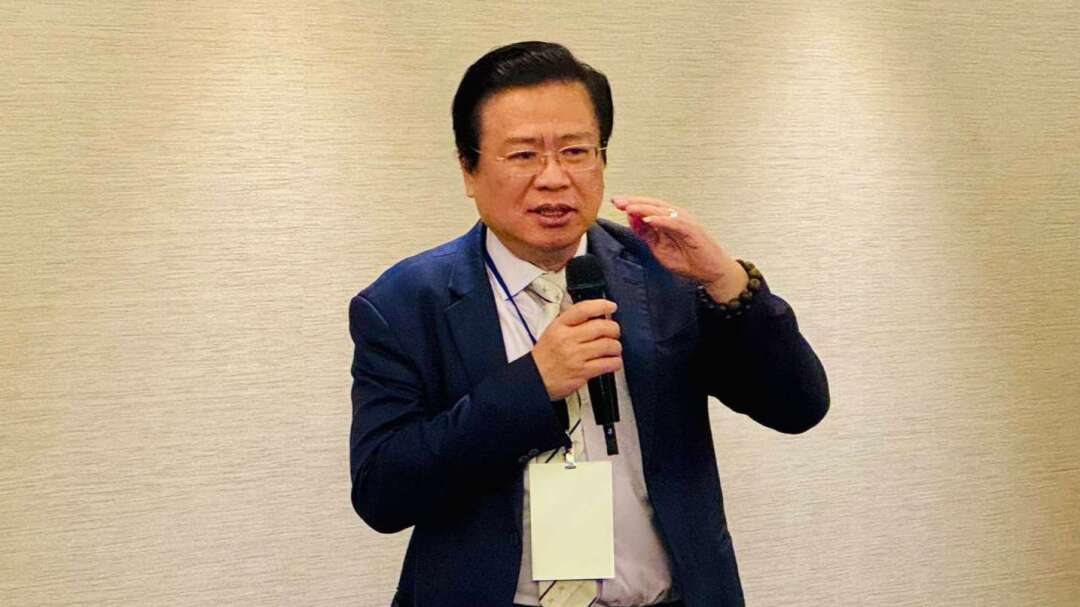
President Lai Qingde recently announced that the government will distribute $10,000 in cash to all citizens in 2027, aiming to realize the vision of 'AI dividends shared by all.' Yesterday (20th), Lin Bo-feng, chairman of the 33 Society, expressed support for the cash disbursement. Today (20th), Hsu Shu-po, chairman of the National Commercial Weekly Association, stated that compared to direct cash handouts, issuing 'consumption vouchers' would be more effective in achieving the policy's goals. He emphasized that if the money is saved rather than spent, it will not boost consumer demand, limiting the multiplier effect on domestic consumption and reducing the overall economic impact of government spending.
Lai Qingde stated that thanks to the development of AI and high-tech industries, Taiwan's economic growth forecasts continue to be revised upward, with this year expected to reach a record high. The association supports the government's initiative to share the fruits of economic growth with the public, allowing all sectors of society to benefit from the broader economic gains driven by AI.
Hsu Shu-po noted, however, that as a representative of diverse industries, the Commercial Weekly Association is concerned that while overall economic performance is strong, the benefits are primarily concentrated in AI, semiconductor, and ICT sectors. Many small and micro enterprises, traditional industries, and grassroots citizens still feel a gap in their actual experience of economic growth. He stressed that policy should guide these gains into private consumption and domestic demand, ensuring broader industrial participation and shared prosperity.
Regarding next year's cash disbursement, the association also expressed concern that many people may simply deposit the money into banks rather than spend it, potentially leading to increased savings instead of consumption.
Hsu pointed out that consumption vouchers, with their time-limited validity, ensure the money actually enters the market. This spending triggers a ripple effect—from consumer purchases and merchant revenues to business procurement and related industries—boosting overall economic activity, enhancing market liquidity, and directly benefiting retail, dining, tourism, service sectors, and countless small and micro enterprises. This approach allows the government to achieve greater economic returns with the same level of policy investment.
Hsu emphasized that the purpose of universal disbursement is not only to share the benefits of economic and AI development but, more importantly, to ensure these resources 'move and get used,' thereby stimulating real consumption and revitalizing domestic demand. He urged the government to balance the goals of inclusive sharing, domestic demand expansion, and support for small and micro enterprises in distress. This way, policy spending can not only benefit the public but also circulate back into the market, driving diverse industries and transforming one-time expenditures into sustained momentum for domestic industries and the broader economy.
FACT BOX
- Source: PR Times
- Category: News