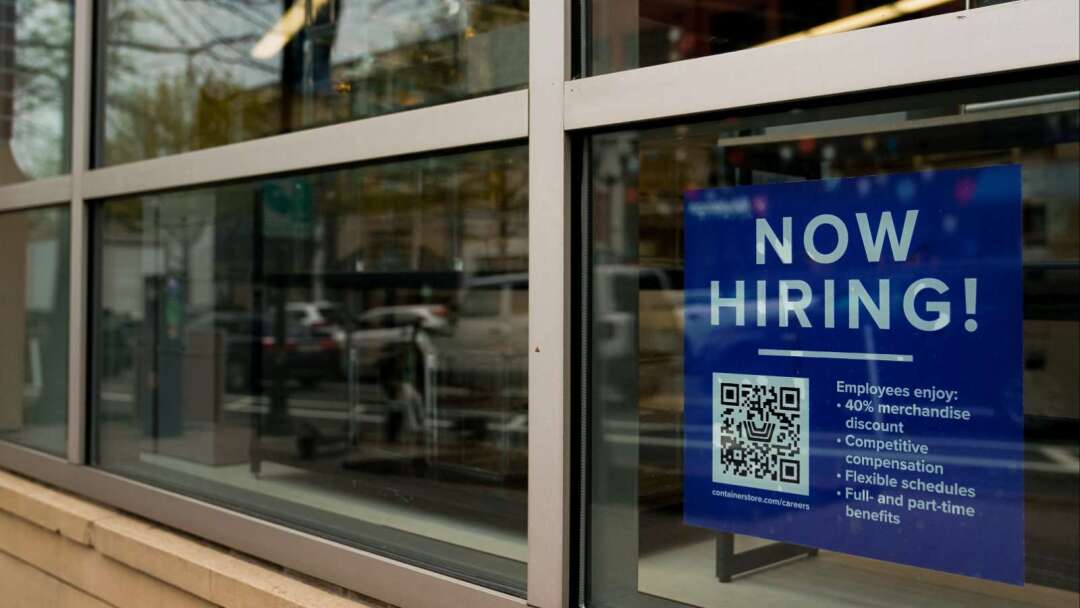
Initial claims for U.S. unemployment benefits declined modestly last week and fell below market expectations, signaling that despite an unexpected drop in July employment, corporate layoffs remain subdued and the labor market continues to maintain relative stability.
The U.S. Department of Labor reported on Thursday (the 20th) that seasonally adjusted initial jobless claims for the week ending August 15 decreased by 6,000 to 206,000, below the median economist forecast of 210,000 surveyed by Reuters and Bloomberg. The current level of claims remains near the lower end of the 189,000 to 230,000 range observed so far this year, reflecting that businesses have not engaged in large-scale layoffs.
For the week ending August 8, continuing claims for unemployment benefits rose by 18,000 to 1.799 million, approaching 1.8 million. This metric reflects how easily unemployed individuals can find new work, and the rise in continuing claims suggests that corporate hiring activity remains weak. The four-week moving average of initial claims, used to smooth out weekly fluctuations, increased to 204,000.
Unadjusted initial claims also declined, primarily driven by decreases in Michigan, South Carolina, and California, with Michigan showing the most significant drop.
U.S. companies this year have exhibited a 'low hiring, low layoffs' pattern—workers currently employed face low risks of job loss, but job seekers are finding it harder to secure new positions. July’s nonfarm payroll unexpectedly decreased by 23,000, and previous months’ data were revised downward. Over the past three months, employment has grown by only about 20,000 per month on average. Job openings and hiring rates have cooled simultaneously, labor force participation has declined, yet the unemployment rate has still dropped to a historically low 4.1%.
Other economic indicators also signal slowing growth. The annualized GDP growth rate for the U.S. second quarter declined from 2.1% in the first quarter to 1.5%. While businesses, facing weaker demand, are reluctant to expand their workforce, they are also not rushing to lay off employees, keeping the labor market superficially stable. However, if the broader economy cools further, its vulnerability could deepen.
If the labor market remains stable and inflation continues to moderate, the Federal Reserve (Fed) may have room to hold steady at its September meeting.
FACT BOX
- Source: PR Times
- Category: News
- Organizations: Federal Reserve (Fed) / U.S. Department of Labor