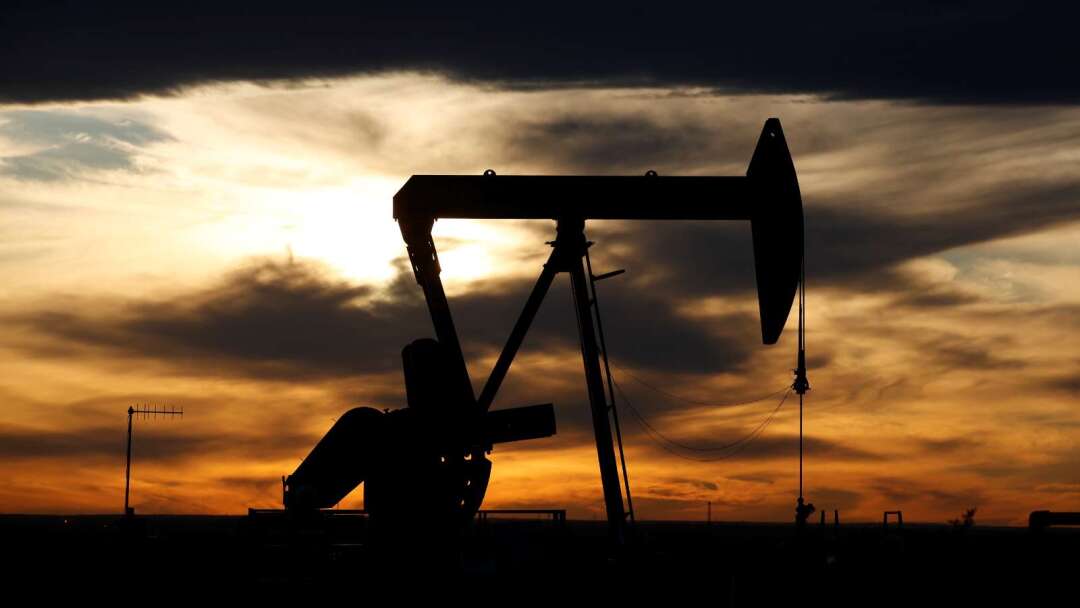
U.S. President Trump issued retaliatory threats against countries supporting Iran. Markets fear that an escalation in sanctions could further widen the impact of the Middle East conflict, compounded by Iran's ongoing blockade of the Strait of Hormuz, which has left millions of barrels of Middle Eastern crude stranded. As a result, international oil prices surged over 2% on Thursday (20th), closing at their highest level in nearly one month.
Brent crude futures rose 2.16 dollars, or 2.4%, to settle at 93.78 dollars per barrel—the highest since July 24. U.S. West Texas Intermediate (WTI) crude for September delivery gained 2 dollars, or 2.3%, to close at 87.83 dollars per barrel, also marking its highest closing price since July 24.
On Wednesday evening, Trump warned that the U.S. might launch an "unprecedented scale of economic warfare and isolation" against Tehran, stating that any country providing Iran with "any form of lifeline" would face consequences. U.S. Treasury Secretary Scott Bessent said he would hold a press conference next Monday to "detail exactly what actions we will take."
Markets believe these latest U.S. threats have further increased geopolitical risk premiums, but they are unlikely to force Iran to concede in the short term. Ritterbusch and Associates noted in a report that unless the U.S. makes significant concessions, these new threats are unlikely to compel Iran to abandon its primary negotiation leverage—the control of the Strait of Hormuz.
The firm stated that without a visible solution, it is difficult to expect oil prices to fall significantly back to pre-war levels, warning that the high-price environment caused by the Middle East conflict could persist for an extended period.
The Iran conflict began on February 28, when the U.S. and Israel launched military strikes against Iran. Since the outbreak of hostilities, thousands have died. Iran subsequently blockaded the Strait of Hormuz and attacked multiple energy facilities across the Middle East, severely disrupting the flow of oil and natural gas supplies to other regions.
The Strait of Hormuz remains one of the most critical risk focal points in the oil market. Before the war, approximately one-fifth of the world's oil consumption passed through this strategic waterway. Latest shipping data shows that the number of vessels passing through the Strait on Wednesday remained unchanged from the previous day but still far below pre-war levels, indicating that shipping and energy logistics have yet to return to normal.
This week, the United Arab Emirates also announced the suspension of all financial and economic transactions with Iran, without setting a date for resumption. This further highlights the deteriorating relationship between this key Persian Gulf oil producer and Tehran, deepening market concerns about regional conflict spillover.
The war is also beginning to impact refined product supply and inventory levels. With less crude available for refineries to process, global fuel supplies are under pressure. On Wednesday, the U.S. Energy Information Administration (EIA) reported that U.S. distillate inventories had declined for the third consecutive week as of the prior week. These products include diesel and heating oil, reflecting ongoing erosion in fuel supply.
However, EIA data also showed that U.S. crude oil inventories unexpectedly increased by 4.4 million barrels, partially alleviating market concerns over an immediate crude shortage. Still, this did not reverse the dominant influence of geopolitical factors on oil prices.
Market observers note that Trump's threat to act against countries aiding Iran could also make U.S.-China relations a new variable in energy markets. Alex Hodes, an energy analyst at StoneX, said that since China is the largest importer of Iranian crude, if the U.S. intensifies pressure on countries maintaining trade or energy ties with Iran, such measures could quickly become a sensitive issue in Washington-Beijing relations.
With Iran still refusing to relinquish control of the Strait of Hormuz, shipping volumes remaining below normal, and the possibility of further U.S. sanctions or economic measures, markets are reassessing the likelihood of long-term disruptions to Middle Eastern oil supply. Analysts believe that unless there is a breakthrough in diplomatic negotiations, oil prices will remain highly volatile, and the geopolitical risk premium is unlikely to subside significantly in the short term.
FACT BOX
- Source: PR Times
- Category: News
- Organizations: Ritterbusch and Associates / StoneX