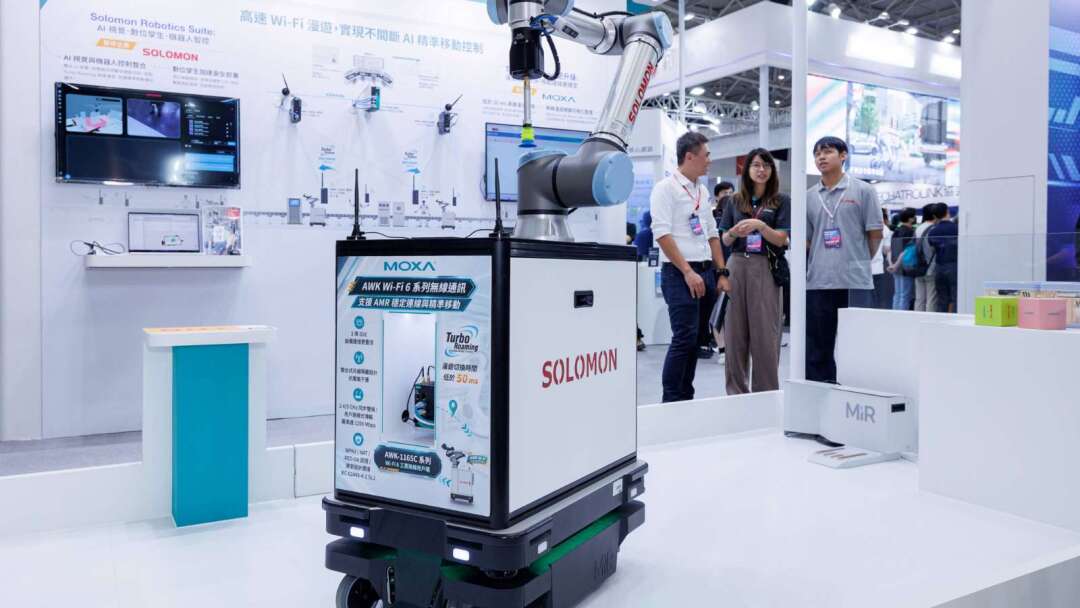
The 2026 Taipei International Industrial Automation Show is currently underway. Industrial networking provider Moxa (404 Technology) presented a deep analysis of global industry trends at the event, stating that under the dual momentum of accelerated AI infrastructure deployment and the restructuring of manufacturing supply chains in Europe and the U.S., Taiwanese manufacturers are capitalizing on their geographical proximity to semiconductor and electronics OEM leaders to capture significant business opportunities in industrial networking and edge AIoT devices.
Moxa emphasized that the core motivation for AI investment in industrial sectors lies in cost reduction and efficiency enhancement. The focus has shifted comprehensively from initial data collection to real-time computing and communication integration at the edge. Among various vertical applications, energy management—such as in photovoltaics, energy storage, and substations—and safety-critical environments like rail transit are advancing most rapidly. In contrast, production lines remain in a gradual verification phase due to concerns over process confidentiality and fault tolerance.
Meanwhile, the European Union is set to implement the Cyber Resilience Act (CRA) next year, with non-compliant companies facing potential fines. Moxa has already invested three years in overhauling its software architecture to help Taiwanese manufacturers achieve compliance and seize the next wave of equipment upgrades.
Amid geopolitical tensions and supply chain restructuring, overseas markets such as the U.S. are increasingly excluding untrusted suppliers when building new semiconductor fabs and advancing domestic manufacturing. This 'de-risking supply chain' trend has become a key driver enabling Taiwanese industrial computer and communication equipment providers to penetrate global supply chains.
New facilities typically allocate full budgets during initial planning and demand turnkey solutions. As a result, enterprises prefer to directly deploy high-end, scalable Taiwanese networking equipment to avoid future budget revisions and cumbersome ROI evaluations, further solidifying the market position of Taiwanese manufacturers.
In terms of precision semiconductor manufacturing and equipment integration, Taiwanese manufacturers possess the core communication capabilities to deeply embed within the machinery of leading semiconductor equipment makers in the U.S., Japan, and Europe. They also meet end-users’ customized needs—such as wafer fabs—for external sensor fusion and edge computing, creating a dual-benefit scenario where they succeed both inside and outside the equipment.
FACT BOX
- Source: PR Times
- Category: Event