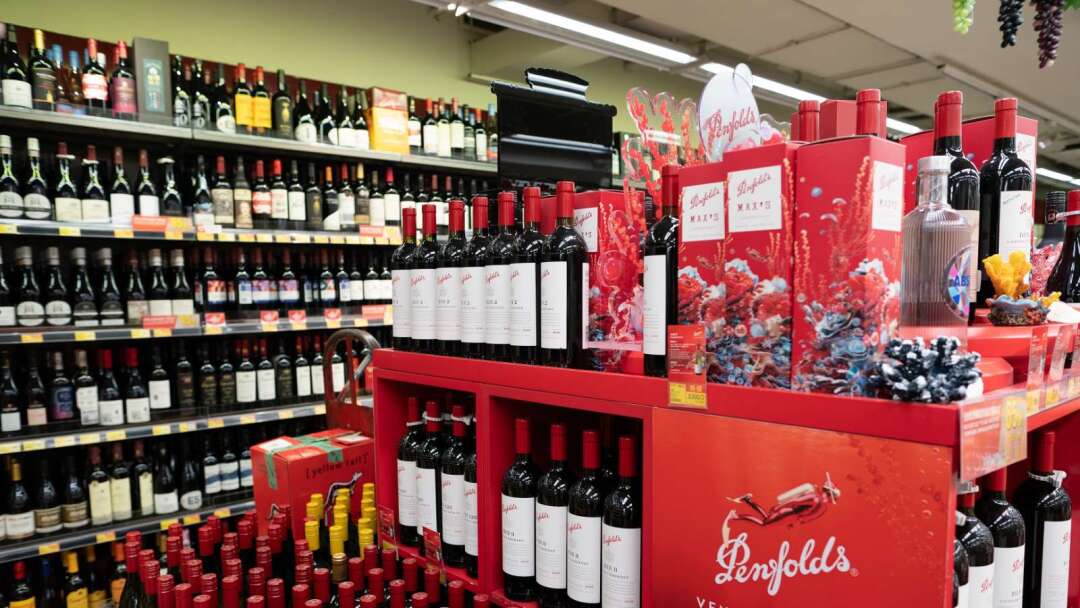
According to Hong Kong-based English-language media South China Morning Post on the 23rd (Sunday), the Chinese market, once hailed as the next growth engine for Europe's wine industry, is undergoing a sustained and profound retreat in demand.
The latest trade data shows that China's imports of bottled wine from the European Union fell by 16.6% in the first half of 2026 compared to the same period last year, with import value declining 7.9% to $251 million.
This figure not only continues a years-long downward trend but also marks the complete disappearance of the brief post-pandemic rebound, forcing European wine producers to recalibrate their 'China dream' against reality.
Arsen Zhao, who works in Sino-French wine trade in Paris, said his business in France remains stable, but orders from Asian—especially Chinese—buyers have seen a 'cliff-like decrease.' 'The drop among Chinese customers is most evident, and downgrading in consumption has become widespread. Large quantities of high-end European wines accumulated over the past few years remain unsold in distribution channels, and high inventory is directly suppressing new procurement demand.'
He further pointed out that supply-demand imbalances have begun distorting pricing systems: 'The terminal retail price of some top-tier French château wines in China is even lower than their retail price in France—something almost unimaginable before.'
Behind the shrinking demand lies a confluence of structural factors. On one hand, younger Chinese consumers are shifting their drinking preferences from 'conspicuous consumption' to 'self-indulgent' and 'occasion-based' drinking, cooling enthusiasm for expensive imported wines. On the other hand, macroeconomic slowdown and the fading wealth effect from real estate are further squeezing budgets for business banquets and gift wine purchases.
At the same time, the rise of domestic Chinese wine is quietly reshaping the competitive landscape—wineries in regions such as Shangri-La in Yunnan, eastern foothills of Helan Mountain in Ningxia, and Penglai in Shandong, backed by continuously improving winemaking techniques and international awards, have successfully attracted a segment of consumers who once only trusted 'Old World' labels.
A veteran wine exporter in Madrid admitted that while China was not their largest market, it had long maintained stable shipments. In peak years, annual exports to China exceeded 3,000 bottles, mainly supplying Western-style restaurants in first-tier cities like Shanghai and Shenzhen. However, this year, their projected sales to China are expected to plummet to fewer than 900 bottles.
Faced with this shift, an increasing number of European suppliers are adjusting their focus, reducing shipments to China and turning their attention to emerging markets such as Canada, India, Southeast Asia, and South America.
FACT BOX
- Source: PR Times
- Category: News