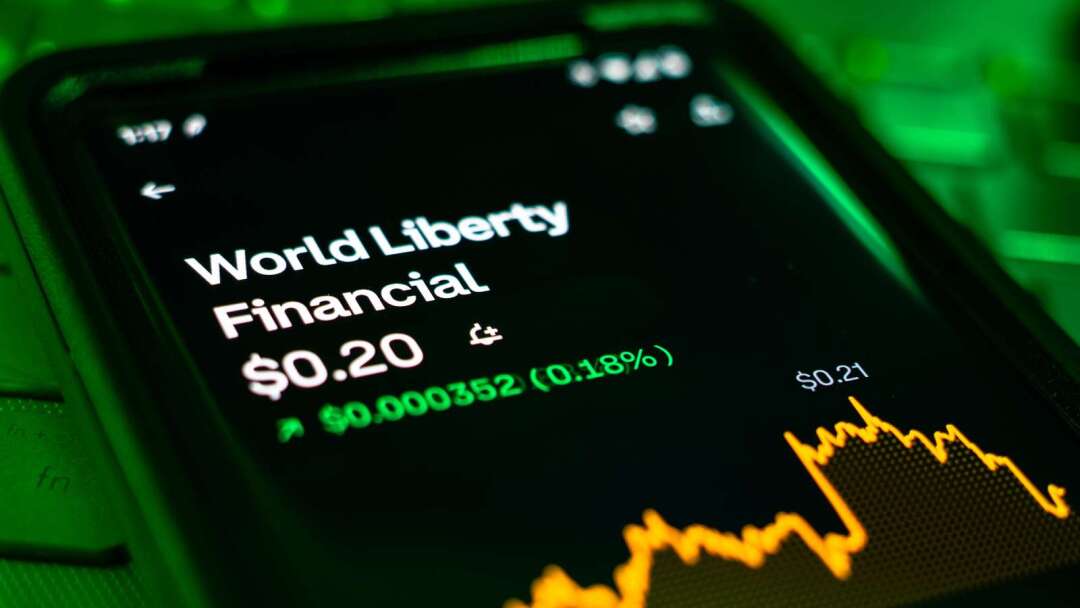
The U.S. Office of the Comptroller of the Currency (OCC) conditionally approved World Liberty Financial (WLFI), a firm associated with former President Donald Trump’s family, for a national bank holding company charter earlier this month. This makes Trump the first U.S. president to have children found a bank while in office.
WLFI aims to expand the use of its dollar-pegged stablecoin USD1. Owning a licensed bank allows it to reduce custody costs, enhance legitimacy, and potentially access the Federal Reserve’s discount window and government bailout mechanisms during crises.
This charter is not an isolated case but part of a rare wave of new bank licenses since 2008. OCC data shows that 22 new bank charters were approved in the first 19 months of Trump’s second term—surpassing the total from the previous five years combined.
Since early last year, around 40 companies have filed applications, a number roughly equivalent to the total filings from 2012 to 2024 over 13 years.
Jonathan Gould, the OCC chief appointed by Trump, stated in June before Congress: “The OCC is open for business again.” He has reduced the target response time for each application to within 120 days, drastically shortening a review process that previously took months or even years.
Other firms approved or awaiting approval alongside WLFI include stablecoin issuer Circle, consumer bank Nu Holdings, Coinbase, and Erebor Bank—founded by defense tech entrepreneur Palmer Luckey—which received its charter in February.
WLFI’s application structure has raised alarms in Washington. Its chairman is Zachary Witkoff, son of Steven Witkoff, Trump’s Middle East envoy. The initial filing lacked a CFO; later, Daniel Dietzel, former CFO of private lender Hidden Road Partners, was added. Three investors—including one of Trump’s sons and a businessman linked to Abu Dhabi’s royal family—signed a “passive commitment” limiting their interference in management. The OCC emphasized that career civil servants conducted the review.
David Wachsman, spokesperson for World Liberty, stressed that obtaining a national charter places WLFI “permanently under federal oversight by the OCC,” subject to regular audits, anti-money laundering (AML) compliance, consumer protection rules, and independent verification of weekly USD1 reserve reports. “We are embracing regulation, not evading it,” he said.
However, Democratic Congresswoman Maxine Waters criticized: “In February 2025, Trump issued an executive order requiring all new financial regulations to be reviewed by the White House before public release, allowing the president to see regulatory changes ahead of the public and position his family’s interests accordingly.”
White House spokesperson Anna Kelly responded only: “There is no conflict of interest.”
Supporters of deregulation argue that tech-driven new banks can counterbalance traditional bank consolidation and curb the expansion of mega-banks. Industry players, however, worry that interest-bearing stablecoins could become substitutes for deposits.
Opponents further fear USD1 could become a channel for foreign capital to show favor to the president, especially given WLFI’s investor network spans Abu Dhabi’s royal family and Wall Street.
For now, how long this window remains open is uncertain. If Democrats expand their congressional seats in the November midterm elections, the OCC’s approval pace and the “120-day response” commitment could be reevaluated.
But currently, the Trump family has woven together cryptocurrency stablecoins, the federal deposit system, and White House interests through a conditionally approved bank charter. The U.S. banking sector is undergoing its first large-scale experiment on the boundaries of non-traditional players operating under license—and those boundaries are being redrawn in real time.
FACT BOX
- Source: PR Times
- Category: News
- Organizations: World Liberty Financial / Circle / Nu Holdings
- Products / services: USD1