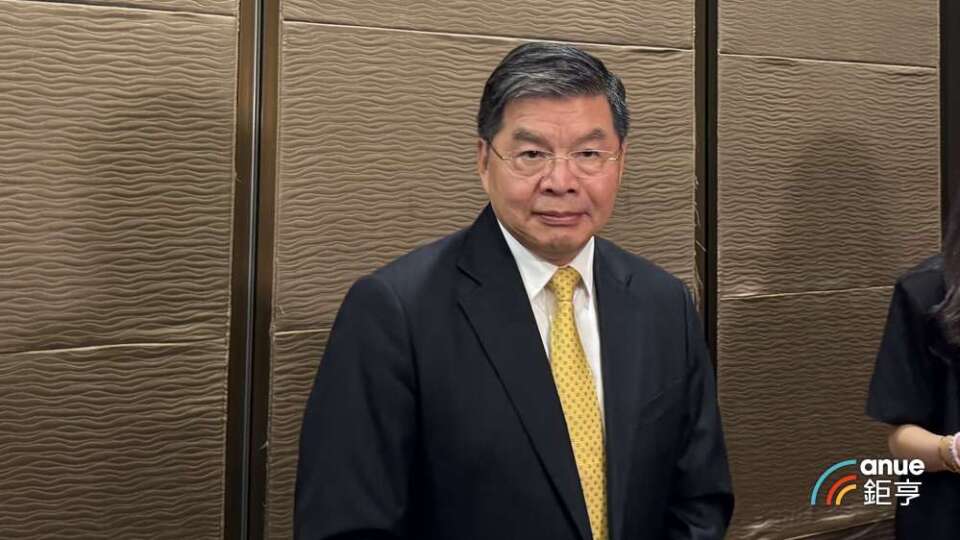
Cathay Financial Holding (2882-TW) held its 2026 second-quarter investor briefing today, chaired by CEO Li Chang-Keng. Cathay Financial posted a post-tax net profit of NT$76.5 billion in the first half of the year. When including gains and losses from the sale of FVOCI (fair value through other comprehensive income) equities, the impact on retained earnings reached NT$165.9 billion, surpassing last year's full-year level and setting a new historical high. This figure expanded further to NT$187 billion in the first seven months, indicating ample capacity for profit distribution.
CEO Li Chang-Keng and the management team stated that after clear provisions for statutory surplus reserves, distributable capacity remains strong, leading to an optimistic outlook for Cathay Life’s cash dividend remittance to the holding company next year. Cathay Financial’s adjusted net worth surged to NT$1.583 trillion, with book value per share breaking the NT$100 threshold, reaching NT$101.2. Li Chang-Keng stated confidently that Cathay Financial’s 2026 dividends will be better than in the past.
Benefiting from strong earnings contributions from core subsidiaries and excellent capital market performance, Cathay Financial delivered outstanding results in the first half, with post-tax net profit reaching NT$76.5 billion. Including FVOCI equity disposal gains, the impact on retained earnings hit NT$165.9 billion, exceeding last year’s full-year figure and reaching a historical high.
Cathay Financial’s CFO Chen Yan-Ju further pointed out that with market recovery and continued realization of capital gains, as of the first seven months of this year, the impact on retained earnings—combining post-tax net profit and FVOCI equity disposal gains—has rapidly climbed to NT$187 billion, with EPS reaching as high as NT$12.47. She emphasized, "Distributable capacity is very sufficient," noting that this data lays a solid financial foundation for the financial holding group’s dividend payouts next year.
Regarding the payout ratio and dividend policy, which have drawn attention from media and institutional investors, Chen Yan-Ju stated that the average payout ratio over the past three years has been 53%, and 46% over the past decade. She emphasized that Cathay Financial’s dividend policy remains consistent, reflecting profitability while also comprehensively considering subsidiaries’ operational growth needs, capital market conditions, and peer cash dividend yield levels, before proposing a competitive dividend policy to the board of directors.
On regulatory requirements and Cathay Life’s ability to remit funds to the holding company—a topic of market concern—Chen Yan-Ju clearly stated that retained earnings impact is currently at a historical high. After deducting required statutory surplus reserves, "distributable capacity has reached a historical high." Even under different transitional standards, Cathay Financial is well-prepared in terms of product mix, asset-liability management, and repayment capacity, leading to a highly optimistic and positive outlook on Cathay Life’s cash remittance next year.
Insurance Bureau Director Wang Li-Hui yesterday outlined three principles for dividend reviews after life insurers align with TIS. At the briefing, Cathay Life CEO Lin Chao-Ting explained that the content is fully consistent with prior communications to investors. He analyzed that regarding distributable earnings, the standards for statutory surplus reserve provisions have become clear, resulting in minimal impact on Cathay Life. Coupled with the record-high retained earnings impact this year, after deducting required reserves as per regulations, the distributable earnings capacity has reached a historical high.
Lin Chao-Ting pointed out that if transitional measures do not apply and objective criteria are met, the review process could be very swift or even exempt. Even under transitional standards, regulators will comprehensively assess indicators such as TIS ratios, product mix transformation, asset-liability management, and currency mismatch improvements. He particularly emphasized that although Cathay Life has issued bonds for financing, the company’s overall repayment capacity is robust, so this principle has little impact. Therefore, he remains optimistic about Cathay Life’s cash dividend remittance next year.
Li Chang-Keng added that future evaluations and forecasts of the overall dividend policy will become clearer. In his personal view, this year’s dividend outlook is far more optimistic than in 2021, and he is confident that this year’s cash dividend performance will surpass past levels. However, he cautioned that from a historical average perspective, when the profit base (denominator) expands significantly and the company is highly profitable, it is inappropriate to directly apply the upper limit of the payout ratio for estimation. Overall, however, the management team maintains a highly positive and optimistic view on next year’s dividend distribution capacity.
FACT BOX
- Source: PR Times
- Category: Event