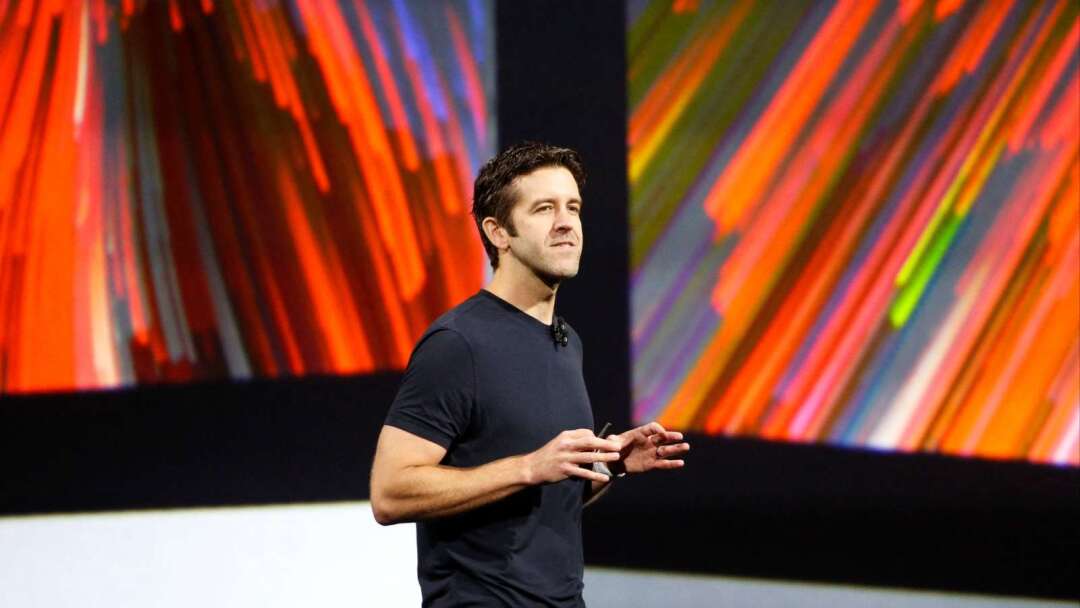
Apple (AAPL-US) will officially welcome a new CEO on Tuesday, September 1, as John Ternus succeeds Tim Cook to become the third leader of the world’s most valuable tech company, following Steve Jobs and Cook.
According to Bloomberg’s latest analysis, the core challenge facing Ternus is clear: how to lead this hardware-focused consumer electronics giant to reestablish competitive advantage in the age of artificial intelligence (AI).
Ternus immediately faces critical tests, including the September launch of new iPhone models and the full deployment of Apple’s revamped Siri AI. The new Siri, rebuilt from the ground up, is seen as a direct competitor to ChatGPT. Early reviews are relatively positive, but whether it can overcome Siri’s long-standing reputation for being “unusable” remains to be seen.
Meanwhile, Cook has not fully exited Apple’s core decision-making circle. He will remain as Executive Chairman, continuing to manage Apple’s relationships with the Trump administration and the Chinese government, and will assist Ternus when needed.
Analysts note that for Apple shareholders, the significance of this leadership transition goes beyond a simple CEO change—it hinges on whether Ternus can steer Apple toward a new growth trajectory amid the AI wave.
Ternus’s product roadmap includes the first foldable iPhone, AI-powered smart glasses, and home display devices. At the same time, Apple faces mounting pressure from AI development delays, accelerating talent attrition, and slowing growth in its services business—challenges the new CEO must address.
AI Development Lag: Apple’s Most Pressing Challenge
Generative AI surged across the tech industry following ChatGPT’s rise in late 2022. Although Apple quickly increased investments—developing its own large language models, hiring AI talent with high salaries, and seeking acquisition targets—its first version of Apple Intelligence underperformed, and key AI acquisitions failed to materialize.
In response, Cook replaced Apple’s AI division head and restructured the Siri team. Apple also shifted strategy last year, abandoning its initial plan to build models in-house and instead opting to pay for Google’s (GOOGL-US) Gemini technology as the foundation for the new Siri.
This decision sparked discontent within Apple’s large language model team. Several core members, including the team lead, subsequently left and joined rival companies offering higher compensation.
The new Siri AI is expected to roll out fully in September. In the long term, Apple may explore monetization through user or developer fees, or by integrating third-party applications.
However, the success of these models depends first on Siri earning user trust.
Hardware Innovation as Apple’s AI-Era Bet
Ternus has spent 25 years at Apple, starting as a Mac engineer and gradually contributing to the development of the iPad, AirPods, and iPhone, eventually overseeing the entire hardware engineering division. He is one of Apple’s most representative hardware experts.
His current product roadmap is highly ambitious. Apple will launch its first foldable iPhone and a smart display capable of identifying speakers and delivering personalized content this fall. Future products include camera-equipped AirPods, smart glasses, home security systems, home displays with robotic arms, and wearable camera pendants.
In contrast, Ternus appears lukewarm toward Cook’s flagship Vision Pro mixed-reality headset. Insiders say he believes the device is too heavy and too expensive to become mainstream.
Apple has recently downsized teams working on Vision Pro, affecting areas such as device safety, audio engineering, Siri integration, testing, and operating systems.
In contrast, Ternus supports Project N50, Apple’s smart glasses initiative, expected to launch next year. However, if head-worn devices fail to gain market acceptance, Ternus may scale back this product line, potentially impacting N224—the next-generation Vision Pro, initially expected by late 2028.
Beyond launching AI-powered hardware, Ternus is also attempting to integrate AI into Apple’s internal product development process. During his tenure as hardware chief, he introduced an AI platform aimed at accelerating product development and improving hardware testing efficiency.
Core Talent Exodus: Apple’s Internal Challenge
Beyond product and AI strategy, talent attrition is another major issue Ternus inherits.
Apple has long been a top destination for elite hardware talent, but hundreds of former Apple employees have now joined OpenAI’s hardware division. Apple has even filed a lawsuit accusing OpenAI of stealing trade secrets, with Ternus himself among the executives who approved the litigation.
To retain key personnel, Ternus has awarded tens of thousands of dollars in additional bonuses to several members of the iPhone design team and personally participated in retention efforts.
One engineer from Singapore was targeted for retention. Ternus instructed iPhone design lead Richard Dinh to meet with the employee and offer a promotion and salary increase, but the engineer ultimately chose to join OpenAI.
Insiders report that about half of Apple’s senior executives may leave the company in the coming years. A key potential risk is Chief Hardware Officer Johny Srouji. The 61-year-old executive expressed his intention to leave last year but stayed on after being given expanded responsibilities and asked to assist with the CEO transition. However, insiders say he may still depart within the next one to two years.
Additionally, the heads of marketing, services, and retail have each served Apple for about 40 years and are likely to retire in the coming years.
Cook Steps Back but Doesn’t Fully Exit: Can Ternus Secure a Smooth Transition?
Cook led Apple for 15 years, growing revenue from about $100 billion to $416 billion and increasing market capitalization by roughly 15 times. He attended a farewell dinner hosted by colleagues at Apple Park on August 23, but this does not mean he is fully leaving Apple.
Cook has clearly told Ternus that he will continue handling Apple’s relationships with the Trump administration and the Chinese government and is willing to take on other roles if the successor deems them necessary. He has also told employees that Apple will remain his “top priority.”
According to Bloomberg, Apple insiders compare the Ternus-Cook leadership model to Amazon’s (AMZN-US) transition from founder Jeff Bezos to CEO Andy Jassy, viewing it as the closest parallel.
But another scenario exists in corporate succession. Disney’s (DIS-US) former CEO Bob Iger remained as an advisor but later clashed with successor Bob Chapek, eventually returning as CEO. For Apple, managing this gradual power transfer will be a crucial test of whether Ternus can establish his own leadership.
Ternus has already begun leading communications with Wall Street analysts and is gradually taking the lead in 2027 planning meetings, even when Cook is present.
The September 9 iPhone launch event will mark Ternus’s first public appearance as Apple’s CEO. Meanwhile, Cook will step off the stage as the main protagonist for the first time in 15 years.
FACT BOX
- Source: PR Times
- Category: 人事
- Organizations: Google / OpenAI / Amazon
- Products / services: iPhone / Siri