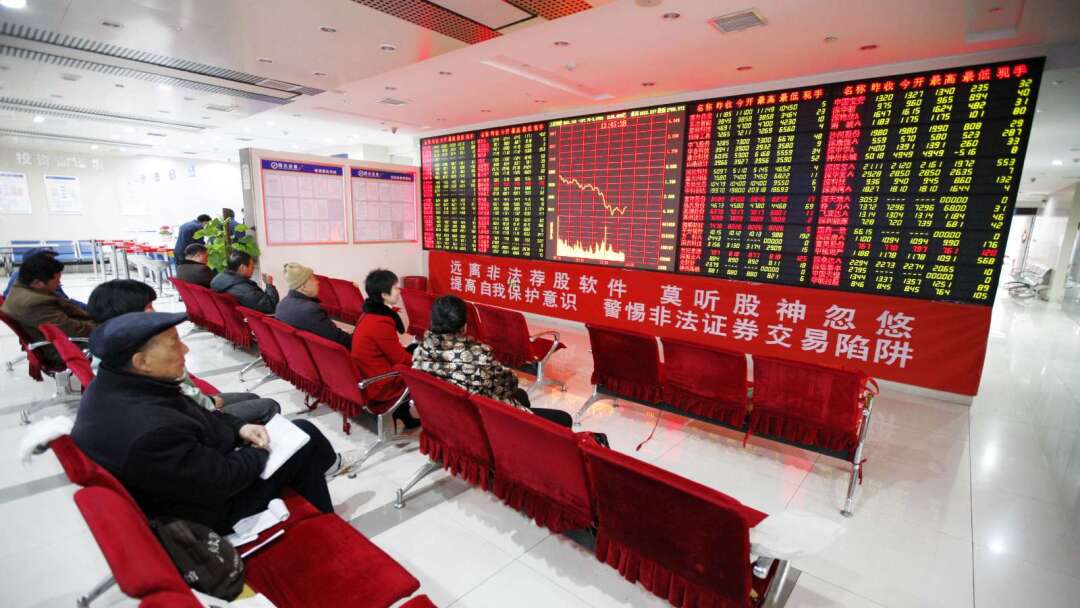
China's A-share market closed higher on August 31 (Monday), as the country's manufacturing activity showed signs of improvement in August, offering a glimmer of economic recovery despite remaining in contraction territory. Market sentiment was lifted by policymakers' signals of further stimulus measures.
The Shanghai Composite Index closed at 3,986.30 points, up 0.86%. The Shenzhen Component Index rose 0.44% to 14,015.00 points, while the ChiNext Index gained 0.42% to 3,438.68 points.
China's National Bureau of Statistics announced on the 31st that the official Manufacturing Purchasing Managers' Index (PMI) stood at 49.8 in August, up from 49.2 in July, surpassing the Bloomberg economist survey median forecast of 49.5.
Notably, both the manufacturing production index and the new orders index returned to expansion territory. The price indices also rebounded significantly, with the output prices index rising above the 50-point threshold for the first time in several months.
According to Wall Street Insights, Huo Lihui, Chief Statistician at the National Bureau of Statistics' Service Sector Survey Center, stated that August's manufacturing industry sentiment improved significantly, with 16 out of 21 surveyed industries reporting higher PMI readings than the previous month.
By sector, industries such as electrical machinery and computer and telecommunications electronic equipment saw both production and new orders indices exceed 53.0, indicating strong and sustained demand. Emerging growth sectors continued to perform robustly. Equipment manufacturing and high-tech manufacturing PMIs were 51.4 and 52.9 respectively, remaining in expansion territory.
Rising raw material prices boosted manufacturing price indicators. Driven by higher crude oil and non-ferrous metal prices, the main raw material input price index and the output price index rose to 56.6 and 50.4 respectively—up 3.4 and 2.6 percentage points from July.
By enterprise size, large enterprises' PMI rose 1.1 points to 50.6, above the 50-point threshold. Medium-sized enterprises' PMI dipped 0.3 points to 49.4, while small enterprises' PMI increased 0.5 points to 47.9, both remaining below the threshold.
In the non-manufacturing sector, the business activity index held steady at 49.0, maintaining overall stability. The composite PMI output index rose 0.2 points to 49.5.
He Hui, Vice President of the China Federation of Logistics and Purchasing, noted that both domestic and foreign market demand expanded in August, with new orders and new export orders indices rising significantly. He emphasized that demand conditions improved compared to the same period last year, reflecting effective policy support that strengthened economic momentum.
Overall, despite being affected by extreme weather such as high temperatures, typhoons, and heavy rains, the August manufacturing PMI remained below 50. However, with pro-investment and domestic demand-boosting policies gaining traction, the guiding effect of central budgetary investment becoming more evident, and 109 major projects and the 'Six Networks' development plan accelerating, manufacturing activity stabilized. Combined with steady summer consumption recovery and rising international demand, the PMI rebounded notably, indicating improved manufacturing operations and a clear upturn in business sentiment.
FACT BOX
- Source: PR Times
- Category: Survey