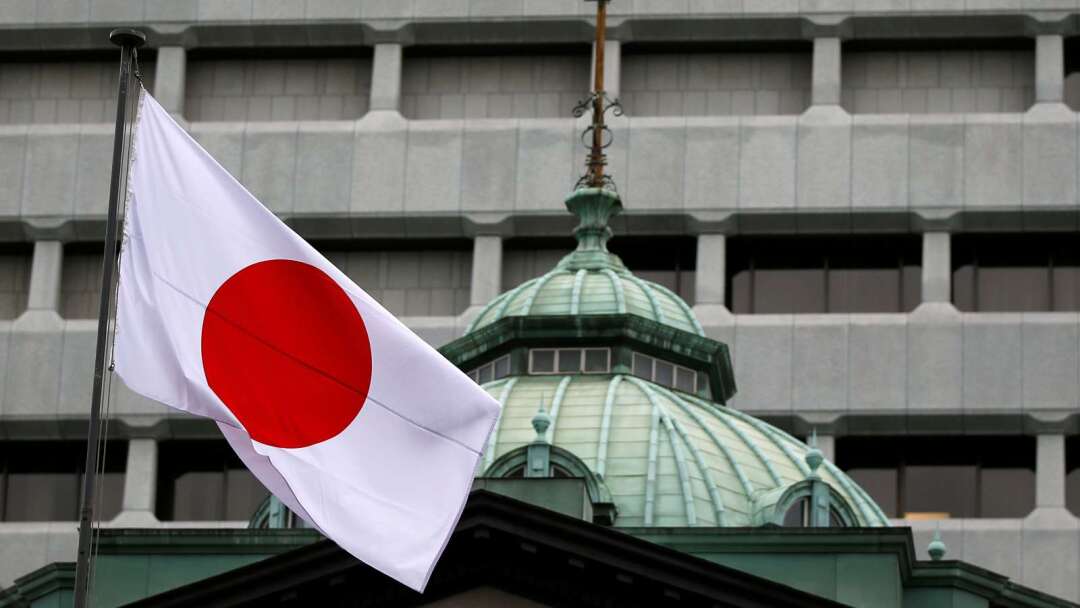
The Bank of Japan (BOJ) will hold a policy meeting on September 17-18, with markets widely expecting a 25-basis-point (0.25%) rate hike, raising the policy rate from 1% to 1.25%. While some investors speculate that the BOJ might raise rates by 50 basis points (0.5%) in one go, informed sources say the central bank has little appetite for such aggressive action and instead favors a "small but fast" approach to avoid triggering bigger market turbulence in its efforts to curb inflation.
The last time Japan raised its main policy rate by 50 basis points in one go was in 1989, at the peak of the asset bubble, when it was even rumored that the value of the Imperial Palace's land exceeded the total value of California's real estate. The bubble subsequently burst, and the Japanese economy fell into the "lost decade." Thirty-seven years later, despite inflationary pressures from the Middle East conflict, a tight labor market, and a weak yen pushing up import costs, current price pressures are far from what they were in the 1980s.
Informed sources say that if the BOJ decides to raise rates this month, it is most likely to adopt the traditional 25-basis-point increment to avoid shocking businesses, households, and financial markets that have become accustomed to near-zero borrowing costs for decades, while also giving the central bank time to observe the cumulative effects of past rate hikes.
Since launching its tightening cycle in 2024, the BOJ has raised rates by 25 basis points each time, at a frequency of roughly twice a year. Past policymakers have emphasized that Japan's economy has suffered nearly 30 years of deflation, so monetary policy normalization must be done carefully. But recent sharp yen depreciation has exacerbated inflationary pressures, prompting the central bank to raise its guard.
Informed sources say the BOJ is considering speeding up the pace of rate hikes to roughly once per quarter. In other words, the central bank may abandon a single large rate hike in favor of more frequent small adjustments to control inflation while retaining policy space for the future.
Nobuyasu Atago, a former BOJ official and now chief economist at Rakuten Securities, says a 50-basis-point rate hike could be interpreted by the market as the BOJ being desperate, further reinforcing concerns that the central bank is lagging behind inflation. He predicts the BOJ will raise rates to 1.25% this month and by another 25 basis points in December or January next year.
Hawkish remarks by BOJ policymaker Takada So have briefly fueled speculation of a large rate hike, but Governor Ueda Kazuo said last week that economic and price trends were largely in line with forecasts, suggesting inflation risks had not risen to a level requiring an extraordinary rate hike. Ueda stressed that as long as financial conditions remained accommodative, the BOJ wanted to continue raising rates, but having already raised rates five times, it was necessary to carefully assess the cumulative impact on the economy.
The yen has recently risen to around 153 to the dollar, a seven-month high, a significant rebound from around 164 yen in July, a 40-year low. This has reduced the need for the BOJ to support the currency through a large rate hike. Multiple informed sources say recent data has not shown inflation accelerating sharply, and since there is still room for two more rate hikes this year, there is no need to use up 50 basis points at once.
Japan's producer prices have recently risen, which could push up consumer inflation in the coming months, but there are currently almost no signs of a runaway spiral of prices and wages. Financial conditions remain accommodative, with bank lending in August up 5.4% from a year earlier.
However, as the policy rate gradually approaches the BOJ's estimated neutral rate range of around 1.1% to 2.5%, dovish members of the nine-person policymaking board may become more cautious. Shallow Tadao, the only dissenter in June's vote to raise rates to 1%, has said he wants to see demand-driven inflation before supporting a rate hike. Another dovish member, Sato Ayano, has argued that the central bank must also pay attention to the risk of economic growth slowing down, in addition to the risk of rising prices.
Mari Iwashita, a rates strategist at Nomura Securities, says some policymakers may think the market is too optimistic about the prospects for rate hikes and expects the BOJ to continue with 25-basis-point hikes in the short term.
FACT BOX
- Source: PR Times
- Category: News